Theopolis Logo

Writing

Explore our collection of theological essays, biblical studies, and reflections on faith and culture.

See all
temp_bg
Biblical Studies

Biblical Allusion and the Meaning of Othello

Understanding Shakespeare’s Biblical references is vital for the interpretation of many, if not all, of Shakespeare’s plays. For Othello , it is especially important, not only because the interpretation of the play is contested among various approaches — feminist, homosexual, post-colonial, Marxist, Freudian, new historical, and others — but also…

by Ralph Allan SmithJune 16, 2017

e99a9492-2
Ecclesiology

Attaining Unity: A Reply to Mike Allen

Mike Allen of Reformed Theological Seminary, Orlando, scores some points in his review of The End of Protestantism . He lodges the fair complaint that my rhetoric sometimes outruns my evidence. He argues that more stress on the present reality of the church’s unity deepens the tragedy of division; divisions…

by Peter LeithartJune 13, 2017
trinity-1-2
Eschatology

Comic Trinity

I begin with two observations. First, on any millennial view, the Christian account of history is progressive, moving from the garden to the city. It is eschatological not only in that there is an end, but that the end is a glorified beginning, not merely a return to origins. To…

by Peter LeithartJune 8, 2017
e99a2225
Ecclesiology

Political Church

The church is a new form of polity that erupts into the world as much as the Son of God comes into the world. It’s a real-world political alternative to the polities of the ancient world. It resolves many of the political dilemmas of the ancient world, though not simply…

by Peter LeithartJune 6, 2017
img_1456
Baptism

Baptism Impasse: Baptists vs. Presbyterians, (Part 2)

In my last post , I explained how Baptists really have a “one-ordinance-one sacrament” ecclesiology. I said this: “what Baptists really believe, in modern parlance, is that there is one ordinance (baptism which is a sign or symbol only) and one sacrament (the Lord’s Supper in which feeding upon Jesus…

by Mani MarprelateMay 30, 2017
medieval-knights
Political Theology

Obedience of Rulers

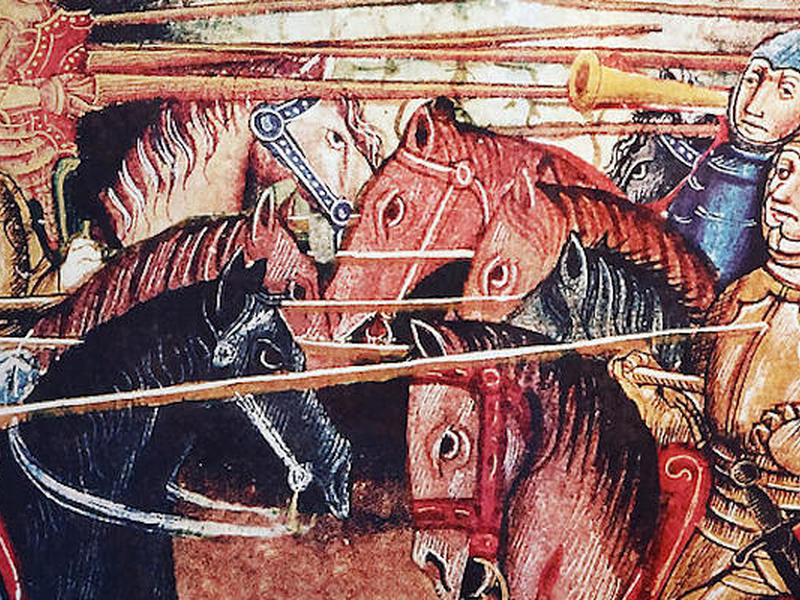
One of the most extensive and penetrating responses to the Yoder-Hauerwas attack on Constantiniansm is found in Oliver O’Donovan’s Desire of Nations , in a chapter entitled “The Obedience of Rulers.” O’Donovan defines the word “Christendom” as “a historical idea,” specifically “the idea of a professedly Christian secular political order,…

by Peter LeithartMay 30, 2017

Showing page 111 of 309

See all
See all
Uncategorized

Apsethus the god

Hippolytus tells the story that Apsethus of Libya trained parrots to fly over North Africa crying out “Apsethus is a god,” and Libyans were taken in and began to offer sacrifices to him. Then a “clever Greek” caught one of the parrots, and retrained it to cry out: “Apsethus, having…

June 25, 2009
Uncategorized

Failure of the Church

In his encyclopedic Later Roman Empire , A. H. M. Jones explains that the church after Constantine failed to transform ordinary social behavior and culture not because it was too lax but because it was too rigorist. Ordinary Christians felt they couldn’t live up to the standards, and responded by…

June 25, 2009

Moses and Christ

Michael Hollerich, who has done some superb revisionist work on Eusebius of Caesarea, explains in a 1990 article from Church History that Eusebius employed a “similar situation” form of typology that focuses on similarities rather than differences between type and antitype, and draws out the similarities in great detail. He…

June 24, 2009
Politics

Truth and Freedom

Milbank, discussing the possibility of educative coercion: “although Christianity . . . certainly requires in the end free consent to the truth, it does not fetishize this freedom merely as a correct mode of approach: truth is what most matters, and moreover a collective commitment to truth, since truth itself…

June 22, 2009
Art

What Rough Beast?

Milbank notes that “science and art have always first mimed the horrors to come.” Darwinian evolution and avant-garde prepared the way, for foreshadowed, twentieth-century horrors. He asks, “what may the far more shocking interventions of 1990s art and science . . . betoken for the present century?’

June 22, 2009
Theology

Privatio and Radical Evil

Milbank opens Being Reconciled: Ontology and Pardon (Radical Orthodoxy) with a discussion of neo-Kantian arguments concerning radical evil. In the light of the Holocaust and twentieth-century totalitarianism, they argue, the traditional Augustinian privatio is deeply inadequate. In response, Milbank relativizes totalitarianism by arguing that “European and American liberal democracy has…

June 22, 2009

Showing page 1367 of 2212

Browse by Category

In Medias Res

Your weekly digest for all things Theopolis.

Donate

Theopolis is nearly 100% donor-supported. Consider joining us on our mission.