Theopolis Logo

Writing

Explore our collection of theological essays, biblical studies, and reflections on faith and culture.

See all
medievalilluminatedmanuscript
Biblical Studies

The Art of Why

“We have a God who hides things because He loves to be sought out, chewed out and found out.” As Christians, we are rightly taught that we must not question God’s Word. The problem is that the Scriptures record many things which appear to have been given to us for…

by Mike BullMay 12, 2015

last-supper
Revelation

Eucharistic Harvest

The book of Revelation is a liturgy. John begins “in the Spirit” on the “Lord’s day” (1:10). Jesus appears, and Jesus tells him to record messages to seven churches, words of encouragement and rebuke, like the call to worship and confession at the beginning of a Christian liturgy. In chapter…

by Peter LeithartMay 7, 2015
sunrise-2
Creation

Maker of Heaven and Earth, (Part 5)

In my previous posts, I looked at the theme of creation as it is found in a sequence of psalms devoted to Yahweh’s Kingship (Psalms 93-100). Among other matters, these psalms declare that when the Kingdom of Israel’s God comes, it is the Kingdom of the world’s own Creator .…

by Stephen LongMay 7, 2015
13071-probablyvalentindeboulogne-saintpaulwritinghi-1
Deuteronomy

Paul the Levir

The church in Corinth was a pastoral nightmare. Factionalism, sexual immorality, incipient syncretism, using the church as a stage for self-promotion, and denial of the final resurrection were just some of the problems. In Paul’s first letter to the Corinthian church, he confronts each of these problems directly and in…

by Bill SmithMay 5, 2015
creation-eve
Covenant

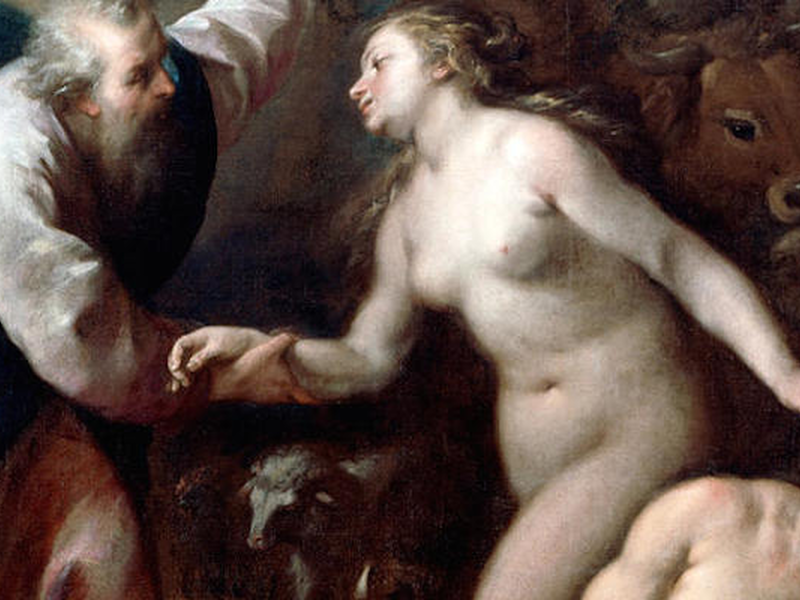
Covenant Structure in Genesis 2

The first chapters of the Word of God have a poetic rhythm. This is used to discredit their accuracy as historical narrative, but the truth is that these same rhythms continue far beyond the book of Genesis. In fact, the later texts shed light on the frustratingly succinct account of…

by Mike BullApril 30, 2015
light-bulb
Creation

Must A Light Bulb Be "Oriented Toward Illumination"?

Mr. Martian: What’s that there? Mr. Edison: (Edison holds up a standard, 60 watt lightbulb). It’s a lightbulb. Mr. Martian: A “lightbulb” you say? What exactly is a “lightbulb”? Mr. Edison: A lightbulb is an object used to illuminate a dark area, say a room. It’s made primarily of filament…

by Gerald HiestandApril 28, 2015

Showing page 154 of 309

See all
See all
Uncategorized

Apsethus the god

Hippolytus tells the story that Apsethus of Libya trained parrots to fly over North Africa crying out “Apsethus is a god,” and Libyans were taken in and began to offer sacrifices to him. Then a “clever Greek” caught one of the parrots, and retrained it to cry out: “Apsethus, having…

June 25, 2009
Uncategorized

Failure of the Church

In his encyclopedic Later Roman Empire , A. H. M. Jones explains that the church after Constantine failed to transform ordinary social behavior and culture not because it was too lax but because it was too rigorist. Ordinary Christians felt they couldn’t live up to the standards, and responded by…

June 25, 2009

Moses and Christ

Michael Hollerich, who has done some superb revisionist work on Eusebius of Caesarea, explains in a 1990 article from Church History that Eusebius employed a “similar situation” form of typology that focuses on similarities rather than differences between type and antitype, and draws out the similarities in great detail. He…

June 24, 2009
Politics

Truth and Freedom

Milbank, discussing the possibility of educative coercion: “although Christianity . . . certainly requires in the end free consent to the truth, it does not fetishize this freedom merely as a correct mode of approach: truth is what most matters, and moreover a collective commitment to truth, since truth itself…

June 22, 2009
Art

What Rough Beast?

Milbank notes that “science and art have always first mimed the horrors to come.” Darwinian evolution and avant-garde prepared the way, for foreshadowed, twentieth-century horrors. He asks, “what may the far more shocking interventions of 1990s art and science . . . betoken for the present century?’

June 22, 2009
Theology

Privatio and Radical Evil

Milbank opens Being Reconciled: Ontology and Pardon (Radical Orthodoxy) with a discussion of neo-Kantian arguments concerning radical evil. In the light of the Holocaust and twentieth-century totalitarianism, they argue, the traditional Augustinian privatio is deeply inadequate. In response, Milbank relativizes totalitarianism by arguing that “European and American liberal democracy has…

June 22, 2009

Showing page 1367 of 2212

Browse by Category

In Medias Res

Your weekly digest for all things Theopolis.

Donate

Theopolis is nearly 100% donor-supported. Consider joining us on our mission.