Theopolis Logo

Writing

Explore our collection of theological essays, biblical studies, and reflections on faith and culture.

See all
max-kukurudziak-qbc3zmxw0g8-unsplash
History

Report from Ukraine

We lost Crimea. That is very clear. Putin proved he was not lying when he said he would place women and children ahead of his soldiers to storm Ukrainian military bases. Russian soldiers did exactly that with women (some who volunteered and some who were forced). Russia now occupies all…

by San SanychMarch 28, 2014

screenshot-2023-09-21-at-3-59-23-pm
Church Calendar

God Gone Silent

Sound is an indicator of life and energy. “Sound signals the present use of power, since sound must be in active production to exist at all.” Things don’t have to be alive to make themselves visible, and “a primitive hunter can see, feel, smell, and taste an elephant when the…

by Peter LeithartMarch 26, 2014
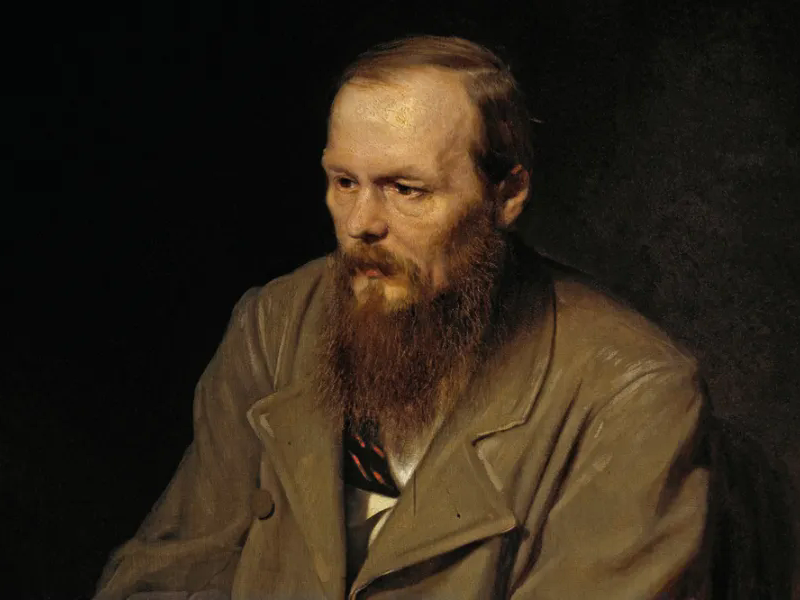
web-lead-image_final_dostoevsky
Books

Dostoevsky the Liberal

In the most famous section of his best-known novel, Dostoevsky’s Ivan Karamazov brings forward his case against God. He opens with a horrific litany of outrages against children. Turkish soldiers make a baby laugh and then shoot a pistol into his face. A little girl is beaten, thrashed, kicked by…

by Peter LeithartMarch 24, 2014
kelly-sikkema-ggs0_g6wi-i-unsplash
Epistemology

Subsidiary-Focal Integration and Liturgy

​At the heart of Esther Lightcap Meek's splendid ​Little Manual for Knowing is a concept she picked up from Michael Polanyi, "subsidiary-focal integration." The concept begins from the insight that all our knowing, all our experience, is double. We focus on something, but we are capable of "indwelling" that focal…

by Peter LeithartMarch 19, 2014
engin-akyurt-uz9qpvbol0e-unsplash
Revelation

White Stone

Jesus promises the overcomers of Pergamum "hidden manna" and a "white stone." The hidden manna is often linked with the manna stashed away in the ark of the covenant. The white stone has proved more elusive. Exodus tells us that manna was white (Exodus 16:31) and like bdellium (Numbers 11:7),…

by Peter LeithartMarch 17, 2014
226961fgsdl
Leviticus

A Theology of Festivity

Leviticus 23 begins with a reference to “Yahweh’s appointed times” ( mo’ade-YHWH ). Mo’ed is the common term for the feasts of Israel. A few dimensions to this term. First, it means “appointed time” or “designated time.” It is a time set by Yahweh. Yahweh has claimed certain times as…

by Peter LeithartMarch 12, 2014

Showing page 177 of 309

See all
See all
Uncategorized

Apsethus the god

Hippolytus tells the story that Apsethus of Libya trained parrots to fly over North Africa crying out “Apsethus is a god,” and Libyans were taken in and began to offer sacrifices to him. Then a “clever Greek” caught one of the parrots, and retrained it to cry out: “Apsethus, having…

June 25, 2009
Uncategorized

Failure of the Church

In his encyclopedic Later Roman Empire , A. H. M. Jones explains that the church after Constantine failed to transform ordinary social behavior and culture not because it was too lax but because it was too rigorist. Ordinary Christians felt they couldn’t live up to the standards, and responded by…

June 25, 2009

Moses and Christ

Michael Hollerich, who has done some superb revisionist work on Eusebius of Caesarea, explains in a 1990 article from Church History that Eusebius employed a “similar situation” form of typology that focuses on similarities rather than differences between type and antitype, and draws out the similarities in great detail. He…

June 24, 2009
Politics

Truth and Freedom

Milbank, discussing the possibility of educative coercion: “although Christianity . . . certainly requires in the end free consent to the truth, it does not fetishize this freedom merely as a correct mode of approach: truth is what most matters, and moreover a collective commitment to truth, since truth itself…

June 22, 2009
Art

What Rough Beast?

Milbank notes that “science and art have always first mimed the horrors to come.” Darwinian evolution and avant-garde prepared the way, for foreshadowed, twentieth-century horrors. He asks, “what may the far more shocking interventions of 1990s art and science . . . betoken for the present century?’

June 22, 2009
Theology

Privatio and Radical Evil

Milbank opens Being Reconciled: Ontology and Pardon (Radical Orthodoxy) with a discussion of neo-Kantian arguments concerning radical evil. In the light of the Holocaust and twentieth-century totalitarianism, they argue, the traditional Augustinian privatio is deeply inadequate. In response, Milbank relativizes totalitarianism by arguing that “European and American liberal democracy has…

June 22, 2009

Showing page 1367 of 2212

Browse by Category

In Medias Res

Your weekly digest for all things Theopolis.

Donate

Theopolis is nearly 100% donor-supported. Consider joining us on our mission.