Theopolis Logo

Writing

Explore our collection of theological essays, biblical studies, and reflections on faith and culture.

See all
trnava-university-beeyeib-am8-unsplash
Biblical Chronology

Meredith G. Kline Strikes Back, Part 2

In our first essay we looked at Kline’s flawed exegesis of Genesis 2:5 as it relates to Day 3 of creation. Now we turn to Kline’s new argument against a chronological reading of Genesis 1, as found, again, in "Space and Time in the Genesis Cosmogony," Perspectives on Science and…

by James B. JordanMarch 29, 1997
30211-bathsheba-800w-tn
Hermeneutics

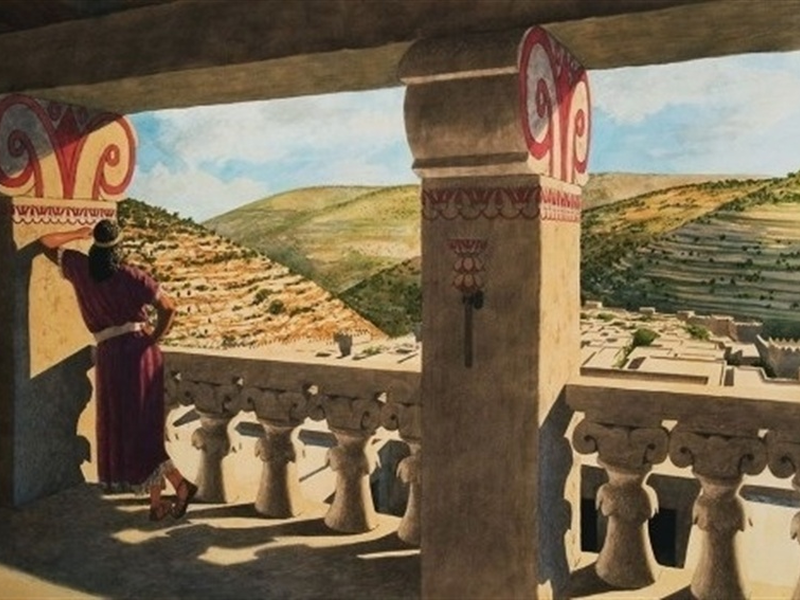
Bathsheba: The Real Story

One of the advantages of paying very close attention to the details in the Bible, especially chronological and genealogical details, is that they can shed light on situations that don’t seem to make much sense apart from them. One such situation is that of Bathsheba. It appears that Bathsheba willingly…

by James B. JordanMarch 28, 1997
jonathan-cooper-ygxq7hfdjzq-unsplash
Church Calendar

Is the Church Year Biblical? | A Parking Lot Parable

Once upon a time, Jeff Meyers and Tony Rollins–old friends who had not seen each other for a few years–met in the parking lot of a neighborhood church. They were dropping off their pre-school children at the church for Mother’s Day Out. They were such conscientious and helpful fathers. As…

by Jeff MeyersMarch 20, 1997
annie-spratt-upxf6to3fea-unsplash
Daniel

The Allegory of Susanna

Years ago, when I was at the briefly-existing Geneva Divinity School, I taught a course in the Apocrypha. One thing that struck me at that time is that two of the stories are almost certainly religious allegories (as well as moral tales): Judith and Susanna. Since "Susanna" means "Lily," this…

by James B. JordanFebruary 28, 1997
serafima-lazarenko-_ivuwprfczi-unsplash
Biblical Horizons

A Blossom of Yahweh’s Field

Peter’s essay inspires me to write up some similar thoughts about the flower of the field. Rightly does Peter associate the almond with Yahweh’s garden, because the Garden of Eden is symbolically positioned as parallel to the Holy Place of the Tabernacle and Temple. To wit: Since Aaron’s rod blossomed…

by James B. JordanFebruary 28, 1997
trnava-university-beeyeib-am8-unsplash
Biblical Chronology

Meredith G. Kline Strikes Back, Part 1

We have had occasion to discuss the views of Meredith G. Kline previously in these newsletters, and now it is time to do so again. Kline teaches at Gordon-Conwell Theological Seminary and also at the Westminster Theological Seminaries (Philadelphia and San Diego). He is the author of some interesting insights…

by James B. JordanFebruary 28, 1997

Showing page 259 of 309

See all
See all
Uncategorized

Apsethus the god

Hippolytus tells the story that Apsethus of Libya trained parrots to fly over North Africa crying out “Apsethus is a god,” and Libyans were taken in and began to offer sacrifices to him. Then a “clever Greek” caught one of the parrots, and retrained it to cry out: “Apsethus, having…

June 25, 2009
Uncategorized

Failure of the Church

In his encyclopedic Later Roman Empire , A. H. M. Jones explains that the church after Constantine failed to transform ordinary social behavior and culture not because it was too lax but because it was too rigorist. Ordinary Christians felt they couldn’t live up to the standards, and responded by…

June 25, 2009

Moses and Christ

Michael Hollerich, who has done some superb revisionist work on Eusebius of Caesarea, explains in a 1990 article from Church History that Eusebius employed a “similar situation” form of typology that focuses on similarities rather than differences between type and antitype, and draws out the similarities in great detail. He…

June 24, 2009
Politics

Truth and Freedom

Milbank, discussing the possibility of educative coercion: “although Christianity . . . certainly requires in the end free consent to the truth, it does not fetishize this freedom merely as a correct mode of approach: truth is what most matters, and moreover a collective commitment to truth, since truth itself…

June 22, 2009
Art

What Rough Beast?

Milbank notes that “science and art have always first mimed the horrors to come.” Darwinian evolution and avant-garde prepared the way, for foreshadowed, twentieth-century horrors. He asks, “what may the far more shocking interventions of 1990s art and science . . . betoken for the present century?’

June 22, 2009
Theology

Privatio and Radical Evil

Milbank opens Being Reconciled: Ontology and Pardon (Radical Orthodoxy) with a discussion of neo-Kantian arguments concerning radical evil. In the light of the Holocaust and twentieth-century totalitarianism, they argue, the traditional Augustinian privatio is deeply inadequate. In response, Milbank relativizes totalitarianism by arguing that “European and American liberal democracy has…

June 22, 2009

Showing page 1367 of 2212

Browse by Category

In Medias Res

Your weekly digest for all things Theopolis.

Donate

Theopolis is nearly 100% donor-supported. Consider joining us on our mission.