
Theopolis Logo

Writing

Explore our collection of theological essays, biblical studies, and reflections on faith and culture.

See all
foster-child
Adoption

Sometimes a Platitude is a Precious Gift

Platitudes are often sayings whose truthfulness is so apparent, so accepted, and so repeated that they are divested of their power and in fact become the object of ridicule. Their failure lies in their fame, and the contempt they invite is bred by their familiarity. To say that children are…

by Bill DeJongJanuary 15, 2015
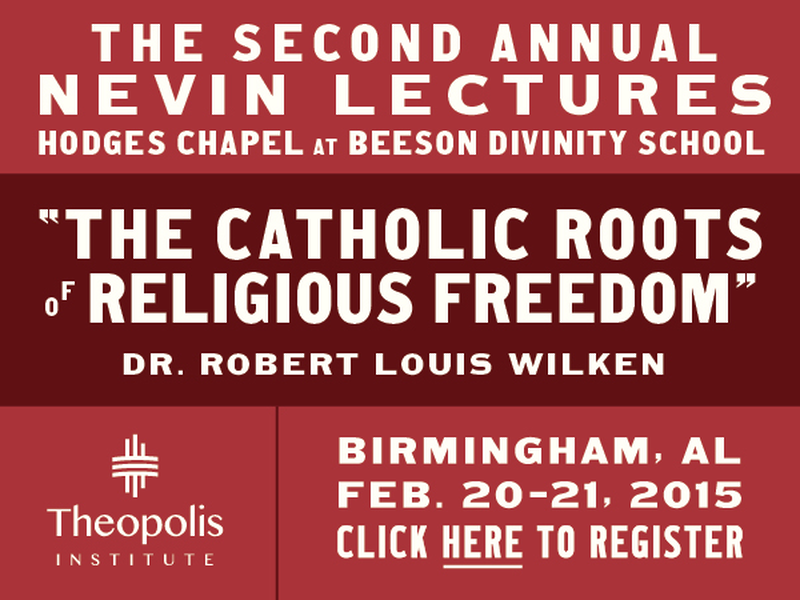
nevin_2015_square
Uncategorized

Second Annual Nevin Lectures

by TheopolisJanuary 13, 2015
emmanuel-phaeton-1bwmfmvybi8-unsplash
Psalms

Psalm 29

Click here to download the Translation Here we have the seven-fold Voice of Yahweh, bracketed by two sets of four lines about Yahweh. The central seven-fold Voice section uses "Yahweh" ten times, for a total in this psalm of eighteen usages of "Yahweh" (3 x 3 x 2). The psalm,…

by James B. JordanJanuary 13, 2015
tree-2
Creation

A Sabbath Conversation

As Adam and Eve walked to the Garden of Eden to meet with Yahweh on their first Sabbath they conversed about the origin and age of the earth. Adam: You know, honey, we spent a lot of time yesterday making preparations for this house, and we still have an awful…

by Jeff MeyersJanuary 13, 2015
mountain-top
Covenant

The Highest of the Mountains

Knowing His paths through Moses and David, in the darkness of the prophets we yet walk in His light. It shall come to pass in the latter days that the mountain of the house of the Lord shall be established as the highest of the mountains, and shall be lifted…

by Mike BullJanuary 8, 2015
bennet-sisters
Charity

Candor

These days, to be “candid” is to be frank, honest, genuine. But the word didn’t always mean that. It used to be the name for a virtue that we don’t really have a name for anymore. Its obsolete meaning is “kindliness”: a disposition to think well of others, a tendency…

by Leta SundetJanuary 7, 2015

Showing page 162 of 309

See all
See all
History

Between Burckhardt and Baynes

H.A. Drake’s Constantine and the Bishops: The Politics of Intolerance (Ancient Society and History) is a remarkable piece of work. One of his opening moves is to show how, despite clear and overt differences, both Burckhardt’s pure-political Constantine and Baynes’s sincere-Christian Constantine share common assumptions about politics and religion. He…

May 27, 2009

Blessed are the poor

Niebuhr has this nice harmonization of the Matthean and Lukan beatitude to the poor: “Both versions are necessary to catch the full flavor of the beatitude. For the Lukan version alone would make poverty a guarantee of virtue, particularly of the virtue of humility, which it is not. The Matthean…

May 27, 2009
Theology

Christian irony

Niebuhr claims that irony is inherent in the Christian view of history: Christianity’s “interpretation of the nature of evil in human history is consistently ironic. This consistency is achieved on the basis of the belief that the whole drama of human history is under the scrutiny of a divine judge…

May 27, 2009
History

American idealism

Niebuhr ( Irony ) quotes an unnamed European statesman who expresses gratitude for America’s help in resisting tyranny, but fear “that we might become an American ally.” America’s idealism doesn’t reassure him: “The idealism does indeed prevent America from a gross abuse of its power. But it might well accentuate…

May 26, 2009
History

Having and Being Empire

Charles Maier’s comparative study Among Empires: American Ascendancy and Its Predecessors reaches the waffly but accurate conclusion that the “United States reveals many, but not all - at least not yet - of the traits that distinguished empires.” Early on, he makes the helpful distinction between “being” and “having” an…

May 26, 2009
Uncategorized

Demoting the Emperor

Van Dam ( Roman Revolution of Constantine ) suggests that Eusebius’s Life was simultaneously a political tract celebrating the elevation of a Christian emperor and a theological apology promoting Eusebius’s Christological subordinationism. The afterlife of Eusebius’s treatise, though, put the emperors in their place. Rufinus’s translation/paraphrase of Eusebius’s Church History…

May 26, 2009

Showing page 1377 of 2212

Browse by Category

In Medias Res

Your weekly digest for all things Theopolis.

Donate

Theopolis is nearly 100% donor-supported. Consider joining us on our mission.