Theopolis Logo

Writing

Explore our collection of theological essays, biblical studies, and reflections on faith and culture.

See all
medievalilluminatedmanuscript
Biblical Studies

The Art of Why

“We have a God who hides things because He loves to be sought out, chewed out and found out.” As Christians, we are rightly taught that we must not question God’s Word. The problem is that the Scriptures record many things which appear to have been given to us for…

by Mike BullMay 12, 2015

last-supper
Revelation

Eucharistic Harvest

The book of Revelation is a liturgy. John begins “in the Spirit” on the “Lord’s day” (1:10). Jesus appears, and Jesus tells him to record messages to seven churches, words of encouragement and rebuke, like the call to worship and confession at the beginning of a Christian liturgy. In chapter…

by Peter LeithartMay 7, 2015
sunrise-2
Creation

Maker of Heaven and Earth, (Part 5)

In my previous posts, I looked at the theme of creation as it is found in a sequence of psalms devoted to Yahweh’s Kingship (Psalms 93-100). Among other matters, these psalms declare that when the Kingdom of Israel’s God comes, it is the Kingdom of the world’s own Creator .…

by Stephen LongMay 7, 2015
13071-probablyvalentindeboulogne-saintpaulwritinghi-1
Deuteronomy

Paul the Levir

The church in Corinth was a pastoral nightmare. Factionalism, sexual immorality, incipient syncretism, using the church as a stage for self-promotion, and denial of the final resurrection were just some of the problems. In Paul’s first letter to the Corinthian church, he confronts each of these problems directly and in…

by Bill SmithMay 5, 2015
creation-eve
Covenant

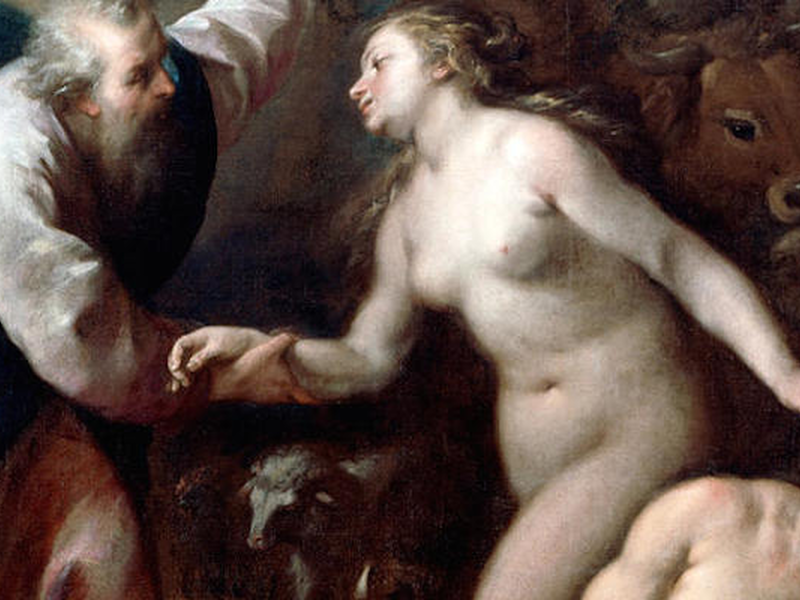
Covenant Structure in Genesis 2

The first chapters of the Word of God have a poetic rhythm. This is used to discredit their accuracy as historical narrative, but the truth is that these same rhythms continue far beyond the book of Genesis. In fact, the later texts shed light on the frustratingly succinct account of…

by Mike BullApril 30, 2015
light-bulb
Creation

Must A Light Bulb Be "Oriented Toward Illumination"?

Mr. Martian: What’s that there? Mr. Edison: (Edison holds up a standard, 60 watt lightbulb). It’s a lightbulb. Mr. Martian: A “lightbulb” you say? What exactly is a “lightbulb”? Mr. Edison: A lightbulb is an object used to illuminate a dark area, say a room. It’s made primarily of filament…

by Gerald HiestandApril 28, 2015

Showing page 154 of 309

See all
See all
Philosophy

Non-universal Universality

Daniel Barber ( Modern Theology ) notes that “particularity cannot be reduced to universality. Therefore we have a philosophical reason for approaching Jesus through particularity: sufficient reason, when conceived as universality, is insufficient; causal frameworks cannot negotiate sufficiently with elements of chance and contingency; ‘universality’ cannot be thought of as…

May 6, 2009
History

American militarism

Andrew Bacevich ( The New American Militarism: How Americans Are Seduced by War ) writes, “Americans in our time have fallen prey to militarism, manifesting itself in a romanticized view of soldiers, a tendency to see military power as the truest measure of national greatness, and outsized expectations regarding the…

May 5, 2009
History

American empire

Howe, again, points out that the most obvious “imperial” project in US history is the one we take most for granted, the conquest of the American continent: “it is the internal expansion of the continental USA, across the intervening hundred years, which evokes the most direct parallels with empire-building elsewhere.…

May 5, 2009
History

A Cheer for the Habsburgs

Stephen Howe ( Empire: A Very Short Introduction ) admits that nationalists in the Austro-Hungarian empire “scorned it as the ‘prison-house of nations,” and that to the intellectuals of Vienna, the empire was “a senile absurdity.” Still, “the very existence of those nationalist, cultural, and intellectual movements, able to express…

May 5, 2009
Politics

Dangers of Anti-Constantinianism

Gerald Schlabach notes that critiques of Constantinianism pose temptations of various sorts, just as Constantinianism itself does. Insofar as such critiques posit a “fall” for the church, “they tend to be dysfunctional - not just for ecumenical debate, but also for ethical discernment within those churches that historically have defined…

May 4, 2009
History

Yoder and Augustine

Travis Kroeker ( Journal of Religious Ethics , 2005) argues that Yoder is closer to Augustine than his dismissal of Augustine as a “Constantinianism” implies: “Augustine’s theological corpus is nothing if not exegetical and historical, though, of course, it is also true that Augustine freely appropriates the ‘gold and silver…

May 4, 2009

Showing page 1384 of 2212

Browse by Category

In Medias Res

Your weekly digest for all things Theopolis.

Donate

Theopolis is nearly 100% donor-supported. Consider joining us on our mission.