
Theopolis Logo

Writing

Explore our collection of theological essays, biblical studies, and reflections on faith and culture.

See all
foster-child
Adoption

Sometimes a Platitude is a Precious Gift

Platitudes are often sayings whose truthfulness is so apparent, so accepted, and so repeated that they are divested of their power and in fact become the object of ridicule. Their failure lies in their fame, and the contempt they invite is bred by their familiarity. To say that children are…

by Bill DeJongJanuary 15, 2015
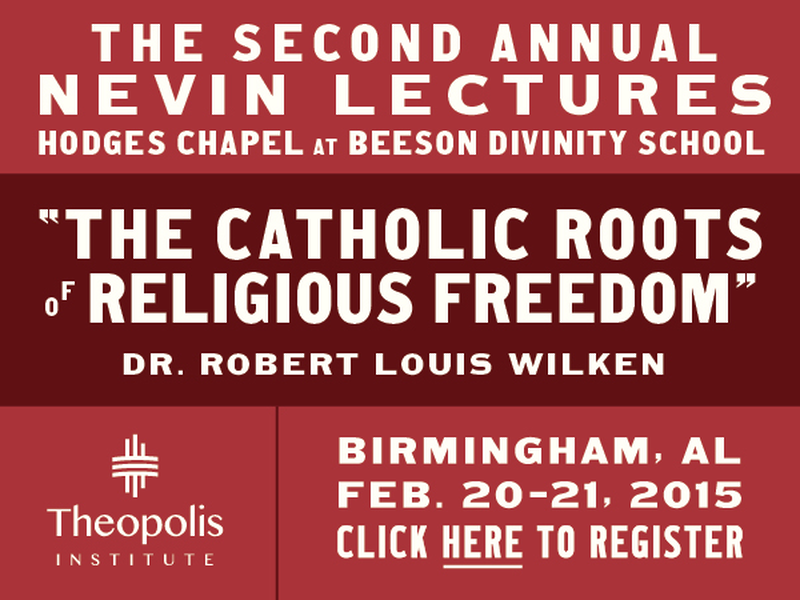
nevin_2015_square
Uncategorized

Second Annual Nevin Lectures

by TheopolisJanuary 13, 2015
emmanuel-phaeton-1bwmfmvybi8-unsplash
Psalms

Psalm 29

Click here to download the Translation Here we have the seven-fold Voice of Yahweh, bracketed by two sets of four lines about Yahweh. The central seven-fold Voice section uses "Yahweh" ten times, for a total in this psalm of eighteen usages of "Yahweh" (3 x 3 x 2). The psalm,…

by James B. JordanJanuary 13, 2015
tree-2
Creation

A Sabbath Conversation

As Adam and Eve walked to the Garden of Eden to meet with Yahweh on their first Sabbath they conversed about the origin and age of the earth. Adam: You know, honey, we spent a lot of time yesterday making preparations for this house, and we still have an awful…

by Jeff MeyersJanuary 13, 2015
mountain-top
Covenant

The Highest of the Mountains

Knowing His paths through Moses and David, in the darkness of the prophets we yet walk in His light. It shall come to pass in the latter days that the mountain of the house of the Lord shall be established as the highest of the mountains, and shall be lifted…

by Mike BullJanuary 8, 2015
bennet-sisters
Charity

Candor

These days, to be “candid” is to be frank, honest, genuine. But the word didn’t always mean that. It used to be the name for a virtue that we don’t really have a name for anymore. Its obsolete meaning is “kindliness”: a disposition to think well of others, a tendency…

by Leta SundetJanuary 7, 2015

Showing page 162 of 309

See all
See all
Philosophy

Non-universal Universality

Daniel Barber ( Modern Theology ) notes that “particularity cannot be reduced to universality. Therefore we have a philosophical reason for approaching Jesus through particularity: sufficient reason, when conceived as universality, is insufficient; causal frameworks cannot negotiate sufficiently with elements of chance and contingency; ‘universality’ cannot be thought of as…

May 6, 2009
History

American militarism

Andrew Bacevich ( The New American Militarism: How Americans Are Seduced by War ) writes, “Americans in our time have fallen prey to militarism, manifesting itself in a romanticized view of soldiers, a tendency to see military power as the truest measure of national greatness, and outsized expectations regarding the…

May 5, 2009
History

American empire

Howe, again, points out that the most obvious “imperial” project in US history is the one we take most for granted, the conquest of the American continent: “it is the internal expansion of the continental USA, across the intervening hundred years, which evokes the most direct parallels with empire-building elsewhere.…

May 5, 2009
History

A Cheer for the Habsburgs

Stephen Howe ( Empire: A Very Short Introduction ) admits that nationalists in the Austro-Hungarian empire “scorned it as the ‘prison-house of nations,” and that to the intellectuals of Vienna, the empire was “a senile absurdity.” Still, “the very existence of those nationalist, cultural, and intellectual movements, able to express…

May 5, 2009
Politics

Dangers of Anti-Constantinianism

Gerald Schlabach notes that critiques of Constantinianism pose temptations of various sorts, just as Constantinianism itself does. Insofar as such critiques posit a “fall” for the church, “they tend to be dysfunctional - not just for ecumenical debate, but also for ethical discernment within those churches that historically have defined…

May 4, 2009
History

Yoder and Augustine

Travis Kroeker ( Journal of Religious Ethics , 2005) argues that Yoder is closer to Augustine than his dismissal of Augustine as a “Constantinianism” implies: “Augustine’s theological corpus is nothing if not exegetical and historical, though, of course, it is also true that Augustine freely appropriates the ‘gold and silver…

May 4, 2009

Showing page 1384 of 2212

Browse by Category

In Medias Res

Your weekly digest for all things Theopolis.

Donate

Theopolis is nearly 100% donor-supported. Consider joining us on our mission.