Theopolis Logo

Writing

Explore our collection of theological essays, biblical studies, and reflections on faith and culture.

See all
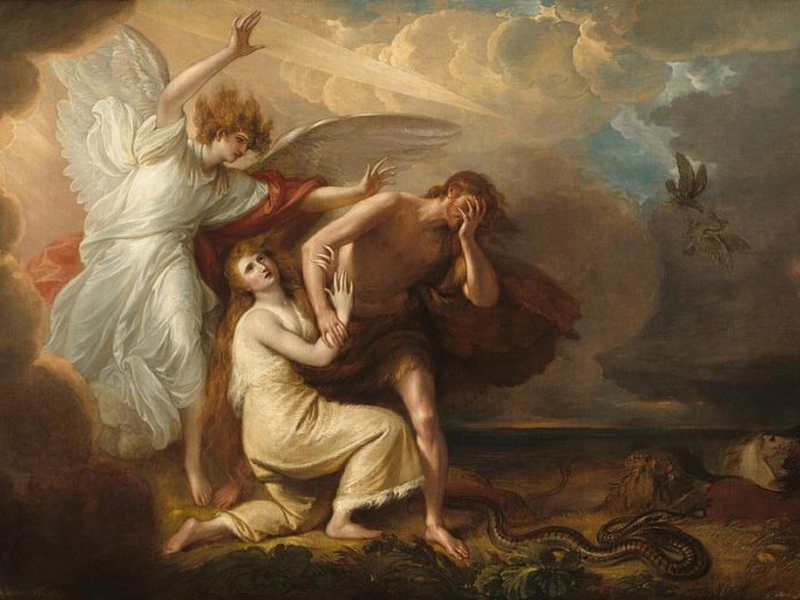
adam-and-eve-garden-768x512
Biblical Horizons

The Dominion Trap

In Genesis One, God told Adam and Eve to "be fruitful and multiply, and fill the earth, and subdue it; and rule over the fish of the sea and over the birds of the heavens, and over every living thing that moves on the earth" (Gen. 1:28). In Christian worldview…

by James B. JordanJuly 2, 1990

ivan-aleksic-16yxcjsoaek-unsplash
Biblical Studies

Building the Church

"And I also way to you that you are Peter, and upon this rock I will build My church; and the gates of Hades shall not overpower it" (Matthew 16:18). Matthew 16:13ff. has historically been one of the most oft-cited passages of Scripture. Throughout the Middle Ages, it was used…

by Peter LeithartJune 19, 1990
timothy-eberly-djj49s6ud2o-unsplash
Matthew

Ephraim in Redemptive History

One of the important themes of the synoptic gospels is Jesus’ rejection of Israel and the transfer of God’s favor to the New Israel, the Church. A clear statement of this theme is found in the parable of the vineyard owner in Matthew 21:33-46. Jesus explained the meaning of the…

by Peter LeithartJune 19, 1990
original
Biblical Horizons

Advice From a Sojourner, Part 7

11. There is a type of person [a generation] who curses his father, And does not bless his mother. 12. There is a type who is pure in his own eyes, Yet not washed from his filthiness [manure]. 13. There is a type — oh how lofty are his eyes!…

by James B. JordanJune 2, 1990
mick-haupt-eq2z9ay9wws-unsplash
Leviticus

A Male Without Defect

Under the Levitical law, whole-burnt offerings from the herd and flock had to be male. No such specification is made with respect to birds (cf. Lev. 5:7-10). Why did the Lord demand that only males be offered as whole-burnt offerings? The easy answer is that the whole-burnt offering typified Christ,…

by Peter LeithartMay 19, 1990
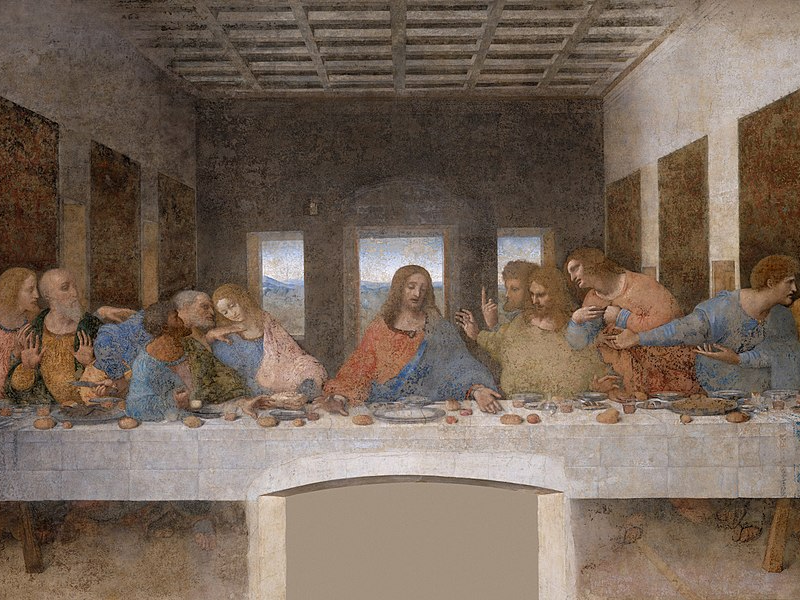
the_last_supper_-_leonardo_da_vinci_-_high_resolution_32x16
Matthew

He Shall Be Called A Nazarene

Matthew 2:13-23 has a tripartite structure, reporting briefly three events of the early years of Jesus’ life. Matthew ends his narrative of each event with a "fulfillment formula." Jesus’ flight to Egypt and His Exodus back into Israel was a fulfillment of Hosea’s words, "Out of Egypt I call my…

by Peter LeithartMay 19, 1990

Showing page 303 of 309

See all
See all
Philosophy

Non-universal Universality

Daniel Barber ( Modern Theology ) notes that “particularity cannot be reduced to universality. Therefore we have a philosophical reason for approaching Jesus through particularity: sufficient reason, when conceived as universality, is insufficient; causal frameworks cannot negotiate sufficiently with elements of chance and contingency; ‘universality’ cannot be thought of as…

May 6, 2009
History

American militarism

Andrew Bacevich ( The New American Militarism: How Americans Are Seduced by War ) writes, “Americans in our time have fallen prey to militarism, manifesting itself in a romanticized view of soldiers, a tendency to see military power as the truest measure of national greatness, and outsized expectations regarding the…

May 5, 2009
History

American empire

Howe, again, points out that the most obvious “imperial” project in US history is the one we take most for granted, the conquest of the American continent: “it is the internal expansion of the continental USA, across the intervening hundred years, which evokes the most direct parallels with empire-building elsewhere.…

May 5, 2009
History

A Cheer for the Habsburgs

Stephen Howe ( Empire: A Very Short Introduction ) admits that nationalists in the Austro-Hungarian empire “scorned it as the ‘prison-house of nations,” and that to the intellectuals of Vienna, the empire was “a senile absurdity.” Still, “the very existence of those nationalist, cultural, and intellectual movements, able to express…

May 5, 2009
Politics

Dangers of Anti-Constantinianism

Gerald Schlabach notes that critiques of Constantinianism pose temptations of various sorts, just as Constantinianism itself does. Insofar as such critiques posit a “fall” for the church, “they tend to be dysfunctional - not just for ecumenical debate, but also for ethical discernment within those churches that historically have defined…

May 4, 2009
History

Yoder and Augustine

Travis Kroeker ( Journal of Religious Ethics , 2005) argues that Yoder is closer to Augustine than his dismissal of Augustine as a “Constantinianism” implies: “Augustine’s theological corpus is nothing if not exegetical and historical, though, of course, it is also true that Augustine freely appropriates the ‘gold and silver…

May 4, 2009

Showing page 1384 of 2212

Browse by Category

In Medias Res

Your weekly digest for all things Theopolis.

Donate

Theopolis is nearly 100% donor-supported. Consider joining us on our mission.