Theopolis Logo

Writing

Explore our collection of theological essays, biblical studies, and reflections on faith and culture.

See all
or
Abortion

Political Hermeneutics: The Argument From Silence, Part 2

Click HERE for part 1. III This leads to a further question. I have argued that silence cannot by itself establish a Scriptural principle, but does Scripture’s silence carry any weight in itself? Does the fact that something is unbiblical in a weak sense tell us anything at all? In…

by Peter LeithartMarch 13, 1990

hebrew-manuscript-6
Biblical Chronology

Groping Through the Gaps

Although nowadays gap theories are associated with dispensationalism, it was not always so. In the nineteenth century, scholars from a variety of backgrounds (Anglican, Reformed, and proto-fundamentalist) seem to have become fascinated by gaps. If you are not familiar with what I am talking about, this newsletter will acquaint you…

by James B. JordanFebruary 26, 1990
or
Abortion

Political Hermeneutics: The Argument from Silence, Part 1

If the debate over Operation Rescue has proven anything, it has proven that there is absolutely no consensus among evangelicals in general, or among "reconstructionists" in particular, about how to use the Bible to judge political actions and movements. Each side of the debate claims biblical authority for its position,…

by Peter LeithartFebruary 13, 1990
49980-nicolas_poussin_-_the_judgment_of_solomon_-_wga18330-800w-tn
Biblical Studies

Advice From a Sojourner, Part 4

Two things I asked of Thee, Do not refuse me before I die: Keep deception and words of falsehood far from me, Give me neither poverty nor riches, Feed me with the food that it my portion, Lest I be full and deny Thee, And say, "Who is the LORD?"…

by James B. JordanFebruary 2, 1990
image-2
Biblical Horizons

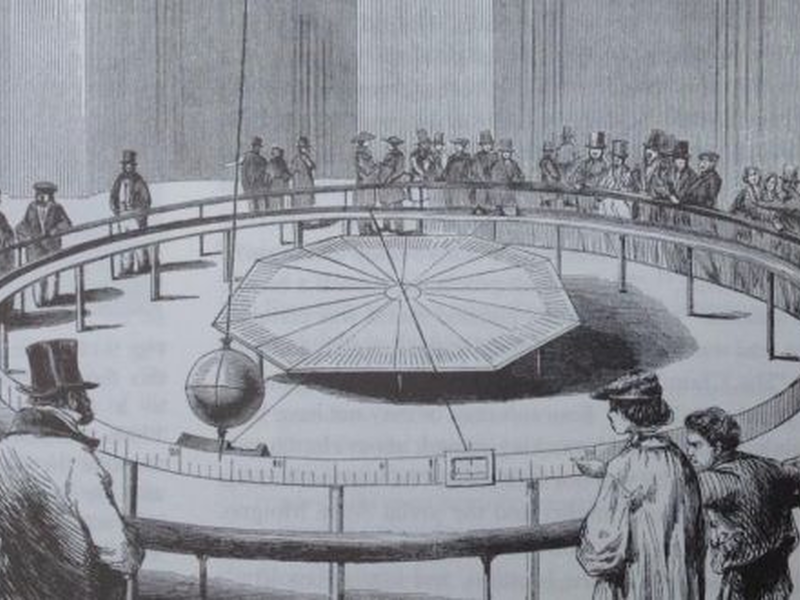
Foucault’s Pendulum

Umberto Eco’s "The Name of the Rose" was certainly one of the best literary works of the past decade, though the film version hardly measured up to it. Now Eco has given us a new novel, "Foucault’s Pendulum." Like Rose, Foucault’s Pendulum reflects on the limitations of human knowledge, and…

by James B. JordanJanuary 26, 1990
tanner-mardis-xuxghzhibn4-unsplash-1-2
Biblical Studies

What Is “Interpretive Maximalism”?

From time to time people ask me about "interpretive maximalism." They want to know what it is, and sometimes want to know if it represents some departure from the Reformed grammatico-historical, Biblico-theological approach to the Bible. I have something of a problem with these questions, because "interpretive maximalism" is not…

by James B. JordanJanuary 26, 1990

Showing page 305 of 309

See all
See all
Politics

Against Rawls

John Gray begins his Enlightenment’s Wake with a breathtaking dismissal of neo-liberal political philosophy (the chapter is “Against the new liberalism”). I found it thrilling, and not just because I have a weakness for titles that begin with “Against.” A few highlights: “It is arguable that the traditional of liberal…

December 24, 2008
History

Cities of God

In the introduction to his 2005 book, Cities of God , Augustine Thompson complains that medievalists have paid too little attention to the religious lives of orthodox laymen: “Heretics, popes, theologians, Franciscans, and saints. Where is everyone else?” His book studies the communes of medieval Italian cities partly to redress…

December 23, 2008

Days of John

Reacting to my earlier post on the week of John 1-2, John Barach offers a (needed) lesson in counting: It seems to me that the wedding at Cana has to be taken as the eighth day for two reasons. First, the parallels with the seven days of creation make it…

December 23, 2008

Lots Again

A friend and former student, Aaron Cummings. offers more thoughts on the lot-scapegoat connection: 1) Saul cast lots for Jonathan when we he sinned. Saul sinfully saw Jonathan as a new Achan, a man whose sin affected the congregation. Saul like Joshua uses lots to root out the sin. 2)…

December 23, 2008
History

City of Commerce

Cities dominated by commerce are offensive to many today, but historically a city of commerce is a city of peace, a city that has escaped the domination of military elites and interest. Weber wrote: “While in Antiquity the hoplite army and its training and military interests moved to the center…

December 22, 2008
Politics

Gifts of power

Power and gift seem to be opposed to each other, but Milbank argues that true rule is always donative, always a gift of ruling. This is partly a matter of power-sharing, and obvious once the point is made: A ruler who does not share rule is, by definition, a tyrant;…

December 22, 2008

Showing page 1433 of 2212

Browse by Category

In Medias Res

Your weekly digest for all things Theopolis.

Donate

Theopolis is nearly 100% donor-supported. Consider joining us on our mission.