Theopolis Logo

Writing

Explore our collection of theological essays, biblical studies, and reflections on faith and culture.

See all
rembrandt-main
Art

The Second Word V: On Images and Art, Part 3

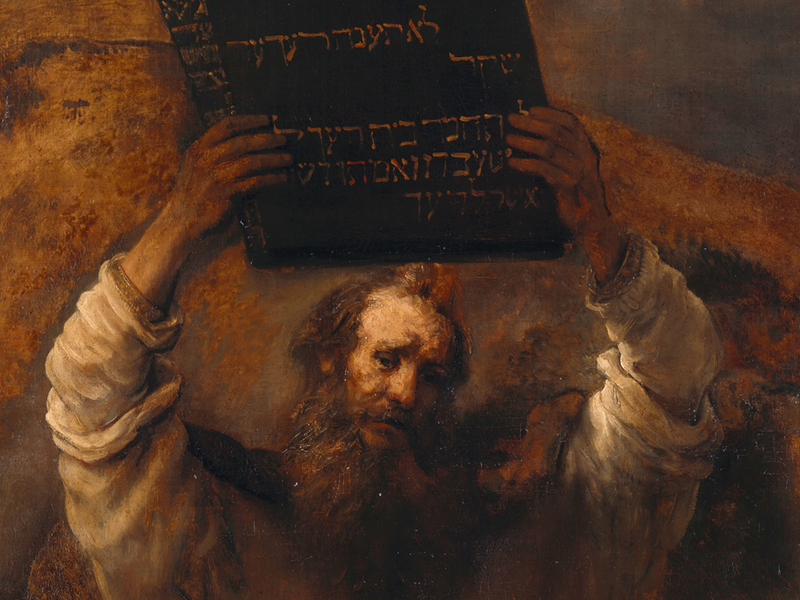
The Failure of the Church Yet a third factor played an important role in this historical development, in addition to the imperial adoption of icons and the rise of the icons of the holy man. Brown writes: "The great Christian basilicas of the previous centuries tended to stand empty, except…

by James B. JordanSeptember 4, 1998

screenshot-2023-09-11-at-11-34-45-am
Biblical Horizons

Patriarchal Dominion

The three large patriarchal narratives of Genesis concern the three aspects of the cosmos: matter, space, and time. Over these three is man given dominion. Lucifer was originally appointed to train man in this dominion, but he chose to lead man into rebellion instead. Thus, the Angel of Yahweh replaced…

by James B. JordanAugust 4, 1998
trnava-university-beeyeib-am8-unsplash
Biblical Horizons

The Case Against Western Civilization, Part 6

Part 6: Living in a Dying World (continued) The "Trivium" (continued) The five stages of education are simply the five stages of the covenant as God administers it in human life and history, and in the liturgy of covenant renewal: First, God announces Himself. "I am Yahweh Your God." He…

by James B. JordanAugust 4, 1998
screen-shot-2022-05-12-at-12-07-23-pm
Biblical Studies

Re-creation in the Ascension Offering

The following essay is tentative and exploratory, offered for your consideration. It seems to me that the ritual of the Ascension Offering (incorrectly translated as Burnt Offering) of Leviticus 1 is a symbolic recapitulation of Genesis 1, which thereby portrays the sacrificial ritual as way of moving from a fallen…

by James B. JordanJuly 4, 1998
Biblical Horizons

The Framework Hypothesis: A Gnostic Heresy

Just as the vast majority of evangelical Christians in America today are Arminian and Baptist, so the vast majority do not believe in a creation around 4000 BC. I don’t expect any of these three situations to change anytime soon. Powerful presuppositions are at work in all three instances, along…

by James B. JordanJuly 4, 1998
picture-mosaic-cathedral-jesus-christ-cefalu-italy-copy
Art

The Second Word V: On Images and Art, Part 2

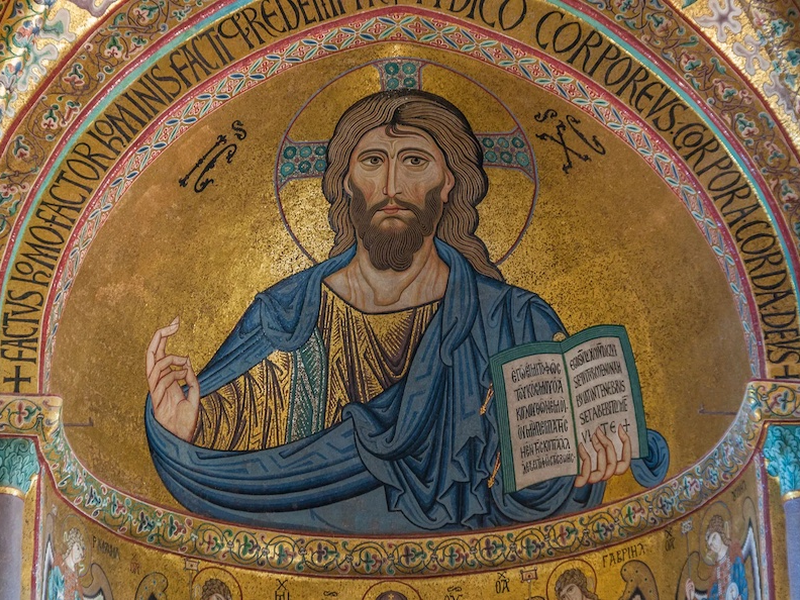
The Iconoclastic Controversy Continuing Pagan Influence How did images creep in? To begin with, there was in the post-Constantinian Church a concerted effort on the part of the semi-pagans to interpret Christianity in essentially pantheistic terms. The heretics put God and man on a continuum of "being," so that God…

by James B. JordanJuly 4, 1998

Showing page 248 of 309

See all
See all

Consider the olive

Constantine says that some created things “possess wonderful properties, and the full apprehension of which is very difficult. Like hot springs. Or “the fruit of the olive-tree and the vine,” which “deserve especial notice; the one for its power of renovating and cheering the soul, the other because it ministers…

December 3, 2008
History

Empires of trust

Thomas Madden offers a contrarian analysis of American and Roman empire in his recent book, Empires of Trust . Most empires in history, he says, “have sought to build their power in whatever way they can, making war on their neighbors when it seems advantageous and continuing to do so…

December 3, 2008
History

Channeling Strauss

In another part of his oration, Constantine analyzes Virgil’s famed Fourth Eclogue, which Christians often took as a pagan prophecy of Christ. Constantine believes that it’s a deliberate prophecy, but one he deliberately obscured for fear of persecution: “these words are spoken plainly and at the same time darkly, by…

December 3, 2008

Ontology of violence

Constantine (of all people) provides a neat little analysis of the violent ontology of polytheism is his Good Friday oration, which Eusebius appended to the Life of Constantine : if the dominion of these [created] things, numberless as they are, were in the hands, not of one but of many,…

December 3, 2008
Biblical Studies

Mission and culture

The First Things web site today posted some of my biblical-theological reflections on missions and culture: http://www.firstthings.com.

December 2, 2008

Hebrews and Odyssey

Of course Hebrews is written to Hebrews, not to Greeks. But there are suggestive echoes of the proem of the Odyssey in the opening chapters of the letter. The first words of the letter, polymeros kai polytropos , remind me of Homer’s first description of his hero - polymetis ,…

December 2, 2008

Showing page 1440 of 2212

Browse by Category

In Medias Res

Your weekly digest for all things Theopolis.

Donate

Theopolis is nearly 100% donor-supported. Consider joining us on our mission.