Theopolis Logo

Writing

Explore our collection of theological essays, biblical studies, and reflections on faith and culture.

See all
kelly-sikkema-aageorr0iqs-unsplash
Lent

Embrace Pessimism

Optimism is “an inclination to put the most favorable construction upon actions and events or to anticipate the best possible outcome.” 1 On the other hand, pessimism is “an inclination to emphasize adverse aspects, conditions, and possibilities or to expect the worst possible outcome.” We can see that optimism and…

by Bogumil JarmulakFebruary 21, 2024

michael-hamments-0vzptqdw2-i-unsplash-1
Biblical Theology

2 Trees of Eden & What They Mean: Knowledge of Good & Evil vs. Life

If we wish to understand the Tree of Life and the Tree of the Knowledge of Good and Evil, we must begin with seeing them as a part of the creational order. Trees, along with plants and seed-bearing things, come to life by the word of God as part of…

by Mark BriansFebruary 13, 2024
screenshot-2024-02-06-at-5-44-53-pm
Death

Training to Die

“I chant slips and irreversible disasters, wiltings, failures, scars, the little disappointments and the large, blue streaks down a world that wishes it was only suncolors.” Paul J. Pastor from Kintsugi Song I recently lost something very valuable. Something I’d had for years and used every day. But, it wasn’t…

by Mandi GerthFebruary 7, 2024
screenshot-2024-01-11-at-2-38-07-pm
Jonah

Jonah’s Backward Exodus

In his eponymous book, Jonah follows an exodus pattern. He travels through the waves and east of the city into the wilderness. On a first reading, it looks like another use of this common literary shape in the Old Testament: salvation through the waters of death and the wilderness of…

by Tim SuffieldJanuary 30, 2024
johann-siemens-epy0gbjzzzu-unsplash
Revelation

Where is the Tree of Knowledge in New Jerusalem?

“Everyone serves the good wine first, and when people have drunk freely, then the poor wine. But you have kept the good wine until now.” The unknowing master of ceremonies didn’t know how right he was. We see this play out in John’s apocalypse. The end is like the beginning,…

by David AppoldJanuary 23, 2024
sincerely-media-gf0ngcju5lw-unsplash
Luke

The Test of Adultery

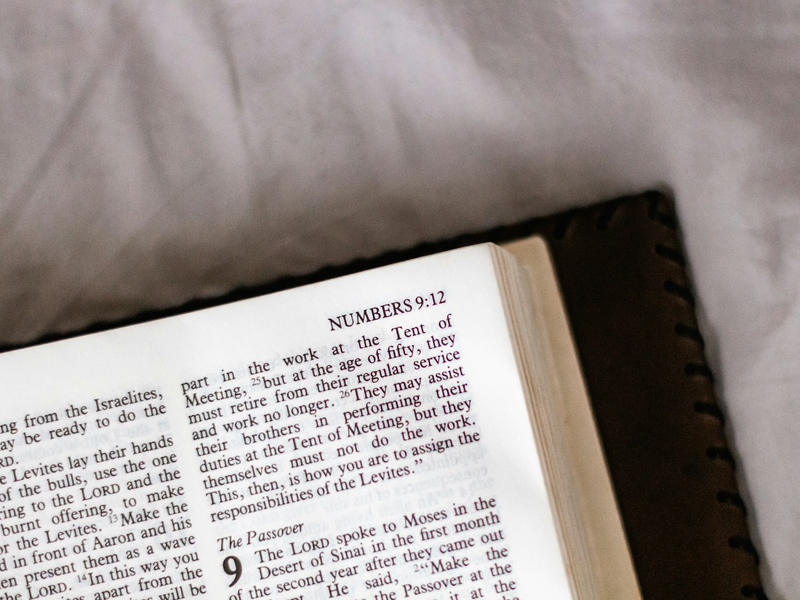
Read in isolation, The Test of Adultery (Num 5:11-31) presents the reader with a seemingly bizarre ritual, conjuring up ideas bordering on the Salem Witch Trials. Beyond this, pressing questions linger—such as, “Why is the woman in particular singled out, while no test is provided for the husband of a…

by Ben LoveladyJanuary 17, 2024

Showing page 23 of 309

See all
See all
Science

Devil’s Delusion

Of all the people I’ve seen on film recently, the one I’d most want to be is David Berlinski, whom Ben Stein interviewed extensively in his Paris apartment that reeked with sophistication and culture. Berklinski, by his own definition a “secular Jew” with no memory of Hebrew, has just published…

May 21, 2008

Obama’s subtexts

In an intriguing piece in TNR , writer Cinque Henderson - who identifies himself as one of the few remaining Clinton supporters among African-Americans - explains Obama’s use of “hoodwinked” and “bamboozled” (not the first words to spring to Obama’s lips, one would think) in the South Carolina primary: “It…

May 21, 2008
Philosophy

Flat souls

Kristeva says that contemporary culture separates affects from language, which leads to a loss of soul. Souls are empty. To help, our culture offers drugs and entertainment. Drugs flatten experience to a drone; entertainment dazzles momentarily with two-dimensional images. So do our solutions increase the problem. Flat remedies for flat…

May 20, 2008

Body/Language

Kristeva’s distinction of semiotic and symbolic is intended to overcome the dualism of traditional linguistic theories, the dualism of body and language, or matter and language. For Kristeva, the “semiotic” is the way drives are organized or “discharged” in language, and thus includes everything that is meaningful in language but…

May 20, 2008

Langue without speakers

Julia Kristeva notes that Saussure’s linguistic theory permits “linguistics to claim a logical, mathematical formalization on the one hand, but on the other, it definitely prevents reducing a language or text to one law or one meaning.” This latter point is true because by splitting the sign into signified and…

May 20, 2008

Limits of Dialectic

Desmond thinks that dialectic makes some gains: It affirms the “complex sense of unity,” appreciates mediation, critiques dualism, defends the “interplay and community of immanence and transcendence.” But dialectic cannot be the final moment of metaphysics. Why? “The problem is that if we privilege self-mediation and erect this into the…

May 20, 2008

Showing page 1516 of 2212

Browse by Category

In Medias Res

Your weekly digest for all things Theopolis.

Donate

Theopolis is nearly 100% donor-supported. Consider joining us on our mission.