Theopolis Logo

Writing

Explore our collection of theological essays, biblical studies, and reflections on faith and culture.

See all
temp_bg
Biblical Studies

Biblical Allusion and the Meaning of Othello

Understanding Shakespeare’s Biblical references is vital for the interpretation of many, if not all, of Shakespeare’s plays. For Othello , it is especially important, not only because the interpretation of the play is contested among various approaches — feminist, homosexual, post-colonial, Marxist, Freudian, new historical, and others — but also…

by Ralph Allan SmithJune 16, 2017

e99a9492-2
Ecclesiology

Attaining Unity: A Reply to Mike Allen

Mike Allen of Reformed Theological Seminary, Orlando, scores some points in his review of The End of Protestantism . He lodges the fair complaint that my rhetoric sometimes outruns my evidence. He argues that more stress on the present reality of the church’s unity deepens the tragedy of division; divisions…

by Peter LeithartJune 13, 2017
trinity-1-2
Eschatology

Comic Trinity

I begin with two observations. First, on any millennial view, the Christian account of history is progressive, moving from the garden to the city. It is eschatological not only in that there is an end, but that the end is a glorified beginning, not merely a return to origins. To…

by Peter LeithartJune 8, 2017
e99a2225
Ecclesiology

Political Church

The church is a new form of polity that erupts into the world as much as the Son of God comes into the world. It’s a real-world political alternative to the polities of the ancient world. It resolves many of the political dilemmas of the ancient world, though not simply…

by Peter LeithartJune 6, 2017
img_1456
Baptism

Baptism Impasse: Baptists vs. Presbyterians, (Part 2)

In my last post , I explained how Baptists really have a “one-ordinance-one sacrament” ecclesiology. I said this: “what Baptists really believe, in modern parlance, is that there is one ordinance (baptism which is a sign or symbol only) and one sacrament (the Lord’s Supper in which feeding upon Jesus…

by Mani MarprelateMay 30, 2017
medieval-knights
Political Theology

Obedience of Rulers

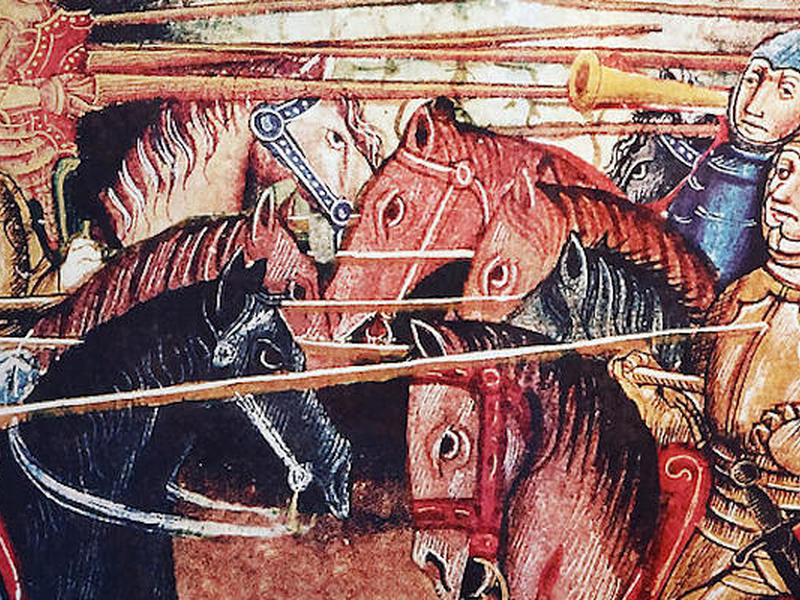
One of the most extensive and penetrating responses to the Yoder-Hauerwas attack on Constantiniansm is found in Oliver O’Donovan’s Desire of Nations , in a chapter entitled “The Obedience of Rulers.” O’Donovan defines the word “Christendom” as “a historical idea,” specifically “the idea of a professedly Christian secular political order,…

by Peter LeithartMay 30, 2017

Showing page 111 of 309

See all
See all
Philosophy

Idiocy

Desmond offers an intriguing argument for a unified self, for an “idiotic” self in the original sense of idiotes , what is one’s own. There is an irreducible “mineness” to all our actions and experience, a mineness that cannot be reduced to categories or analyzed in terms of outside forces:…

May 14, 2008
Philosophy

Ontological Metaphor

Desmond takes another enthralling step. If “seeing is” may be “seeing is,” then metaphor might reveal being. “Metaphor may be a revelation of reality. Metapherein - the thing carries itself across to revelation, metaphorizes itself; this is its spread beyond univocal identity. In its self-metaphorizing, it reaches out to more,…

May 14, 2008
Philosophy

Definiteness and dynamism

It might seem that saying things have determinate qualities undermines their dynamism, while emphasizing things dynamism of things fuzzies all the boundaries to the point where there are no things at all. Desmond, again, demurs. We cannot have a pure flux without any determinacy, because then “there would be no…

May 14, 2008
Philosophy

Diminished things

Modern thought is often materialist. Whatever happens to spirit in such an outlook, at least we’ve got things left. Right? Not so, argues William Desmond ( Being and the Between ) . The doctrine of primary and secondary qualities, he says, is a “classic bifurcation of thinghood into two extremes…

May 14, 2008
Philosophy

More on Identities

As I noted a few weeks ago, Nobel Laureate Amartya Sen points out that everyone has multiple identities, and that these identities slip into the foreground and background in different settings. At a family reunion, our family identity is prominent. At a political rally, family identity recedes as we join…

May 14, 2008

Limited historicism

In separating philosophy and theology, Spinoza mounts a kind of historicist critique of the Bible; its authors are bound by the assumptions of their time and culture. Besides that, the Bible and philosophy are completely different in method and style; the Bible is narrative, and its truth depends on the…

May 13, 2008

Showing page 1519 of 2212

Browse by Category

In Medias Res

Your weekly digest for all things Theopolis.

Donate

Theopolis is nearly 100% donor-supported. Consider joining us on our mission.