Theopolis Logo

Writing

Explore our collection of theological essays, biblical studies, and reflections on faith and culture.

See all
or
Abortion

Political Hermeneutics: The Argument From Silence, Part 2

Click HERE for part 1. III This leads to a further question. I have argued that silence cannot by itself establish a Scriptural principle, but does Scripture’s silence carry any weight in itself? Does the fact that something is unbiblical in a weak sense tell us anything at all? In…

by Peter LeithartMarch 13, 1990

hebrew-manuscript-6
Biblical Chronology

Groping Through the Gaps

Although nowadays gap theories are associated with dispensationalism, it was not always so. In the nineteenth century, scholars from a variety of backgrounds (Anglican, Reformed, and proto-fundamentalist) seem to have become fascinated by gaps. If you are not familiar with what I am talking about, this newsletter will acquaint you…

by James B. JordanFebruary 26, 1990
or
Abortion

Political Hermeneutics: The Argument from Silence, Part 1

If the debate over Operation Rescue has proven anything, it has proven that there is absolutely no consensus among evangelicals in general, or among "reconstructionists" in particular, about how to use the Bible to judge political actions and movements. Each side of the debate claims biblical authority for its position,…

by Peter LeithartFebruary 13, 1990
49980-nicolas_poussin_-_the_judgment_of_solomon_-_wga18330-800w-tn
Biblical Studies

Advice From a Sojourner, Part 4

Two things I asked of Thee, Do not refuse me before I die: Keep deception and words of falsehood far from me, Give me neither poverty nor riches, Feed me with the food that it my portion, Lest I be full and deny Thee, And say, "Who is the LORD?"…

by James B. JordanFebruary 2, 1990
image-2
Biblical Horizons

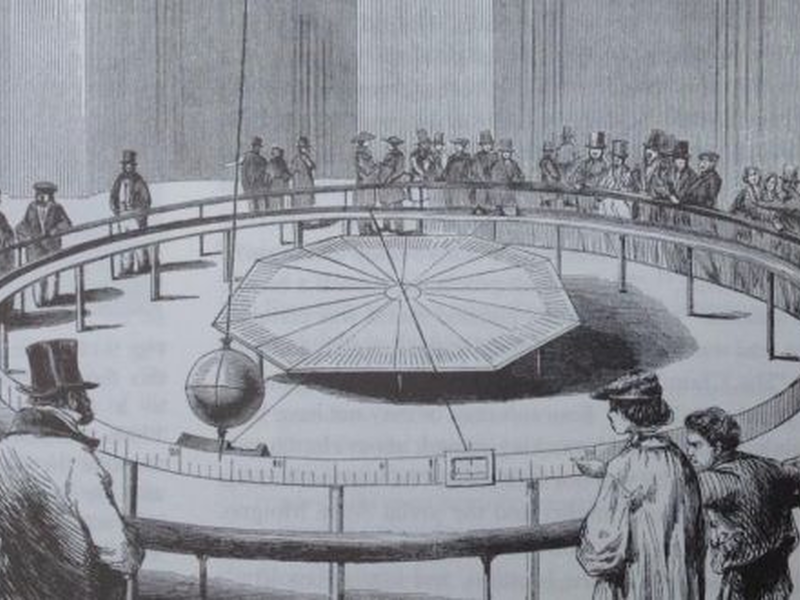
Foucault’s Pendulum

Umberto Eco’s "The Name of the Rose" was certainly one of the best literary works of the past decade, though the film version hardly measured up to it. Now Eco has given us a new novel, "Foucault’s Pendulum." Like Rose, Foucault’s Pendulum reflects on the limitations of human knowledge, and…

by James B. JordanJanuary 26, 1990
tanner-mardis-xuxghzhibn4-unsplash-1-2
Biblical Studies

What Is “Interpretive Maximalism”?

From time to time people ask me about "interpretive maximalism." They want to know what it is, and sometimes want to know if it represents some departure from the Reformed grammatico-historical, Biblico-theological approach to the Bible. I have something of a problem with these questions, because "interpretive maximalism" is not…

by James B. JordanJanuary 26, 1990

Showing page 305 of 309

See all
See all

Boaz the Bridegroom

Boaz is the type of the bridegroom who marries Ruth in order to raise up a seed for the old and widowed Naomi. James Jordan says Ruth is a substitute bride, because the firstborn seed is her seed, and leads to the redeemer that comes into the world. Typologically: The…

February 27, 2008

Moral and Social

According to Oliver O’Donovan, Book 19 of City of God “is, at the very least, an essay to demonstrate that moral philosophy must be social philosophy.” The highest good for Augustine is the peace of the city of the blessed, and this is an inherently social reality. Since virtuous action…

February 26, 2008
History

Anti-Festive Sabbath

Reflecting on Simmons’s stimulating article on Malvolio: He points out that by the 1590s, Sabbatarianism had become what Christopher Hill characterized as a shibboleth of Puritanism. Yet, at the time of Shakespeare’s play, Puritanism had also become popularly associated with hostility to jollity and festivity. Make all necessary allowances for…

February 26, 2008
Literature

Malvolio the Puritan

Malvolio is expressly described as a “Puritan” in Twelfth Night , and the description is apt given Malvolio’s stern hostility to frivolous entertainments. Shakespeare is offering a parody of Puritan opposition to the theater. The satire is sharp: Puritans were opposed to the cross dressing inherent in Elizabethan theater (boys…

February 26, 2008

Daughter Ruth

Boaz calls Ruth “my daughter,” even when they are lying together at night with Boaz’s feet uncovered. The whole book is about the levirate institution, and refracts again and again off the story of Judah and Tamar in Genesis 38. Ruth is a new Tamar, who was “more righteous” than…

February 25, 2008

No Name

At the beginning of Ruth 4, Boaz takes a seat at the gate, the place of courts and judgments. The nearer kinsman happens by, and Boaz greets him. Lawson Younger points out that the common translation of his greeting, “friend,” doesn’t capture the Hebrew, which is a farrago, a nonsense…

February 25, 2008

Showing page 1561 of 2212

Browse by Category

In Medias Res

Your weekly digest for all things Theopolis.

Donate

Theopolis is nearly 100% donor-supported. Consider joining us on our mission.