Theopolis Logo

Writing

Explore our collection of theological essays, biblical studies, and reflections on faith and culture.

See all
screen-shot-2019-09-03-at-7-00-44-am-2
Biblical Studies

Genesis 38 from Multiple Angles (Part 2)

Summary : The Bible is a multi-faceted text. As a result, it can fruitfully be analyzed in many ways. Pace, context, flow, imagery: all of these aspects of the Biblical text are significant and instructive. Here, by way of illustration, I analyze Gen. 38 in a range of different ways,…

by James BejonOctober 22, 2019

screen-shot-2019-09-03-at-7-00-44-am-2
Hermeneutics

Genesis 38 from Multiple Angles (Part 1)

Summary: The Bible is a multi-faceted text. As a result, it can fruitfully be analysed in many ways. Pace, context, flow, imagery: all of these aspects of the Biblical text are significant and instructive. Here, by way of illustration, I analyse Gen. 38 in a range of different ways, and…

by James BejonOctober 15, 2019
eco-warrior-princess-tsoeguwwzwo-unsplash
Biblical Theology

Church Planting as Garden Growing

The closing chapters of the Bible bring to fulfillment the mission inaugurated in the opening chapters of the Bible: the dwelling place of God expands to fill the entire new creation. The story of Scripture concludes having achieved God’s original intent for His people in the Garden of Eden, and…

by Drew KnowlesOctober 8, 2019
annie-spratt-rx1ij59jryu-unsplash
Economics

Gift Economies Aren't So Giving

Oddly, the nature of pre -modern economies plays a central role in today’s policy debate over economic globalization and neo-liberalism. Analysts take ancient non-market economies as the standard against which to measure the economic and social effects of the market system. Scholars compare the distribution of economic goods and services…

by James R. RogersOctober 1, 2019
20121120_1642723459__76354-1391444640-1280-1280-1014x487
Luke

Zacchaeus, (Part 2)

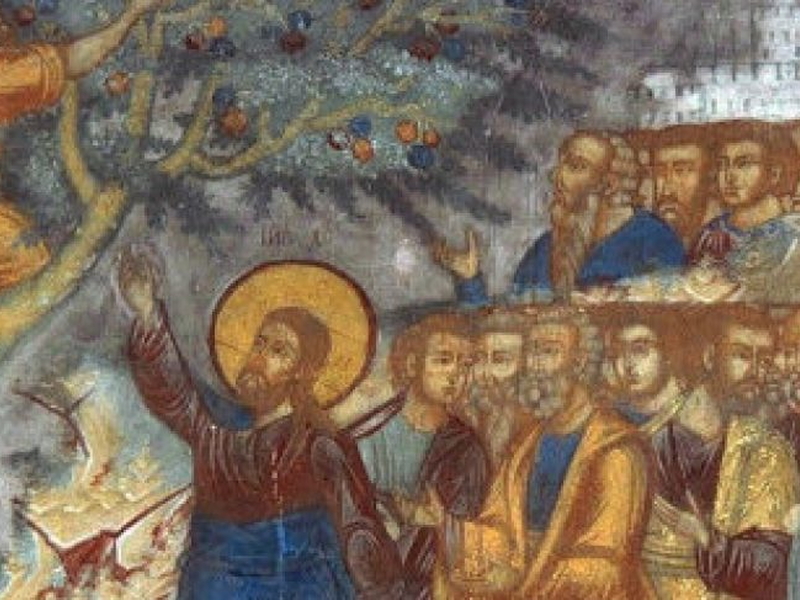
In part one of this essay, I mentioned that the story of Zacchaeus includes not only many details that point to other passages in Luke, but also details that point to the Old Testament, though we might not initially think of them. The first detail I have in mind is…

by Ralph Allan SmithSeptember 24, 2019
20121120_1642723459__76354-1391444640-1280-1280-1014x487
Luke

Zacchaeus (Part 1)

The story of Zacchaeus includes numerous interesting details that link this story with others in the Gospel of Luke. There are also details that tie the story of Zacchaeus to the Old Testament in ways that we might not initially take note of. In the Gospel of Luke, the story…

by Ralph Allan SmithSeptember 17, 2019

Showing page 74 of 309

See all
See all
History

Jewish/Non-Jewish Gnosis

In his history of Christianity, August Neander distinguished between gnostics who arose from within Judaism and those whose inspiration came from “Oriental” modes of thought. Here is his description of the Jewish sources of gnosticism: In the following respect, all these Gnostics agree ; they all held . . .…

December 21, 2007
History

Gnosticism and Samaritan theology

A few scattered notes from Jarl Fossum’s book examining the links between the figure of the “angel of Yahweh” in Samaritan theology and the “demiurge” of gnosticism. 1) Fossum points out that Simon Magus, legendarily the fountain of Gnosticism, venerated the Torah, and that some of the church Fathers said…

December 21, 2007
History

Gnosticism and Jewish Revolt

In a 2006 book on the origins of gnosticism, Carl B. Smith offers an alternative account of the connections of Judaism and gnosticism. According to the JETS reviewer: Smith “proposes that gnosticism arose in a social context of ‘alienated Judaism’ influenced by Greco-Roman and early Christian ideas in the aftermath…

December 21, 2007

Gnosticism and AD 70

In a book published in 1959, R. M. Grant attempted “to explain Gnosticism as arising out of the debris of apocalyptic-eschatological hopes which resulted from the fall or falls of Jerusalem.” According to a reviewer in Theology T0day , “Grant stresses the Jewish element which, as he rightly says, has…

December 21, 2007
History

Yahweh/Kronos

Origen says that the Ophite demiurge had the face of a lion and was connected with Saturn, and this has led some scholars to conclude that Jaldabaoth was a combination of Baal and Kronos. John of Damascus says that the Phoenicians held Kronos to be a kind of demiurge, and…

December 21, 2007
History

Jaldabaoth

According to Alfred Honig (writing in the late 19th century), the Ophite name for the demiurge, Jaldabaoth, comes from a Hebrew phrase meaning “child of chaos,” and the etymology goes back at least to the 1820s. Scholem argued, however, that the name was invented by a Jew and is a…

December 21, 2007

Showing page 1592 of 2212

Browse by Category

In Medias Res

Your weekly digest for all things Theopolis.

Donate

Theopolis is nearly 100% donor-supported. Consider joining us on our mission.