Theopolis Logo

Writing

Explore our collection of theological essays, biblical studies, and reflections on faith and culture.

See all
preston-goff-xncifslw0jw-unsplash
Catholicism

Outgrowing Protestant Adolescence

The Protestant-Catholic relationship has hardly been an untroubled one. And yet, the possibilities for various layers of reconciliation are better then at any time since the original schism 500 years ago. One of the symbols for the church that is used in Scripture is the church as a household (Ephesians…

by Richard BledsoeMay 5, 2014

screen-shot-2022-05-12-at-12-07-23-pm
Leviticus

Two Shall Become One Flesh, (Part 3): Realizing Recovering

Despite the layers of wiping, covering, and ransoming during the Day of Recoverings, true unity still has not been achieved. Divorce is still possible; God still might leave his people. Thus the Day of Recoverings must be repeated every year. The perpetual expression of unity between God and man in…

by Ryan HandermannApril 30, 2014
skyler-gerald-akljfvj5ym4-unsplash
Leviticus

Two Shall Become One Flesh, (Part 2): The Day of Recoverings

The events of Leviticus 16 are commonly known as “The Day of Atonement,” from the Hebrew phrase yom hakippurim, in Leviticus 23:27. However, it would be more accurate to say, “The Day of Atonements,” [i] since the word is plural. The plurality primarily relates to 16:33, which states five different…

by Ryan HandermannApril 29, 2014
aaron-burden-h8s0pf2rcqs-unsplash
Leviticus

Two Shall Become One Flesh, I: Atonement and Eschatology

Mary Douglas, against the common notion that primitive religious rituals were illogical and random asserts, “The analysis of ritual symbolism cannot begin until we recognize ritual as an attempt to create and maintain a particular culture … Any culture is a series of structures which comprise social forms, values, cosmology,…

by Ryan HandermannApril 23, 2014
Revelation

Seven Spirits, Seven Sisters

​Jesus holds seven stars. They are the angels of the seven churches (Revelation 1:20). For ancient readers and hearers, "seven stars" would evoke a number of associations - the seven planets, the seven stars of Ursa Major, and the seven stars that make up the Pleiades. The last makes a…

by Peter LeithartApril 21, 2014
zoltan-tasi-qxjei8fs9hg-unsplash
Biblical Theology

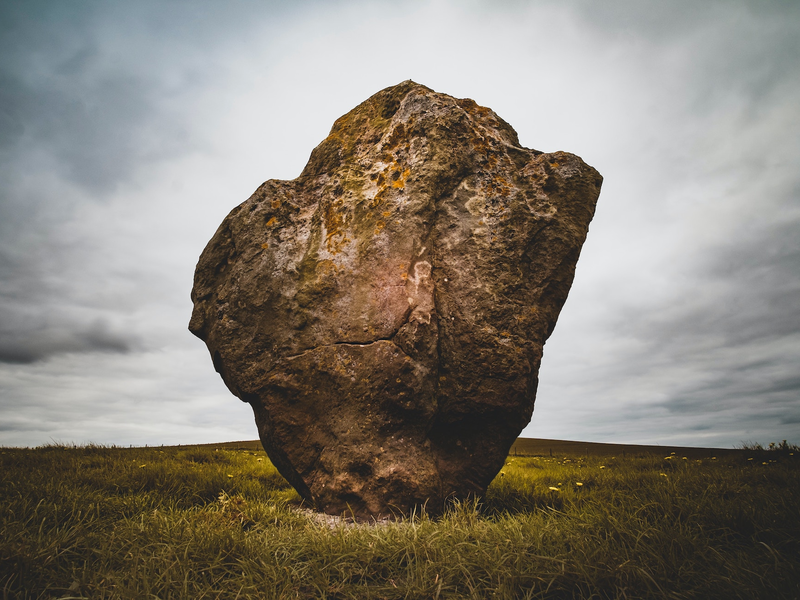
Jacob and the Stone

When he first arrives in Harran, at Paddan-Aram, the home of Laban his uncle, Jacob sees a well. Wells are mentioned frequently in Genesis. Twice Hagar finds a well in the wilderness (Genesis 16:14; 21:19). Philistines seize Abraham’s well (21:22-34), and Abraham’s chief servant finds a wife for Isaac at…

by Peter LeithartApril 16, 2014

Showing page 175 of 309

See all
See all
Literature

Seneca’s failure

Wallace again on Timon of Athens . Wallace argues that Shakespeare has written a play to explore Seneca’s society of benefits and gratitude, and shows that the classical model of social order is impossible: “the cast would appear to have been designed to test the Senecan hypothesis about the nature…

November 1, 2007
Philosophy

Elizabethan Seneca

Wallace again on Seneca in Shakespeare: “The first separat e publication of De Benficiis in an English translation was Nicholas Haward’s The Line of Liberalitie in 1569, which included only the first three books, but William Baldwin’s popular Treatise of Morall Philosophie had appeared in 1547 and contained one chapter…

November 1, 2007
Literature

Senecan Shakespeare

In a 1986 article in Modern Philology , John Wallace argues that Timon of Athens is “Shakespeare’s Senecan Study,” reflecting on the issues raised by Seneca’s de Beneficiis : “Shakespeare must have been thinking of Seneca, but a safer argument could have been constructed on the premise that Shakespeare was…

November 1, 2007
Literature

Roman trilogy

Paul Cantor describes three of Shakespeare’s Roman plays as a trilogy, moving from the Republic ( Coriolanus ) to the early empire ( Julius Caesar ) to the decadence of Octavian ( Antony and Cleopatra ). Together they form “a kind of historical trilogy, dramatizing the rise and fall of…

November 1, 2007

Fat, Body Parts, Liver Lobes

In her Leviticus as Literature , the late Mary Douglas offers some interesting possibilities for interpreting the prohibition of eating fat and for the arrangement of animal portions on the altar. Her interpretation is guided by her recognition of analogies between Sinai, the tabernacle, and the body, both of the…

November 1, 2007

Showing page 1612 of 2212

Browse by Category

In Medias Res

Your weekly digest for all things Theopolis.

Donate

Theopolis is nearly 100% donor-supported. Consider joining us on our mission.