
Theopolis Logo

Writing

Explore our collection of theological essays, biblical studies, and reflections on faith and culture.

See all
giammarco-zeh-ljawhtg-unsplash
Biblical Horizons

OPEN BOOK: Views and Reviews

Isaac E. Mozeson, The Word: The Dictionary that Reveals the Hebrew Sources of English (Northvale, NJ: Jacob Aaronson Inc., 1995), 310 pp. Reviewed by James B. Jordan. Once there was only one language in the world, the language God spoke to Adam. At the Tower of Babel, there came to…

by James B. JordanJune 28, 1996
tim-wildsmith-j6jv-mkdzqs-unsplash
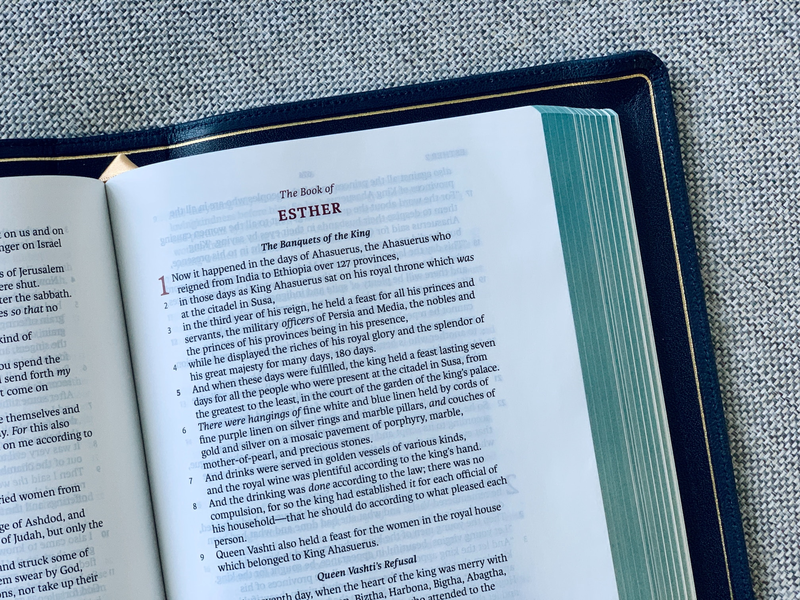
Esther

Esther: Historical & Chronological Comments (IV)

2. The Setting of the Book of Esther A. Xerxes (continued from previous issue) Ezra 6:14 says that the Jews finished building "according to the command of the God of Israel and the decree of Cyrus and Darius and Artaxerxes king of Persia." The problem with this verse is that…

by James B. JordanJune 28, 1996

ales-krivec-4mibe6zg5r0-unsplash
Acts

Jesus and Amalek

This essay goes with our previous study of the Amalek pattern back in Biblical Horizons No. 2. Since many do not have this essay, entitled "The Battle of Gog and Magog," let me cite the relevant paragraphs: Note in Genesis 12-15 that Abram moves into the land after escaping Pharaoh…

by James B. JordanJune 28, 1996

aaron-burden-1ebsmyrau-s-unsplash
Proverbs

The Strange Woman

Proverbs 7:6-23 is one of several passages early in the Proverbs in which Solomon warns his son about the wiles and dangers of the "strange woman." It is certainly quite proper to take these as straightforward warnings against sexual sins, and these are certainly warnings that need to be impressed…

by Peter LeithartJune 27, 1996
jan-kahanek-g3o5ztrk2e4-unsplash
Biblical Studies

Some Observations

1. In Luke 4:20 we read that after Jesus finished reading from Isaiah, "the eyes of all in the synagogue were fixed upon Him." This is usually taken in a psychological sense: They were amazed at Jesus somehow. I suggest that, as always, a merely psychological reading is a modern…

by James B. JordanMay 28, 1996
tim-wildsmith-j6jv-mkdzqs-unsplash
Esther

Esther: Historical & Chronological Comments (III)

2. The Setting of the Book of Esther Up to now we have assumed what we must prove, that the king in Esther is Darius the Great. While Biblical chronologists have usually taken this position, commentators on the book of Esther have often taken others as the king. One view,…

by James B. JordanMay 28, 1996

Showing page 265 of 309

See all
See all
Literature

The meaning of “Literature”

Michael Hattaway writes, in an introduction to Early Modern English literature (Blackwell, 2005), “A primary difference between Renaissance and modern concepts of writing involves meanings for ‘literature’ and for ‘fiction.’ As surviving library catalogues reveal, contemporaries of Donne and Shakespeare did not recognize the groupings that determine the display of…

May 12, 2007

Anointed with clay

It’s significant that Jesus is said to “anoint” the blind man’s eyes with the clay-and-spittle (John 9:11). We wouldn’t normally think of clay as a promising material to “anoint” someone with, but this is the way that the man describes Jesus’ action. The word is often associated with the work…

May 12, 2007

Let there be light

In John 9, Jesus makes an allusion to the creation story when He explains to His disciples the reasons for the blind man’s blindness. The man is not blind because of his own sin, or his parents’ sins, but instead so that the work of God might be displayed in…

May 12, 2007
Media

Instruments of torture

The “Middle Ages only had thumb screws, not the media.” -Karl Kraus, early 20th century Viennese writer

May 11, 2007
History

Rites Controversy

During the seventeenth century, the church grew rapidly in China. According to Chan Kei Thong, “In 1640, three decades after [Matteo] Ricci died, there were 60,000 to 70,000 Catholic converts; by 1651, their numbers had more than doubled to 150,000. By 1664, the figure had ballooned to at least 254,980.…

May 11, 2007
History

True Kingship

During the reign of Tang, the founder of the Shang Dynasty (1766 B.C.), China suffered a seven-year drought. Someone suggested that a human sacrifice was necessary. Chan Kei Thong tells the story: “Tang appointed a day for this to be done, and a great multitude gathered for the unprecedented event.…

May 11, 2007

Showing page 1681 of 2212

Browse by Category

In Medias Res

Your weekly digest for all things Theopolis.

Donate

Theopolis is nearly 100% donor-supported. Consider joining us on our mission.