Theopolis Logo

Writing

Explore our collection of theological essays, biblical studies, and reflections on faith and culture.

See all
medievalilluminatedmanuscript
Biblical Studies

The Art of Why

“We have a God who hides things because He loves to be sought out, chewed out and found out.” As Christians, we are rightly taught that we must not question God’s Word. The problem is that the Scriptures record many things which appear to have been given to us for…

by Mike BullMay 12, 2015

last-supper
Revelation

Eucharistic Harvest

The book of Revelation is a liturgy. John begins “in the Spirit” on the “Lord’s day” (1:10). Jesus appears, and Jesus tells him to record messages to seven churches, words of encouragement and rebuke, like the call to worship and confession at the beginning of a Christian liturgy. In chapter…

by Peter LeithartMay 7, 2015
sunrise-2
Creation

Maker of Heaven and Earth, (Part 5)

In my previous posts, I looked at the theme of creation as it is found in a sequence of psalms devoted to Yahweh’s Kingship (Psalms 93-100). Among other matters, these psalms declare that when the Kingdom of Israel’s God comes, it is the Kingdom of the world’s own Creator .…

by Stephen LongMay 7, 2015
13071-probablyvalentindeboulogne-saintpaulwritinghi-1
Deuteronomy

Paul the Levir

The church in Corinth was a pastoral nightmare. Factionalism, sexual immorality, incipient syncretism, using the church as a stage for self-promotion, and denial of the final resurrection were just some of the problems. In Paul’s first letter to the Corinthian church, he confronts each of these problems directly and in…

by Bill SmithMay 5, 2015
creation-eve
Covenant

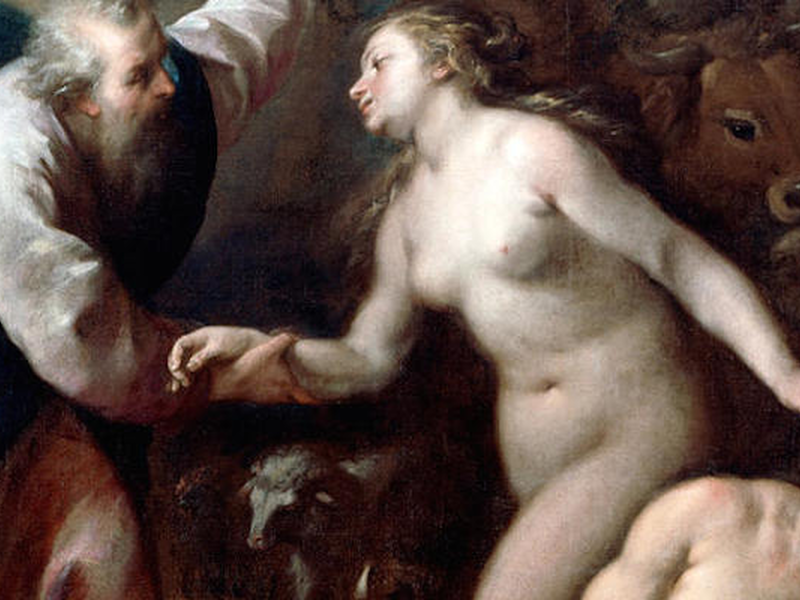
Covenant Structure in Genesis 2

The first chapters of the Word of God have a poetic rhythm. This is used to discredit their accuracy as historical narrative, but the truth is that these same rhythms continue far beyond the book of Genesis. In fact, the later texts shed light on the frustratingly succinct account of…

by Mike BullApril 30, 2015
light-bulb
Creation

Must A Light Bulb Be "Oriented Toward Illumination"?

Mr. Martian: What’s that there? Mr. Edison: (Edison holds up a standard, 60 watt lightbulb). It’s a lightbulb. Mr. Martian: A “lightbulb” you say? What exactly is a “lightbulb”? Mr. Edison: A lightbulb is an object used to illuminate a dark area, say a room. It’s made primarily of filament…

by Gerald HiestandApril 28, 2015

Showing page 154 of 309

See all
See all
Literature

Living in fictions

In a discussion of King Lear , David Bevington suggests that Edgar saves his father at the cliffs of Dover by constructing a cosmology in which the gods are merciful and perform miracles: “Edgar stages his fiction in this particular way because he knows his father well enough to realize…

December 27, 2006
Literature

Tyranny of gratitude

Many of Shakespeare’s plays explore the moral and political consequences of ingratitude, but Shakespeare is also cognizant of the tyrannical uses to which the demand for gratitude may be put. Lear is certainly about ingratitude, the “marble-hearted fiend” that infects and distorts the monsters of ingratitude Goneril and Regan, as…

December 27, 2006
Theology

In praise of Pietism

Friedrich Oetinger was a leading German pietist intellectual and theologian, deeply interested in the science of his day. And critical of science and rationalist philosophy as well. Against thinkers who placed a primacy on reason, Oetinger argued that sheer logical clarity is insufficient “for living knowledge.” Living knowledge takes form…

December 26, 2006

Communion in humor

I tell a joke, and you get it. I include a veiled allusion to, say, Faust in a casual conversation; you catch it; and we exchange a mental wink. Humor provides a pathway into the hermeneutics of texts and communication. It also seems to provide a pathway into the sociology…

December 26, 2006

Keeping in mind

Gadamer notes the ambiguity of “keeping something in mind.” We sometimes hold something in our mental “gaze” in order to knock into it head on. We watch it carefully until we can grab it. But keeping in mind can also be a form of forgetfulness. We might also keep something…

December 26, 2006
History

Mysticism and culture

Gadamer notes that the concept of Bildung (culture) has its origins in medieval and baroque mysticism, and continues to carry a mystical connotation when it begins to be used of the cultivated humanness. Von Humboldt, for instance, says “when in our language we say Bildung, we mean something both higher…

December 26, 2006

Showing page 1747 of 2212

Browse by Category

In Medias Res

Your weekly digest for all things Theopolis.

Donate

Theopolis is nearly 100% donor-supported. Consider joining us on our mission.