Theopolis Logo

Writing

Explore our collection of theological essays, biblical studies, and reflections on faith and culture.

See all
sacre-bleu-r__kixb0i5m-unsplash
Death

Integrity

Integrity seems to have two meanings. It can mean the quality of being honest and having strong moral principles. A man of integrity is a person of honour, rectitude and probity, truthful and trustworthy. Integrity also describes a state – the quality of being whole and undivided. If things are…

by Arthur KayMarch 19, 2015

emmanuel-phaeton-1bwmfmvybi8-unsplash
Psalms

Psalm 32 Commentary

Get the Psalm 32 Translation here Psalm 32 is the first part of Ps. 32-33, ending with a call to praise that is answered by what follows. Ultimately the psalm needs to be considered as a whole, but what we call Psalm 32 does have its own structure and logic,…

by James B. JordanMarch 18, 2015
laughter
Humor

On Crude Humor

You wouldn’t hit a man with glasses would ya? No, of course not. I’d hit him with a bat. In our culture of frivolity it is tempting for Christians to think that solemnity should be our defining attribute. The coarseness of the world impedes us from enjoying any sort of…

by Remy WilkinsMarch 17, 2015
standingonamountain
Creation

Maker of Heaven and Earth, Part 2

Taking a cue in my last post from early Christian apologetics, I suggested that if we wish to articulate and defend a doctrine of creation ex nihilo in contemporary theology, we would do well to offer a thick description of Yahweh’s divine monarchia (his sole rule or sovereignty). Rather than…

by Stephen LongMarch 12, 2015
mountain-top-2
Creation

Catechism of the Universe

I’m not sure we really understand the insidiousness of unbelief. It is not merely to reject the gospel of Jesus, the existence of a Creator God, or to question biblical morality. At its core, unbelief is ingratitude, and by the very nature of this ingratitude, it must ultimately reject every…

by Toby SumpterMarch 10, 2015
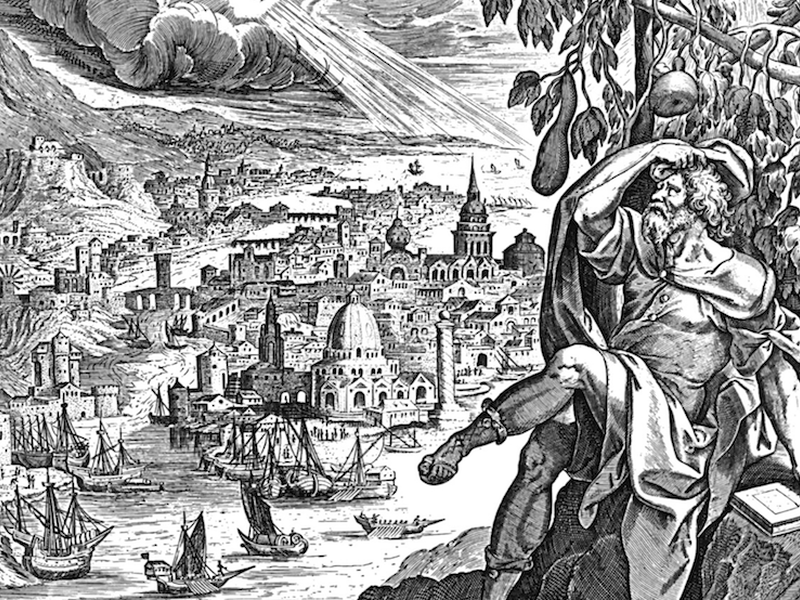
jonah-under-gourd
Mark

The True Jonah and Lenten Fasting

Mark’s narrative of the baptism of Jesus is characteristically brief: “In those days Jesus came from Nazareth of Galilee and was baptized by John in the Jordan. And when he came up out of the water, immediately he saw the heavens being torn open and the Spirit descending on him…

by Arthur KayMarch 9, 2015

Showing page 158 of 309

See all
See all
Literature

Living in fictions

In a discussion of King Lear , David Bevington suggests that Edgar saves his father at the cliffs of Dover by constructing a cosmology in which the gods are merciful and perform miracles: “Edgar stages his fiction in this particular way because he knows his father well enough to realize…

December 27, 2006
Literature

Tyranny of gratitude

Many of Shakespeare’s plays explore the moral and political consequences of ingratitude, but Shakespeare is also cognizant of the tyrannical uses to which the demand for gratitude may be put. Lear is certainly about ingratitude, the “marble-hearted fiend” that infects and distorts the monsters of ingratitude Goneril and Regan, as…

December 27, 2006
Theology

In praise of Pietism

Friedrich Oetinger was a leading German pietist intellectual and theologian, deeply interested in the science of his day. And critical of science and rationalist philosophy as well. Against thinkers who placed a primacy on reason, Oetinger argued that sheer logical clarity is insufficient “for living knowledge.” Living knowledge takes form…

December 26, 2006

Communion in humor

I tell a joke, and you get it. I include a veiled allusion to, say, Faust in a casual conversation; you catch it; and we exchange a mental wink. Humor provides a pathway into the hermeneutics of texts and communication. It also seems to provide a pathway into the sociology…

December 26, 2006

Keeping in mind

Gadamer notes the ambiguity of “keeping something in mind.” We sometimes hold something in our mental “gaze” in order to knock into it head on. We watch it carefully until we can grab it. But keeping in mind can also be a form of forgetfulness. We might also keep something…

December 26, 2006
History

Mysticism and culture

Gadamer notes that the concept of Bildung (culture) has its origins in medieval and baroque mysticism, and continues to carry a mystical connotation when it begins to be used of the cultivated humanness. Von Humboldt, for instance, says “when in our language we say Bildung, we mean something both higher…

December 26, 2006

Showing page 1747 of 2212

Browse by Category

In Medias Res

Your weekly digest for all things Theopolis.

Donate

Theopolis is nearly 100% donor-supported. Consider joining us on our mission.