Theopolis Logo

Writing

Explore our collection of theological essays, biblical studies, and reflections on faith and culture.

See all
sixteen-miles-out-al48tflf4e8-unsplash
Food

Gluttony In The Bible (As Opposed To Gluttony In The American Church)

In the Bible, fatness is such a blessing, that it is especially hard to understand why wicked men are permitted to enjoy such a state. It requires a theodicy and faith in God. Thus: “For they have no pangs until death; their bodies are fat and sleek . They are…

by Mark HorneAugust 12, 2013

jeremy-yap-j39x2xx_8cq-unsplash
How to Worship

Biblical Worship (Video with James B. Jordan)

[fve]http://vimeo.com/71901553[/fve]

by Peter LeithartAugust 8, 2013
chris-bair-ndczc5739ck-unsplash
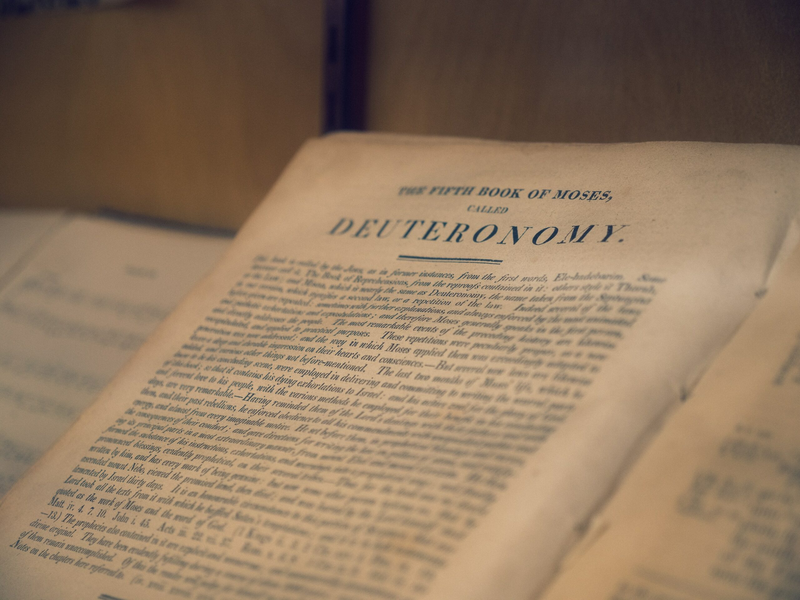
Deuteronomy

Holy Things for Holy People

The allusion to the Exodus story is contained in the first words of Deuteronomy 14:1 — “ye are the sons of Yahweh your God” — as well as in 14:2 in the use of the technical term translated “treasured possession,” “His own possession,” “peculiar people,” “precious people,” and so forth.…

by Ralph Allan SmithAugust 5, 2013
adam-and-eve-in-the-garden-of-eden-wenzel-peter
Deuteronomy

Forbidden Foods

I have argued that Deuteronomy 14:1-21 is an independent literary unit that applies the Third Word to the lives of Israelites from the time of Moses and Joshua. In this short pericope, Moses suggests broad and deep meaning by means of literary allusion to the stories of the creation and…

by Ralph Allan SmithJuly 31, 2013
david-weber-fwuo_zluhnw-unsplash
How to Worship

Pro-Sacramental Reformation

In his recently republished The New Creation , the late, delightful Herbert McCabe defends the priesthood of the plebs as roundly as anyone could want. Citing Hebrews, he claims that "there is an essential difference between the Christian community and the community of the Old Law, or any other religious…

by Peter LeithartJuly 29, 2013
eric-ward-7kqe_8meex8-unsplash
Augustine

Sexual Idolatry

Augustine famously prayed, “Our hearts our restless until they rest in You.” True indeed. Being creatures, we inherently sense our ontological poverty—our innate condition of dependence—and are compelled to find a sense of security. And it is also true—as Augustine’s own narrative painfully illustrates—that one of the things we most…

by Gerald HiestandJuly 24, 2013

Showing page 190 of 309

See all
See all
Media

Mediated

Instead of continuing to quote de Zengotita until I’ve transcribed the whole book, let me summarize: This is the best anthropology of contemporary culture I’ve ever read. Somewhat reductive - I’m not sure that everything is so shaped by media as de Zengotita suggests. Mostly he makes a very compelling…

December 14, 2006
Media

Predictable surprise

De Zengotita again, commenting on how lame action/sci fi movies have become: “There’s this very specific phase in so many of these films, a phase that’s so marked I bet there’s some insider lingo for it. It’s when the suspenseful set-up phase - which is often pretty good, very atmospheric,…

December 14, 2006
Media

Mediating the Other

De Zengotita notes the paradox of modernity/postmodernity’s affirmation of the Other: “instead of treating the Other as an alien something - threatening in some cases, alluring in others, but in all cases an object , whether of conquest, exploitation, proselytizing, study, or tourism - instead of that, you recognize in…

December 13, 2006

Things

De Zengotita gives this lovely description of his grandfather’s (a surgeon) delight in things: “it was his hands that I remember most of all, the care they extended to everything he touched, one by one, no haste, no waste, to each its due. That much was obvious. But subtler internal…

December 13, 2006
Media

Mediated

Mediated by Thomas de Zengotita (Bloomsbury, 2005) comes highly recommended from Ken Myers. No wonder. This is a very thoughtful book, written with great energy. Every paragraph is quotable, and has the effect of holding up a mirror to the way we live now. For instance, comparing our penchant for…

December 12, 2006
Theology

Boundaries and RO

Hans Boersma offers an extended critique of Radical Orthodoxy in the Fall 2006 issue of Pro Ecclesia. Boersma focuses on the issue of boundaries, arguing that Radical Orthodoxy’s ontology of peace is hostile to boundaries, seeing them as fluctuating and humanly constructed, and that this hostility to boundaries undermined RO’s…

December 12, 2006

Showing page 1753 of 2212

Browse by Category

In Medias Res

Your weekly digest for all things Theopolis.

Donate

Theopolis is nearly 100% donor-supported. Consider joining us on our mission.