Theopolis Logo

Writing

Explore our collection of theological essays, biblical studies, and reflections on faith and culture.

See all
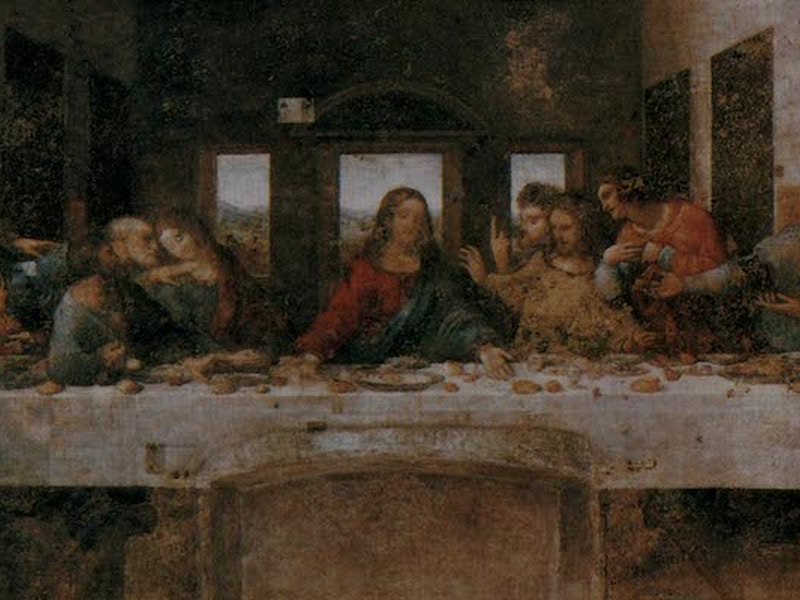
last-supper
Eucharist

The Epiclesis in Reformed Eucharistic Prayer, (Part 1)

What happens at the Table of the Lord? If Christ is really present, then how is this so? The witness of the Church throughout history has been that Christ is present in the Eucharist through the operation of the Holy Spirit, and in the practice of the Church, prayers at…

by Christopher KouOctober 11, 2016

sixteen-miles-out-al48tflf4e8-unsplash
Spiritual Warfare

Enemies and Victims

In the power of the Spirit, the gospel forms a society in which there is neither Jew nor Greek, slave nor free, a society that is characterized by unity, long-suffering, patience; love. The gospel forms a culture whose participants do not steal but labor and give, who are not angry…

by Peter LeithartOctober 6, 2016
sixteen-miles-out-d40gdcd_-he-unsplash
Mark

Sovereignty and Self-Gift

At the 1997 Biblical Horizons Summer Conference, the Rev. Jeffrey Meyers presented a series of remarkable lectures on the gospel of Mark. Among his many insightful comments, he suggested that the second gospel continues where the first gospel ends; Matthew ends with Jesus saying "Go" (Matthew 28:19), and Mark’s shows…

by Peter LeithartOctober 4, 2016
e99a2338
Art

Birmingham Life and Culture Series: Joseph Bottum

On October 25 at Avondale Brewery , Theopolis will be co-sponsoring the 2nd Annual Birmingham Life and Culture Series. This year's event will feature author Joseph Bottum. Joseph is known for his writings on literary criticism, religion, and his short stories. Essayist and reviewer Mary Eberstadt has said that "his…

by Brian MoatsSeptember 29, 2016
hebrew-manuscript
Biblical Studies

Are Not All These Galileans?

One of the curiosities of the New Testament revelation is its focus on Galilee. The region of Galilee was given to Asher, Zebulun, Naphtali, and Issachar, and the events of Judges 4-8 occurred there, so it had some importance in Israelite history. But when the tribe of Ephraim led the…

by James B. JordanSeptember 29, 2016
screen-shot-2016-03-31-at-9-32-11-am
Hermeneutics

Hero's Theme

In a recent post , Ian Paul discusses the practice of allegorical interpretation, reflecting in particular upon a conversation he had with someone concerning the reading of the story of Rahab. Paul’s interlocutor argued strongly for an allegorical reading of the Rahab story, writing: “Joshua is a type of Christ…

by Alastair RobertsSeptember 27, 2016

Showing page 124 of 309

See all
See all

Mediated fellowship

1 John 1:1-3 describes how those who never saw, heard, or handled the incarnate word of life can come to have fellowship with the Father through Jesus. First, the apostles (“we”) witnessed the Word in flesh directly. Second, they proclaim that testimony. Third, through believing their testimony, we come to…

December 3, 2005

Feast of Booths

John Kleinig suggests that Luke’s account of the Transfiguration alludes to the feast of booths: Luke “alone of the Gospel writers relates that the transfiguration occurred on the eighth day after Peter’s confession of faith (Lk 9:28). The transfiguration was the epiphany of Jesus as God’s Son. It showed Peter,…

December 1, 2005
History

Modern heroism

Zygmunt Bauman, in the book mentioned above, traces the shifts in Western cultural imagination from the ancient hero through the Christian martyr, to the revival of the ancient heroic ideal in the early modern period, to our current cult of celebrity. According to Bauman, the modern hero was born “or…

November 29, 2005
History

Conservator

An etymology of “conservative” from the online Dictionary of the History of Ideas (http://etext.lib.virginia.edu/DicHist/dict.html): In Latin conservare means to protect, preserve, save; the noun of agency, conservator, appears as a synonym for the substantives custos, servator. Just as the Greek S?ter (“Savior”) was adopted from the religious realm by the…

November 29, 2005
History

Modern sacralization

Still on Bauman: “In most of its descriptions, modernity is presented as a time of secularization (‘everything sacred was profaned,’ as young Marx and Engels memorably put it) and disenchantment. What is less often mentioned, however, though it should be, is that modernity also deified and enchanted the ‘nation,’ the…

November 29, 2005
History

Desire and resistance

More on Bauman, since that last post was getting too long: Consumerism, we (especially Christians) tend to think, is driven by desire; if so, perhaps the solution is to limit or suppress desire. Bauman points out that the goal of consumer economies is to render desires irrelevant to consumption. Desires…

November 29, 2005

Showing page 1918 of 2212

Browse by Category

In Medias Res

Your weekly digest for all things Theopolis.

Donate

Theopolis is nearly 100% donor-supported. Consider joining us on our mission.