
Theopolis Logo

Writing

Explore our collection of theological essays, biblical studies, and reflections on faith and culture.

See all
jacek-dylag-pmxt0xtq-a-unsplash
Culture

Consumerism, Oikos, and the Role of Women in the Church

Part 1 We do not understand the role of women in ministry because we do not understand the role of men in ministry. We do not understand the role of men in ministry because we do not understand the church. We do not understand the church because the consumer culture…

by John CarpenterJuly 11, 2023
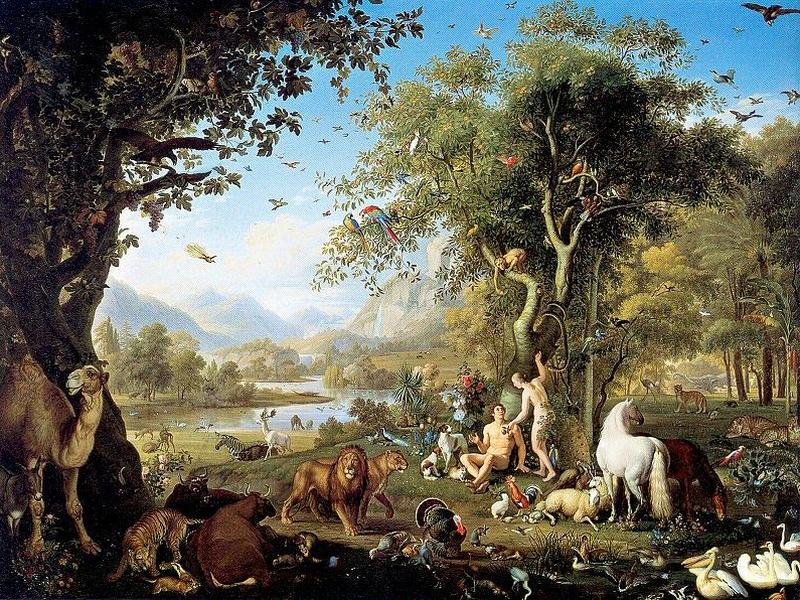
adam-and-eve-in-the-garden-of-eden-wenzel-peter
Biblical Theology

Genesis’ Beginning Story

1. One structure The Creation account (G1:1-2:4) conspicuously conveys meaning using the literary shape of the text. The narrative is told with formulaic patterns, repetitions, and parallelism. The Garden account is different. It is viewed as a separate text, with its own author, employing its own structure. This second account’s…

by Scott FairbanksJune 28, 2023
jelleke-vanooteghem-gnxb59lgu1m-unsplash
Baptism

Crystalline Baptism

I was reading James Jordan’s Creation in Six Days while also preparing for Trinity Sunday in which the gospel reading is John 3:1-15. As providence would have it Jordan dropped an easter egg for me along the lines of baptism. In chapter 5 he points out, “ On the second…

by Matthew CoreyJune 20, 2023
ryan-loughlin-a8cewc-qgq-unsplash
Baptism

Christians Should Baptize Their Children, but Not Because of Circumcision

It's true. There is no verse in the New Testament that commands or records an infant baptism. This poses a problem for some Christians. Those who only look for explicit commands, or those whose theology is limited to the New Testament, will conclude that infant baptism is not biblical and…

by Adam McIntoshJune 13, 2023
adam-and-eve-in-the-garden-of-eden-wenzel-peter
Biblical Studies

Polarities

1. Goal This paper’s goal is to identify and describe a literary strategy employed by scripture, namely using two episodes that cover similar territory or themes using details drawn from opposite ends of a number of spectrums. Once described the reader may recognize numerous other instances of this strategy in…

by Scott FairbanksJune 7, 2023
juli-kosolapova-us_dv71f1bc-unsplash
Deuteronomy

Kind Capital Punishment

Numbers 14 records the tragic story of Israel’s decision to rebel against Yahweh and Moses. Twelve spies had been sent into the land to bring back a report to Israel. All twelve spies agreed: “We went to the land where you sent us. It truly flows with milk and honey”…

by Ralph Allan SmithMay 31, 2023

Showing page 30 of 309

See all
See all

Mediated fellowship

1 John 1:1-3 describes how those who never saw, heard, or handled the incarnate word of life can come to have fellowship with the Father through Jesus. First, the apostles (“we”) witnessed the Word in flesh directly. Second, they proclaim that testimony. Third, through believing their testimony, we come to…

December 3, 2005

Feast of Booths

John Kleinig suggests that Luke’s account of the Transfiguration alludes to the feast of booths: Luke “alone of the Gospel writers relates that the transfiguration occurred on the eighth day after Peter’s confession of faith (Lk 9:28). The transfiguration was the epiphany of Jesus as God’s Son. It showed Peter,…

December 1, 2005
History

Modern heroism

Zygmunt Bauman, in the book mentioned above, traces the shifts in Western cultural imagination from the ancient hero through the Christian martyr, to the revival of the ancient heroic ideal in the early modern period, to our current cult of celebrity. According to Bauman, the modern hero was born “or…

November 29, 2005
History

Conservator

An etymology of “conservative” from the online Dictionary of the History of Ideas (http://etext.lib.virginia.edu/DicHist/dict.html): In Latin conservare means to protect, preserve, save; the noun of agency, conservator, appears as a synonym for the substantives custos, servator. Just as the Greek S?ter (“Savior”) was adopted from the religious realm by the…

November 29, 2005
History

Modern sacralization

Still on Bauman: “In most of its descriptions, modernity is presented as a time of secularization (‘everything sacred was profaned,’ as young Marx and Engels memorably put it) and disenchantment. What is less often mentioned, however, though it should be, is that modernity also deified and enchanted the ‘nation,’ the…

November 29, 2005
History

Desire and resistance

More on Bauman, since that last post was getting too long: Consumerism, we (especially Christians) tend to think, is driven by desire; if so, perhaps the solution is to limit or suppress desire. Bauman points out that the goal of consumer economies is to render desires irrelevant to consumption. Desires…

November 29, 2005

Showing page 1918 of 2212

Browse by Category

In Medias Res

Your weekly digest for all things Theopolis.

Donate

Theopolis is nearly 100% donor-supported. Consider joining us on our mission.