Theopolis Logo

Writing

Explore our collection of theological essays, biblical studies, and reflections on faith and culture.

See all
screen-shot-2022-04-12-at-7-14-44-am
Biblical Horizons

Christ Is Risen! He Is Risen Indeed!

"Vanity of vanities", says the Preacher. "All is vanity". Life, we are told in the book of Ecclesiastes, is a repetitious, wearisome cycle; all that is and all that will be has already been. There is nothing new under the sun. What is crooked cannot be made straight, what is…

by Peter LeithartFebruary 23, 1991

jacob-wrestling-the-angel
Biblical Studies

Three “Falls” and Three Heroes

The Bible tells us that when God created the earth, He set up three zones of life. The first was the world itself. The second was the holy land of Eden. And the third was the Garden in Eden, God’s sanctuary. God told Adam and Eve that every tree was…

by James B. JordanFebruary 22, 1991
mick-haupt-eq2z9ay9wws-unsplash
Biblical Studies

The Chronology of Ezra & Nehemiah, Part 1

In our survey of Biblical chronology we have arrived at the books of Ezra and Nehemiah, which provide chronological information for the period after the return from exile, the Restoration Period of Old Testament history. The question we begin to address in this essay is whether the Artaxerxes of these…

by James B. JordanFebruary 22, 1991
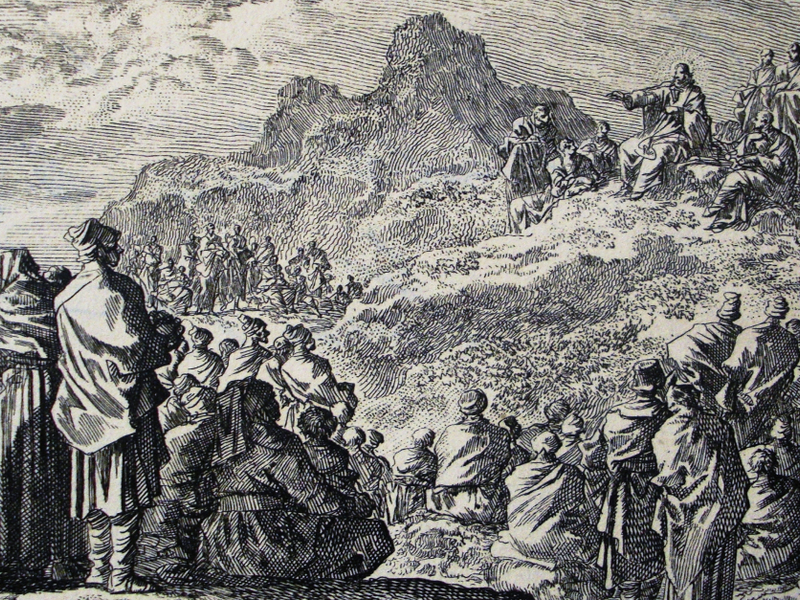
8226-sermon-on-the-mount-painting-2
Matthew

Pluck It Out!

These verses from the Sermon on the Mount are generally taken in connection with Jesus’ earlier statement concerning adultery in the heart (vv. 27-28); the eye and the hand have obvious relevance to the sin of adultery. At the same time, most commentators admit that the principle of avoiding occasions…

by Peter LeithartFebruary 2, 1991
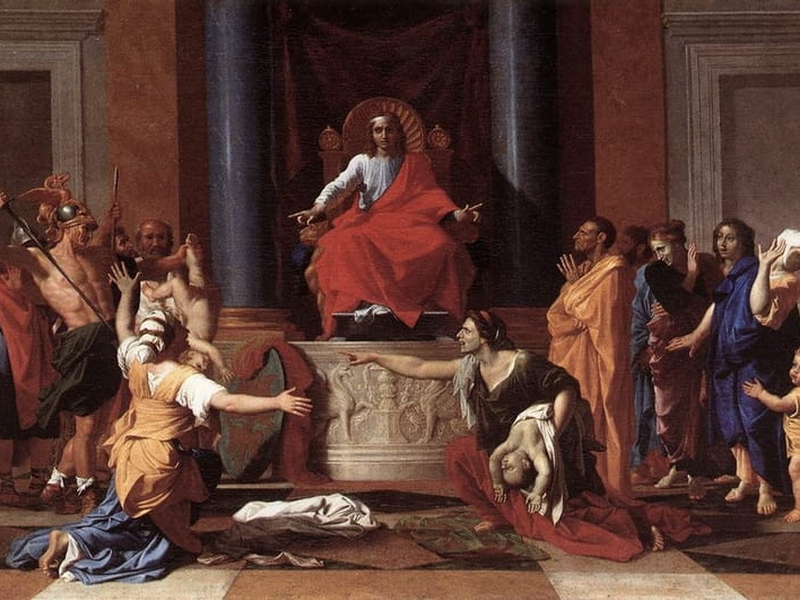
49980-nicolas_poussin_-_the_judgment_of_solomon_-_wga18330-800w-tn
Proverbs

Advice From a Sojourner, Part 9

17. The eye that mocks a father, And despises to obey a mother, The ravens of the valley will pick it out, And the young eagles will eat it. 18. There are three things that are too wonderful for me, Four that I do not understand: 19. The way of…

by James B. JordanJanuary 30, 1991
screen-shot-2020-12-03-at-1-47-33-pm
Biblical Horizons

The Dominion Church

The modern Church in America and virtually everywhere else is ideology-centered, not geographical. This is because various Churches believe different things and have different customs of worship and sacraments. The ideological Church has gradually developed from the time of the Reformation, because accuracy of doctrine has become more important to…

by James B. JordanJanuary 30, 1991

Showing page 299 of 309

See all
See all
Literature

Ibsen

Ibsen, Steiner argues, did not write tragedies. Ibsen wrote “dramatic rhetoric” calling society to reform. For real tragedy, there is no such “solution” to be found, there is no remedy, except destructive sacrifice and perhaps a deus ex machina. From this angle, tragedy is perhaps among the STOICHEIA that prepared…

January 7, 2004
Literature

More Quotations from Steiner

Some more quotations from Steiner’s Death of Tragedy : “We cannot understand the romantic movement if we do not perceive at the heart of it the impulse toward drama . . . . The romantic mode is neither an ordering nor a criticism of life; it is a dramatization. And…

January 7, 2004
Theology

NT Wright’s Rutherford House Lecture

Some thoughts on NT Wright’s Rutherford House Lecture, August 2003. I have little disagreement with much of the lecture, and it clarified a number of things for me. Wright’s views on justification, however, continue to puzzle me at a number of points. Here’s an attempt to clarify my (or NTW’s)…

January 7, 2004
Theology

NT Wright’s Rutherford House Lecture

Some thoughts on NT Wright’s Rutherford House Lecture, August 2003. I have little disagreement with much of the lecture, and it clarified a number of things for me. Wright’s views on justification, however, continue to puzzle me at a number of points. Here’s an attempt to clarify my (or NTW’s)…

January 7, 2004
Literature

European Drama

Steiner notes that, following the Renaissance, European drama operated under the shadows of neo-classical and Elizabethan dramatic practice, the former “closed” and rigidly adhering to Aristotelian criteria, the other open and experimental. He discusses the theory of Thomas Rymer (a neo-classicist) at some length, concluding that the controversies that Rymer…

January 6, 2004
Literature

Shakespearean Difference

George Steiner in his Death of Tragedy describes the “Shakespearean difference” as mainly due to Shakespeare’s avoidance of fascination with Hellenic models: “The neo-classic view [which rigidified Aristotelian conceptions of tragedy] expresses a growing perception of the miracle of Greek drama. This perception was fragmentary. There were few translations of…

January 6, 2004

Showing page 2141 of 2212

Browse by Category

In Medias Res

Your weekly digest for all things Theopolis.

Donate

Theopolis is nearly 100% donor-supported. Consider joining us on our mission.