Theopolis Logo

Writing

Explore our collection of theological essays, biblical studies, and reflections on faith and culture.

See all
kiwihug-l4gw27xzn1i-unsplash
Hermeneutics

Hermeneutical Polytheism

A couple of decades ago, when I was a young Reconstructionist (instead of a middle-aged post-Reconstructionist), I coined the phrase "political polytheism" to describe how modern evangelical Christians approach matters of social law and politics. Christians want the Bible for Church and family life, but turn to other gods for…

by James B. JordanJanuary 28, 1996

jan-kahanek-g3o5ztrk2e4-unsplash
Biblical Horizons

Concerning Contracts and Covenants

Gary North has from time to time taken note of some of the differences between contracts and covenants. For him, one of the most important is the oath-character of a covenant. Naturally, the English terms "contract" and "covenant" can be used with varying nuances by different writers, and their zone…

by James B. JordanJanuary 5, 1996
hebrew-manuscript-6
Biblical Studies

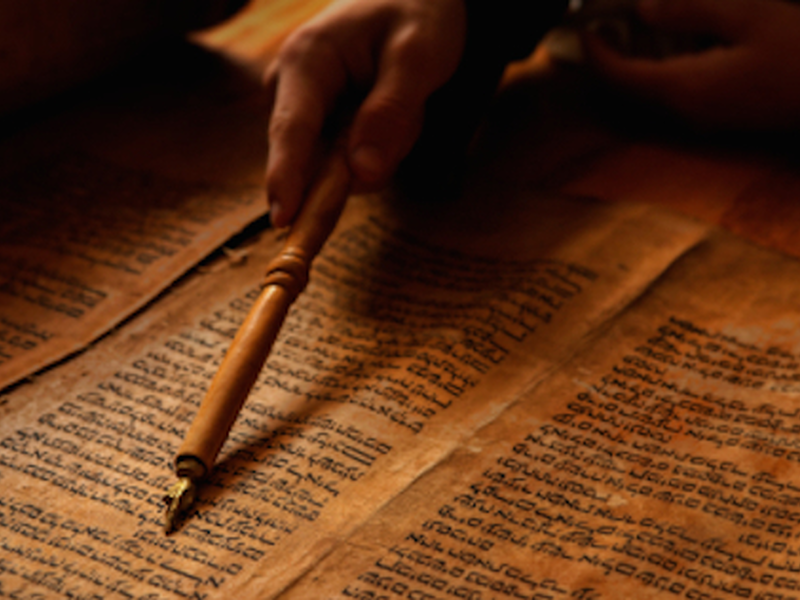
Rethinking the Order of the Old Testament

The Book of Chronicles is the last book in the Hebrew Canon of the Old Testament. The word "canon" means "authoritative list" when used in connection with the Bible. What we call the Hebrew Canon consists of 24 books arranged in three major divisions: the Law, the Prophets, and the…

by James B. JordanDecember 28, 1995
skyler-gerald-akljfvj5ym4-unsplash
Biblical Studies

At The Center of the Book of Kings

by: Peter Leithart and James Jordan The Book of Kings is structured chiastically, or concentrically. To see this clearly, we start in the middle and work our way outward. 2 Kings 3–7 record the central events of the ministry of Elisha. Elisha makes his first appearance in 1 Kings 19:19-21,…

by Peter LeithartNovember 5, 1995
lili-popper-lu15z1m_kfm-unsplash
Judges

Dynastic Aspirations in the Book of Judges

(The following is a supplement to my book, God’s War Against Humanism , a study of the book of Judges, available from Biblical Horizons for $20.00 – a photocopy of the original book, which is now out of print). The turning point in the book of Judges is 8:22-28. Here…

by James B. JordanNovember 5, 1995
james-coleman-orks2dpueo0-unsplash
Biblical Horizons

Doing the Lord’s Supper

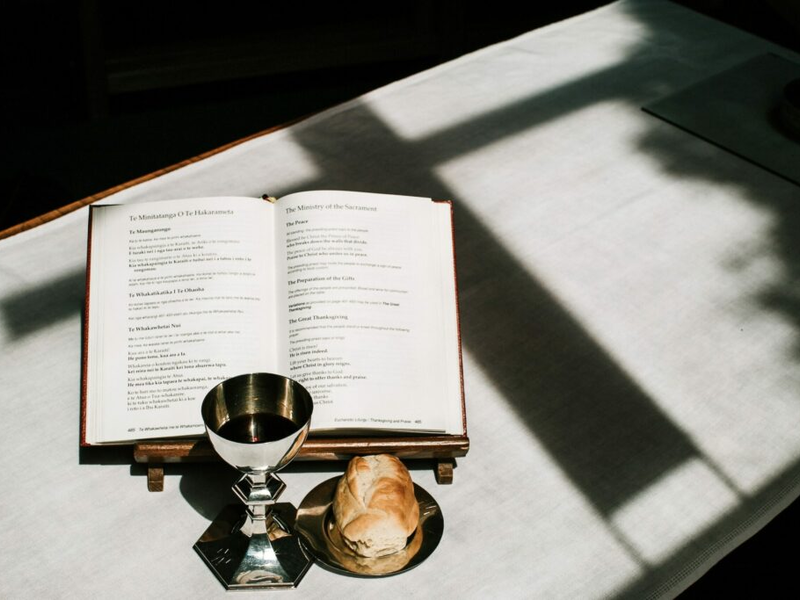
From time to time I am asked how I think the Lord’s Supper should be done. This essay is my response to that question. To start with, we should agree that the Lord’s Supper is the only ritual we are obligated to do in the New Covenant on a routine…

by James B. JordanNovember 5, 1995

Showing page 268 of 309

See all
See all
Philosophy

Smith on Derrida

James Smith’s conclusions regarding Derrida express more clearly than I’ve been able to do my own sense of Derrida. These are scattered quotations from The Fall of Interpretation , pp. 127-129: “Derrida is honest about not challenging for a moment Rousseau’s and Levi-Strauss’s reading of violence; his own analysis is…

October 15, 2003

Interpretation and the Fall

James K. A. Smith has a neat scheme for summarizing different view of interpretation in terms of the categories of creation and fall. For some thinkers, interpretation and the possibility of misinterpretation are results of the Fall; for others, interpretation and misinterpretation is inherent in created life, though there is…

October 15, 2003
Philosophy

Another Benefit of Derrida: Because

Another benefit of Derrida: Because he puts philosophical issues in mythological and metaphorical terms, he moves philosophy into the field of theology. As I’ve pointed out in a number of posts, Derrida (following Plato) speaks of the relationship between speaker and speech (or sometimes between speech and writing) as a…

October 14, 2003
History

Writing and Democratization

JP Vernant points out the connection between writing and democratization: “In the kingdoms of the New East, writing was a privilege and specialty of scribes. Writing enabled the royal administration to control the economic and social life of the State by keeping records of it. Its purpose was to constitute…

October 14, 2003
Philosophy

Pharmakos

Well, here’s an interesting coincidence (pointed to by Derrida, still in “Plato’s Pharmacy”): Derrida is discussing the ritual of the pharmakos , which he is connecting to Plato’s various uses of pharmak - words in discussions of knowledge, language, and other issues. The pharmakos rite was a scapegoat ritual, annually…

October 14, 2003
Philosophy

Why is Derrida Fun?

What is it that makes Derrida so stimulating and fun to read? At least for his treatment of standard philosophical works (I’m reading “Plato’s Pharmacy” in Disseminations ), I think it’s mainly that he shows that philosophy is not about what undergraduate courses in philosophy teach you it is about.…

October 14, 2003

Showing page 2183 of 2212

Browse by Category

In Medias Res

Your weekly digest for all things Theopolis.

Donate

Theopolis is nearly 100% donor-supported. Consider joining us on our mission.