Theopolis Logo

Writing

Explore our collection of theological essays, biblical studies, and reflections on faith and culture.

See all
or
Abortion

Political Hermeneutics: The Argument From Silence, Part 2

Click HERE for part 1. III This leads to a further question. I have argued that silence cannot by itself establish a Scriptural principle, but does Scripture’s silence carry any weight in itself? Does the fact that something is unbiblical in a weak sense tell us anything at all? In…

by Peter LeithartMarch 13, 1990

hebrew-manuscript-6
Biblical Chronology

Groping Through the Gaps

Although nowadays gap theories are associated with dispensationalism, it was not always so. In the nineteenth century, scholars from a variety of backgrounds (Anglican, Reformed, and proto-fundamentalist) seem to have become fascinated by gaps. If you are not familiar with what I am talking about, this newsletter will acquaint you…

by James B. JordanFebruary 26, 1990
or
Abortion

Political Hermeneutics: The Argument from Silence, Part 1

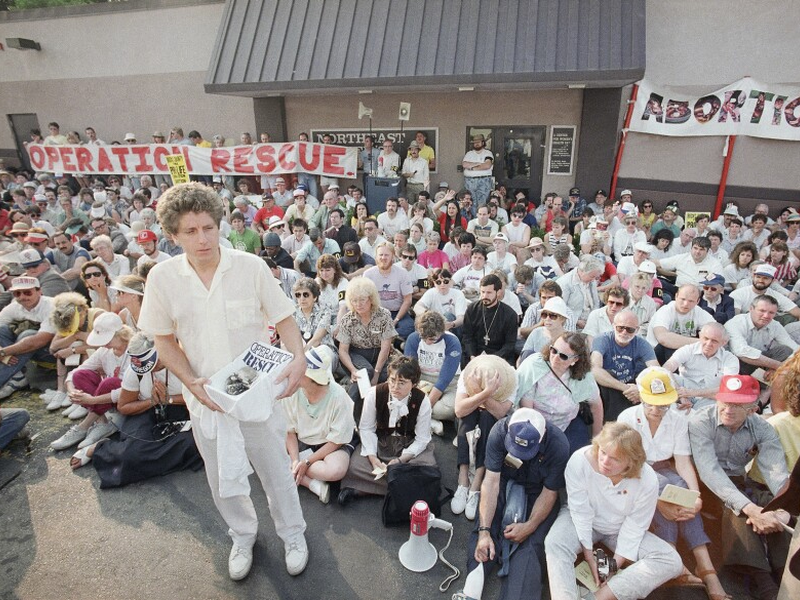
If the debate over Operation Rescue has proven anything, it has proven that there is absolutely no consensus among evangelicals in general, or among "reconstructionists" in particular, about how to use the Bible to judge political actions and movements. Each side of the debate claims biblical authority for its position,…

by Peter LeithartFebruary 13, 1990
49980-nicolas_poussin_-_the_judgment_of_solomon_-_wga18330-800w-tn
Biblical Studies

Advice From a Sojourner, Part 4

Two things I asked of Thee, Do not refuse me before I die: Keep deception and words of falsehood far from me, Give me neither poverty nor riches, Feed me with the food that it my portion, Lest I be full and deny Thee, And say, "Who is the LORD?"…

by James B. JordanFebruary 2, 1990
image-2
Biblical Horizons

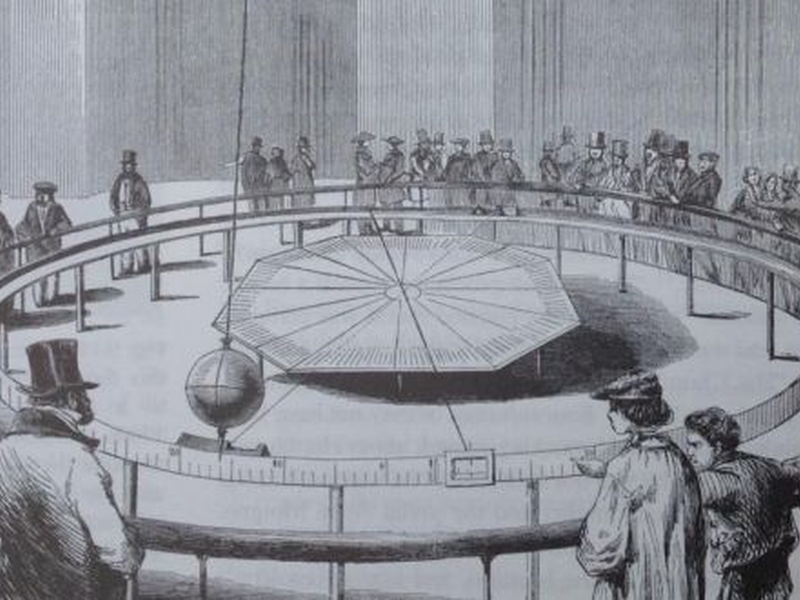
Foucault’s Pendulum

Umberto Eco’s "The Name of the Rose" was certainly one of the best literary works of the past decade, though the film version hardly measured up to it. Now Eco has given us a new novel, "Foucault’s Pendulum." Like Rose, Foucault’s Pendulum reflects on the limitations of human knowledge, and…

by James B. JordanJanuary 26, 1990
tanner-mardis-xuxghzhibn4-unsplash-1-2
Biblical Studies

What Is “Interpretive Maximalism”?

From time to time people ask me about "interpretive maximalism." They want to know what it is, and sometimes want to know if it represents some departure from the Reformed grammatico-historical, Biblico-theological approach to the Bible. I have something of a problem with these questions, because "interpretive maximalism" is not…

by James B. JordanJanuary 26, 1990

Showing page 305 of 309

See all
See all

The Three

In his classic work on the Common Background of Greek and Hebrew Civilizations , Cyrus Gordon points to a very specific parallel: “Homeric tradition often represents military organisation as contingents of troops under a triad of officers for each contingent.” He cites Iliad 1.563-7 and Odyssey 14.470-1 for support. And…

August 1, 2014

Fault in the Stars

Giorgio de Santillana’s Hamlet’s Mill is an exercise in un-forgetting. Ancients believed the world moved through various ages: “Each age brings a World Era, a Twilight of the Gods. Great structures collapse; pillars topple which supported the great fabric; floods and cataclysms herald the shaping of a new world.” And…

August 1, 2014

Magus of Britain

In an essay written around 1942, John Maynard Keynes beautifully captured the archaic character of Isaac Newton: “Newton was not the first of the Age of Reason. He was the last of the magicians, the last of the Babylonians and Sumerians, the last great mind which looked out on the…

August 1, 2014

Cosmic Myth

Giorgio de Santillana argued that mythology was not historical but cosmological ( Hamlet’s Mill , 50): “whatever is true myth has no historical basis, however tempting the reduction, however massive and well armed the impact of a good deal of modern criticism on that belief. The attempt to reduce myth…

August 1, 2014
Architecture

Google Space

Sim Van der Ryn’s Design for an Empathic World is a brief for person-centered design, design that takes the users and the world around a building into account. Van der Ryn sees “forward-thinking companies” doing just what he suggests. He quotes Paul Goldberger on Google’s California campus: “What is really…

July 31, 2014
Parenting

Unparents

University of Cape Town professor David Benatar argues answers the question “How many children should we have” with a simple “None.” “Morally responsible parents wish to spare their children pain,” he argues. But “the only way to prevent harm altogether is to desist from bringing children into existence. Any child…

July 31, 2014

Showing page 559 of 2212

Browse by Category

In Medias Res

Your weekly digest for all things Theopolis.

Donate

Theopolis is nearly 100% donor-supported. Consider joining us on our mission.