Theopolis Logo

Writing

Explore our collection of theological essays, biblical studies, and reflections on faith and culture.

See all
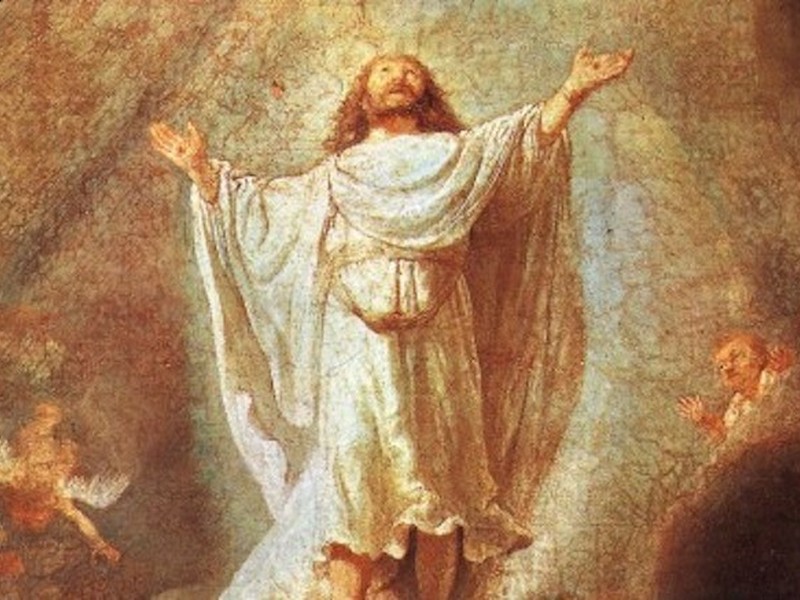
ascension-rembrandt
Ascension

Ascension and Eucharist

It’s a simple point, obviously biblical and creedal: Jesus of Nazareth ascended into heaven as the God-man, and He remains the God-man in all his specific particularity from now to the end. He is Jesus the Christ, the same yesterday, today, and forever. Duh! But Douglas Farrow shows in his…

by Peter LeithartMay 27, 2013

markus-winkler-aid-xyrtlec-unsplash
Theopolis News

Register for Trinity Term Class

You can now register for the very first Trinity House intensive class, "How to Read the Bible," taught by James Jordan and Peter Leithart. There will be a kick-off welcome for students on the evening of Sunday, August 25, and the class will be held at Trinity Presbyterian Church ,…

by Peter LeithartMay 22, 2013
chris-bair-ndczc5739ck-unsplash
Deuteronomy

Deuteronomy as Narrative-Law

This series of essays will address the food laws in Deuteronomy 14:1-21. To some, this may seem like a work of supererogation. After all, why should a Christian be interested in outdated “laws” from the book of Deuteronomy? I hope to show that meditation on this portion of Scripture is…

by Ralph Allan SmithMay 20, 2013
venice-la-distruzione-del-tempio-di-gerusalemme-francesco-hayez-gallerie-accademia-venice
Isaiah

Apocalyptic Patience

This essay was first published in 2011 in Credenda/Agenda . Isaiah 24 begins the section of Isaiah known as the “little apocalypse.” It’s a good name for this chapter. It’s a text of terror. The world is coming apart at the seams. The earth is emptied; and not only that,…

by Peter LeithartMay 15, 2013
sixteen-miles-out-al48tflf4e8-unsplash
Biblical Studies

Anti Anti-Supercessionism

This article was first published in 2010 in Credenda/Agenda . In recent years, mainstream theology has begun to recognize the disaster that followed from the Marcionism of classical liberalism. R. Kendall Soulen is a leading figure in efforts to restore the importance of the Old Testament to Christian theology. In…

by Peter LeithartMay 13, 2013
skyler-gerald-akljfvj5ym4-unsplash
Deuteronomy

Law and History: How to Read the Law of Moses

This is the last in a series of studies on Deuteronomy 22:30-23:8. In this series, I have offered an interpretation of Deuteronomy 22:30-23:8 which suggests that a simple surface reading of the text does not do justice to Moses’ or God’s intention, that the larger historical and legal context in…

by Ralph Allan SmithMay 8, 2013

Showing page 194 of 309

See all
See all

Difference

Ancient Greeks sacrificed and ate pigs and dogs. Israelites were forbidden to do so. Ancient Greeks made blood pudding from sacrifices. Israelites were not supposed to eat blood. Ancient Greeks sometimes sacrificed pregnant sows. Israelites were commanded not to take both the eggs and the hen. Greek sacrificial goats were…

April 11, 2014

Equality and Privilege

Was sacrificial meat distributed equally or hierarchically in ancient Greece? Some have resolved the question diachronically: Archaic Greece had a more democratic sacrificial distribution that democratic classical Athens. Gunnel Ekroth concludes that the two systems lived side-by-side. Choice pieces were given to dignitaries and priests, but the bulk of the…

April 11, 2014

Hold, Cold, Between

Jesus charges the Laodicean angel with being lukewarm, neither hot nor cold (Revelation 3). This is understandably and rightly taken as a symbol of their indecisiveness and lethargic piety. But there’s a whole lot more going on. Hot and cold match day and night (Genesis 8:22). “Heat of the day”…

April 11, 2014

Thoughts on 1 Samuel 17

A few scattered thoughts on 1 Samuel 17. Saul offers David his armor for battle, but David refuses (v. 39). After the battle, though, David accepts the armor of Jonathan, signifying David’s elevation to crown prince (18:1-4). David kills Goliath with a rock, trusting in Yahweh the Rock. There is…

April 11, 2014

Socially Constructed Self

By the time a child is two, he or she has developed “narrative” memory, the ability to “store” and recall events in story form. This is essential to the development of thought and self-reflection, but it is, Daniel Siegel argues, a shared, social process ( The Developing Mind , 60-1),…

April 10, 2014

Pluralist Paralysis

Millennials aren’t apathetic or lazy, argues Zachary Fine in the NYT . They are simply paralyzed, and pluralism is one of the causes. “The art critic Craig Owens once wrote that pluralism is not a ‘recognition, but a reduction of difference to absolute indifference, equivalence, interchangeability.’ Some millennials who were…

April 10, 2014

Showing page 637 of 2212

Browse by Category

In Medias Res

Your weekly digest for all things Theopolis.

Donate

Theopolis is nearly 100% donor-supported. Consider joining us on our mission.









