Theopolis Logo

Writing

Explore our collection of theological essays, biblical studies, and reflections on faith and culture.

See all
giammarco-zeh-ljawhtg-unsplash
Biblical Horizons

OPEN BOOK: Views and Reviews

Isaac E. Mozeson, The Word: The Dictionary that Reveals the Hebrew Sources of English (Northvale, NJ: Jacob Aaronson Inc., 1995), 310 pp. Reviewed by James B. Jordan. Once there was only one language in the world, the language God spoke to Adam. At the Tower of Babel, there came to…

by James B. JordanJune 28, 1996
tim-wildsmith-j6jv-mkdzqs-unsplash
Esther

Esther: Historical & Chronological Comments (IV)

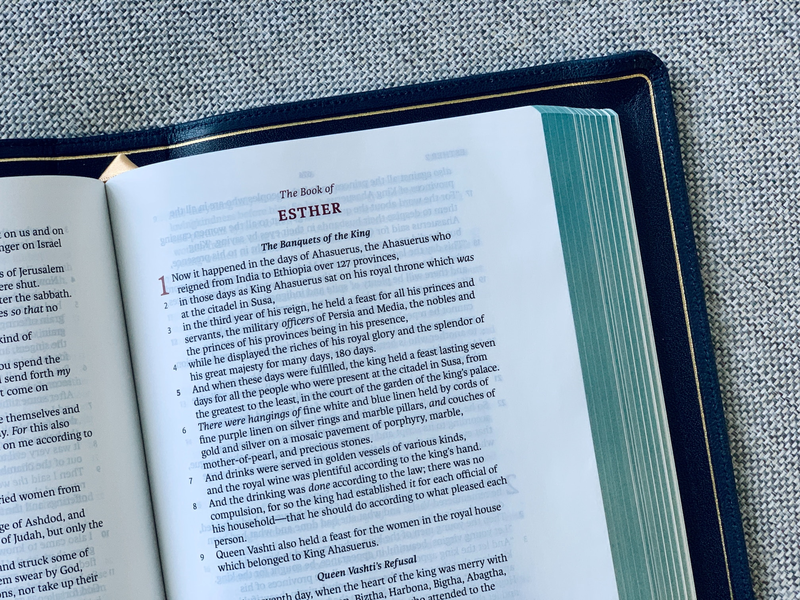
2. The Setting of the Book of Esther A. Xerxes (continued from previous issue) Ezra 6:14 says that the Jews finished building "according to the command of the God of Israel and the decree of Cyrus and Darius and Artaxerxes king of Persia." The problem with this verse is that…

by James B. JordanJune 28, 1996
ales-krivec-4mibe6zg5r0-unsplash
Acts

Jesus and Amalek

This essay goes with our previous study of the Amalek pattern back in Biblical Horizons No. 2. Since many do not have this essay, entitled "The Battle of Gog and Magog," let me cite the relevant paragraphs: Note in Genesis 12-15 that Abram moves into the land after escaping Pharaoh…

by James B. JordanJune 28, 1996
aaron-burden-1ebsmyrau-s-unsplash
Proverbs

The Strange Woman

Proverbs 7:6-23 is one of several passages early in the Proverbs in which Solomon warns his son about the wiles and dangers of the "strange woman." It is certainly quite proper to take these as straightforward warnings against sexual sins, and these are certainly warnings that need to be impressed…

by Peter LeithartJune 27, 1996
jan-kahanek-g3o5ztrk2e4-unsplash
Biblical Studies

Some Observations

1. In Luke 4:20 we read that after Jesus finished reading from Isaiah, "the eyes of all in the synagogue were fixed upon Him." This is usually taken in a psychological sense: They were amazed at Jesus somehow. I suggest that, as always, a merely psychological reading is a modern…

by James B. JordanMay 28, 1996
tim-wildsmith-j6jv-mkdzqs-unsplash
Esther

Esther: Historical & Chronological Comments (III)

2. The Setting of the Book of Esther Up to now we have assumed what we must prove, that the king in Esther is Darius the Great. While Biblical chronologists have usually taken this position, commentators on the book of Esther have often taken others as the king. One view,…

by James B. JordanMay 28, 1996

Showing page 265 of 309

See all

Showing page 21 of 43

See all

Jesus’ silence

During his trial, Jesus is frequently, remarkably silent. This is particularly striking in John, where Jesus has been identified as the eternal Word of the Father. But when Jew and Gentile combine to put the Word of the Father in the dock, the Word says nothing. Is there here perhaps…

March 6, 2007

Sermon notes, Third Sunday of Lent

INTRODUCTION Scripture demands that we honor our fathers and mothers, the past of our family. But families only exist because of a break with the past. To form a family, a man and woman leave their families and cleave to one another to form a new family for the future.…

March 5, 2007

Exodus to light

John 9 tells an exodus story: The man born blind crosses through water, from darkness to light. Perhaps this is also a Jordan crossing, because as soon as he passes through the water he is involved in warfare with the Jews. But there’s another liminal moment in the story: Having…

March 5, 2007

Infant baptism

The man born blind in John 9 is reborn by clay, spittle, and a bath in Siloam. He is so transformed that people don’t know if he’s the same man (v. 9). At this point, he barely knows who Jesus is. Pressured by the Pharisees, he confesses Jesus as a…

March 5, 2007

Eucharistic meditation, Second Sunday of Lent

Luke 22:18-19: Jesus said, I say to you, I will not drink of the fruit of the vine from now on until the kingdom of God comes. And when he had taken some of the bread and given thanks, He broke it and gave it to them, saying, This is…

March 4, 2007
Theology

Exhortation, Second Sunday of Lent

Churches, families, and nations have memories, just as much as individuals. But while individual memory tends to be more or less automatic unless there is some physiological problem, group memories need to be cultivated. Over the course of generations, groups don’t maintain their memory without conscious effort. Groups maintain memories…

March 4, 2007

Showing page 1709 of 2212

Browse by Category

In Medias Res

Your weekly digest for all things Theopolis.

Donate

Theopolis is nearly 100% donor-supported. Consider joining us on our mission.