Theopolis Logo

Writing

Explore our collection of theological essays, biblical studies, and reflections on faith and culture.

See all
screen-shot-2021-08-12-at-2-57-54-pm
Revelation

Benediction

After the identification of the recipients of his letter at the beginning of Revelation, John gives a benediction that resembles the benedictions of the Pauline letters. He pronounces grace/favor and peace, grace and favor that lead to peace, grace that leads to fullness and harmony that is the biblical definition…

by Peter LeithartOctober 2, 2013
screen-shot-2023-02-24-at-1-48-41-pm
Symbolism

Hand to Hand

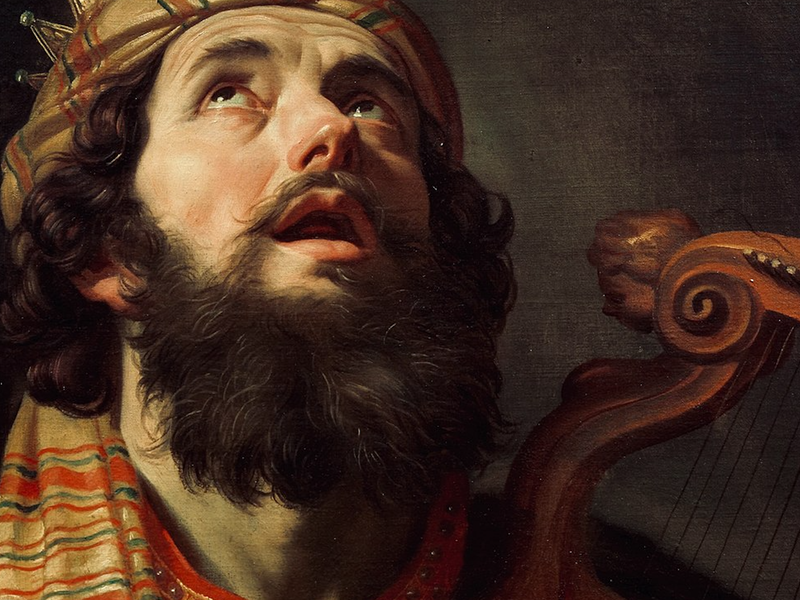
Throughout the latter half of 1-2 Samuel, Saul and David are locked in hand-to-hand combat. It seems an unequal contest. All the heavy artillery is on Saul's side. To understand the full scope of the conflict, we need to back up to the beginning of the book. Prior to Saul's…

by Peter LeithartSeptember 30, 2013
markus-winkler-aid-xyrtlec-unsplash
Theopolis News

Borderland

Last week, I lectured at Ostrog Academy in Ostrog, Ukraine, and at a pastors' conference in Kyiv. The latter was co-sponsored by Trinity House and the Alliance of Reformed Churches in Ukraine. I offer my impressions of Ukraine this morning at Firstthings.com .

by Peter LeithartSeptember 27, 2013
ruijia-wang-lr-ow3b23cm-unsplash
Media

Pascal and the iPod

Why do I bristle when I see someone with white wires hanging from his ears, flipping through what must be a million songs downloaded onto his iPod? No doubt, it’s the threat of the new. I've only recently begun carrying a cell phone, and now I hear tell of compact…

by Peter LeithartSeptember 25, 2013
aaron-burden-1ebsmyrau-s-unsplash
Isaiah

Where God Lives

Judah is in terrible shape (Isaiah 57). Yahweh told Israel to worship Him only at the temple, but the people worship on every hill and under every green and leafy tree. He commanded them to worship Him alone, but they are devoted to many gods. Worshipers set up their beds…

by Peter LeithartSeptember 23, 2013
screen-shot-2022-08-04-at-9-36-57-am
Hermeneutics

Everything Concerning Himself, (Part 2)

Like any great writer, the Lord foreshadows late happenings in early happenings. Like many greater writers, the Lord ends where he begins, returning to a glorified Edenic city-sanctuary at the end of his cosmic story. The Lord writes with history, real people and events, not merely with words. But His…

by Peter LeithartSeptember 18, 2013

Showing page 187 of 309

See all

Showing page 21 of 43

See all

Conference

If you’re in the vicinity of Duke, you might be interested in a conference sponsored by the Center for Catholic and Evangelical Theology, in cooperation with the Duke Divinity School, on May 21-23, at Duke. The theme is “Preaching, Teaching, and Living the Bible.” Speakers include Robert Jenson, Rusty Reno,…

March 30, 2006
Literature

Garber on Merchant

Marjorie Garber has, as usual, some insightful things to say about Merchant of Venice: 1) She describes the play as “Shakespeare’s great play about difference,” pointing to the apparent stark contrasts of Christian and Jew, Venice and Belmont, male and female. Yet, she also notes that the play is busy…

March 29, 2006
Literature

Biblical echoes in Merchant of Venice

A.R. Braunmuller offers some suggestive comments in his introduction to the Merchant of Venice in the Pelican Shakespeare. Having summarized Portia’s speech (which he suggests might be a “setup that turns on a technicality” that “turns back on Shylock a legal rigidity he had been duped into demanding”), he notes…

March 29, 2006

Hypostatic union

Thomas argues that “if the human nature is not united to God the Word in person, it is not united to him in any way, and thus belief in the incarnation is altogether done away with, which subverts the entire Christian faith.” But since there is a union, it must…

March 29, 2006

Aquinas and Chalcedon

Frederick Bauerschmidt claims that “Aquinas is in fact the first medieval theologian in the West to quote directly from the Council of Chalcedon.” This is remarkable on all sorts of levels, not least because of the questions it raises about the authority of the ecumenical councils in medieval thought.

March 29, 2006
Theology

Gift and Gratitude in the Middle Ages

INTRODUCTION Seneca’s de Beneficiis was known to the Christian Middle Ages, as were some of the gift and gratitude customs of the Roman world. We’ll examine the use that Aquinas makes of Seneca when we get to the Summa later this week. But in addition to these ancient sources, medieval…

March 28, 2006

Showing page 1865 of 2212

Browse by Category

In Medias Res

Your weekly digest for all things Theopolis.

Donate

Theopolis is nearly 100% donor-supported. Consider joining us on our mission.