Theopolis Logo

Writing

Explore our collection of theological essays, biblical studies, and reflections on faith and culture.

See all
sinitta-leunen-dvibhmzsy8e-unsplash
Epistemology

A Cheer for the Mystics

Mystical theologians are often unguarded, extreme, un-nuanced, pressing to the edges of heresy, sometimes beyond. Still, the mystics are worthy of study. Why? Many reasons. Unlike some late medieval and post-Reformation dogmaticians, mystical theologians are often instinctively and richly Trinitarian. Historical-critical approaches to Scripture left mystical theologians virtually untouched; mystics…

by Peter LeithartSeptember 2, 2013
portrait-of-william-shakespeare-1564-1616-ca-1865
Literature

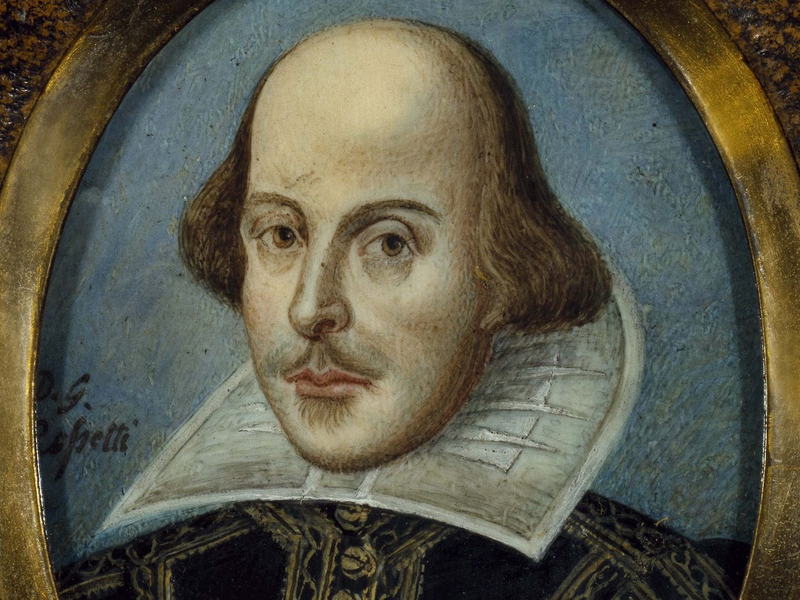
Shadow and Substance in Shakespeare's Venice

Portia of Belmont is a “lady richly left,” as Bassanio says of her in the first Act of The Merchant of Venice . Plus, she’s beautiful and wise. Suitors clamber to Belmont in hope. Her father knew it would be so, and in his will set up a fairy-tale test…

by Peter LeithartAugust 28, 2013
carlo-alberto-burato-smdx3gleu_m-unsplash
Liturgy

Liturgy Traps

[fve]http://vimeo.com/72195198[/fve]

by James B. JordanAugust 26, 2013
screen-shot-2022-05-12-at-12-07-23-pm
Deuteronomy

Victory Food

In the nature of the case, “the” Christian meditation on Deuteronomy 14:1-21 cannot be written. Meditation offers too many possibilities, opens too many doors. There is not one and only one correct set of associations for a Christian to consider when thinking of Deuteronomy 14:1-21. We could, for example, consider…

by Ralph Allan SmithAugust 21, 2013
aaron-burden-1ebsmyrau-s-unsplash
Romans

David's Sin and Israel's Salvation, Part I

Having retold the story of the cumulative sin of Israel leading to the great atonement on the cross, Paul then reemphasizes that, just as both Jew and Gentiles were locked into sin and judgment, now they are both justified by faith: Then what becomes of our boasting? It is excluded.…

by Mark HorneAugust 20, 2013
ben-white-w8qqn1pmqh0-unsplash
Deuteronomy

You are what you eat

Deuteronomy 14 is full of allusions to events of Israel’s history and other portions of Scripture. What would an Israelite learn by mediation on these allusions? The answer, I believe, is at least fourfold. Faith, Worship, War For the ancient Israelite first hearing Moses’ sermon, or perhaps hearing it read…

by Ralph Allan SmithAugust 15, 2013

Showing page 189 of 309

See all

Showing page 22 of 43

See all

Just Quitting

One day, Henry just quit. He had soldered wires for he didn’t know what in the back room of the Magnavox plant for thirteen years, and enough was enough. His eyes itched, the watery coffee from the machine was bitter, the pinups in the maintenance room never changed, and he…

November 24, 2005

Sermon Outline, First Advent

INTRODUCTION When Christians speak of the “holy family,” they normally have in mind Jesus’ “nuclear family,” Joseph and Mary and his siblings. But Matthew begins with Jesus’ larger family, tracing his descent from Abraham and David. THE TEXT “The book of the genealogy of Jesus Christ, the Son of David,…

November 24, 2005
Philosophy

A word for Scotus

Jonathan McIntosh, a student at the University of Dallas, challenges Vanhoozer’s (and Radical Orthodoxy’s) reading of Scotus that I summarized in a previous post, arguing that Scotus does not deny analogy. He has a point. The following discussion of Scotus’ understanding of the univocity of being is taken largely from…

November 24, 2005
History

History of the Sentence

Ian Robinson’s The Establishment of Modern English Prose in the Reformation and the Enlightenment (Cambridge, 1998) is a fascinating discussion of the history of the sentence and of English punctuation, and, despite its heavy-handed title, is a delight to read. Does the sentence have a history? Robinson shows that it…

November 24, 2005
Philosophy

Postmodern Theology

Kevin Vanhoozer has done a great service by editing the Cambridge Companion to Postmodern Theology (2003). Though the authors of the various articles differ among themselves, they are all well-informed about postmodern thought and culture and are making an effort to respond from the stance of Christian theology. In his…

November 24, 2005
Theology

Images of God

In the Summa theologiae (1.1.9), Thomas argues that “it is more fitting that divine matters should be conveyed under the figure of lowly bodies than of noble bodies.” Rocks are better figures for God than ideal forms. Thomas gives three reasons for this preference: First, if “lowly” bodies provide the…

November 24, 2005

Showing page 1921 of 2212

Browse by Category

In Medias Res

Your weekly digest for all things Theopolis.

Donate

Theopolis is nearly 100% donor-supported. Consider joining us on our mission.