Theopolis Logo

Writing

Explore our collection of theological essays, biblical studies, and reflections on faith and culture.

See all
kiwihug-l4gw27xzn1i-unsplash
Hermeneutics

Beginning and New Beginning in Luke

Although the events are, of course, not perfectly parallel, Luke in his gospel intends us to connect Jesus’ birth from the womb and His re-birth from the tomb. Luke 1:27 introduces us to Joseph and in verse 30 we learn that his betrothed wife was named Mary. An angel appeared…

by James B. JordanDecember 28, 1996
screenshot-2023-08-30-at-11-50-23-am
Matthew

A Note on Matthew

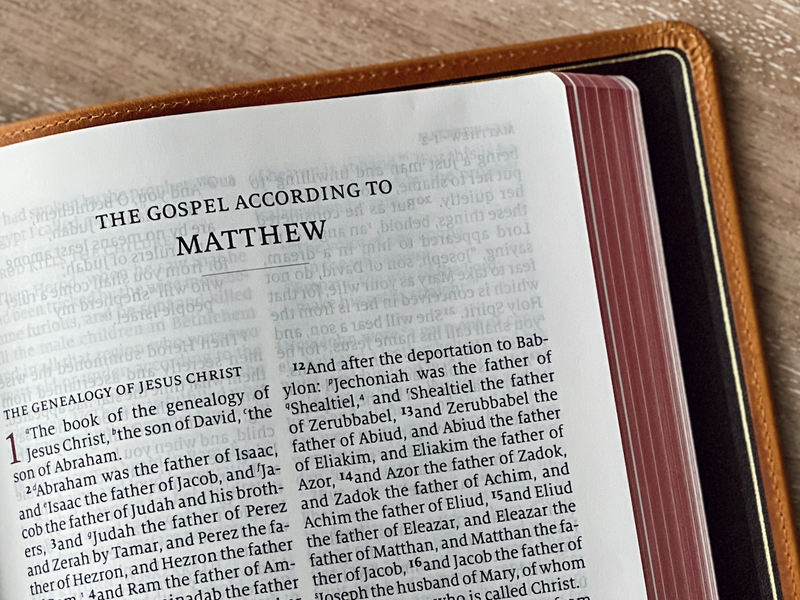
The apostle Matthew is also known as Levi son of Alphaeus. While not much is said about this man, the few things that are told us are significant. Matthew in Greek is Matthaios and comes from the Hebrew name Mattithiah, or Mattith-Yah, "Gift of Yah(weh)." Matthew’s other name is Levi,…

by James B. JordanDecember 28, 1996

aaron-burden-qjdzyt_k8xg-unsplash
Biblical Horizons

Twelve Fundamental Avenues of Revelation (Part 1)

Theologians often speak of "special" and "general" revelation, or of "natural" and "supernatural" revelation, or of "word" and "deed" revelation. While there are many worthwhile insights in these discussions, particularly in the discussions in Cornelius Van Til’s Introduction to Systematic Theology , I have not found any that satisfied my…

by James B. JordanDecember 28, 1996

jan-kahanek-g3o5ztrk2e4-unsplash
Ezekiel

Countdown to Exile IV: Ezekiel and the Structure of History

Ezekiel’s 430 Years In Ezekiel 4, the prophet is told to begin his ministry by setting up a model of Jerusalem and lying on his side and prophesying against it. He is to do this for 430 days, a day for a year. 390 days are against "Israel," and 40…

by James B. JordanDecember 28, 1996

img_7664
Biblical Horizons

The Oddness of the Feast of Booths

The Feast of Ingathering in the seventh month of the Sinaitic calendar is also called the Feast of Sukkoth, of Booths, also called Feast of Tabernacles. I have usually called it by that last phrase, and it is the most common today; but there is a problem: A tabernacle is…

by James B. JordanDecember 28, 1996
sixteen-miles-out-ki3hr9t8t7a-unsplash
Ezekiel

Countdown to Exile III: Warnings Against False Hopes

The End of Jehoiakim’s Reign We have seen that Jehoiakim rejected Jeremiah’s prophetic warnings at the beginning of his reign. Let us now make a year-by-year survey of his reign down to its end. In the spring of 605 BC, Nebuchadnezzar defeated the Egyptians at Carchemish. In the summer, he…

by James B. JordanNovember 28, 1996

Showing page 261 of 309

See all

Showing page 23 of 43

See all
History

Witch Craze

Jeffrey Burton Russell, who identifies himself as a “lapsed atheist,” has spent most of his career writing about Satan and hell. His most recent book is a history of the modern “mislaying” of heaven. Early in the book, he points out that “The ‘decline of heaven’ was linked to the…

August 18, 2006

Plato’s forms

In his “Hortatory Address,” Justin claims that Plato’s theory of forms came from a misreading of the tabernacle texts of Exodus: “And Plato, too, when he says that form is the third original principle next to God and matter, has manifestly received this suggestion from no other source than from…

August 16, 2006

Plato’s forms

In his “Hortatory Address,” Justin claims that Plato’s theory of forms came from a misreading of the tabernacle texts of Exodus: “And Plato, too, when he says that form is the third original principle next to God and matter, has manifestly received this suggestion from no other source than from…

August 16, 2006

Types and Shadows

As Hugo Rahner made clear in his classic study of the patristic uses of Greek myth, the church fathers saw Christ anticipated not only in the OT but in ancient literature and philosophy generally. Some examples: In Plato’s Republic (2, 361d-e), Glaucon describes the perfectly just man as one who…

August 16, 2006

Ouch!

In his “Hortatory Address to the Greeks,” Justin Martyr argued that the disagreements among Greek philosophers undermined their reliability, while the unity of the apostolic witness, and the witness of their successors, was evidence that Christianity came from God. “Since therefore it is impossible to learn anything true concerning religion…

August 16, 2006
History

Hegel and Hermes again

In the aforementioned book, Magee enumerates the following parallels between Hegel and Hermeticism: 1. Hegel holds that God’s being involves “creation,” the subject matter of his Philosophy of Nature. Nature is a moment of God’s being. 2. Hegel holds that God is in some sense “completed” or actualized through the…

August 16, 2006

Showing page 1808 of 2212

Browse by Category

In Medias Res

Your weekly digest for all things Theopolis.

Donate

Theopolis is nearly 100% donor-supported. Consider joining us on our mission.