Theopolis Logo

Writing

Explore our collection of theological essays, biblical studies, and reflections on faith and culture.

See all
e99a1883
Eucharist

According to the Ordinance

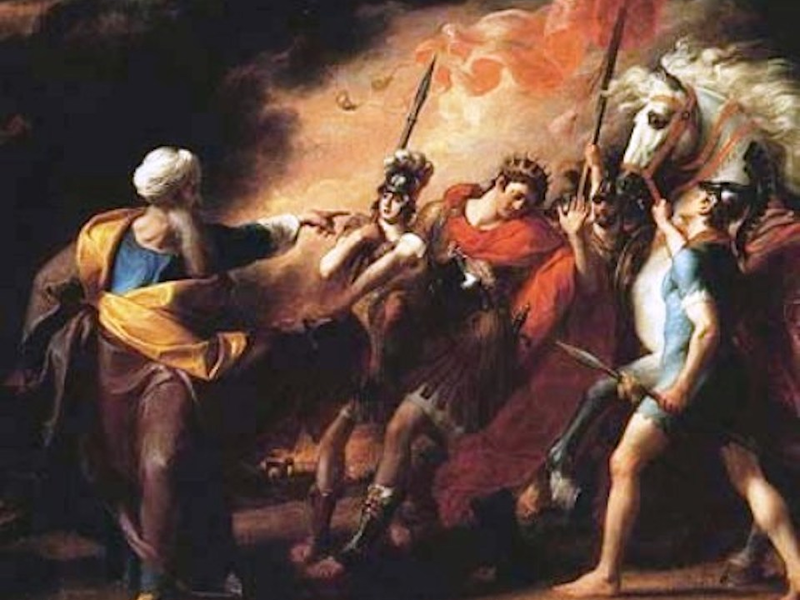
After 9 chapters of genealogy, the Chronicler begins his history with the death of Saul and the rise of David. The latter part of 1 Chronicles 12 describes the assembly of warriors from the twelve tribes to Hebron to celebrate David’s coronation as king. They have a three-day feast, with…

by Peter LeithartSeptember 1, 2016
pentecost
Baptism

Water, Spirit, and Fire, (Part 2)

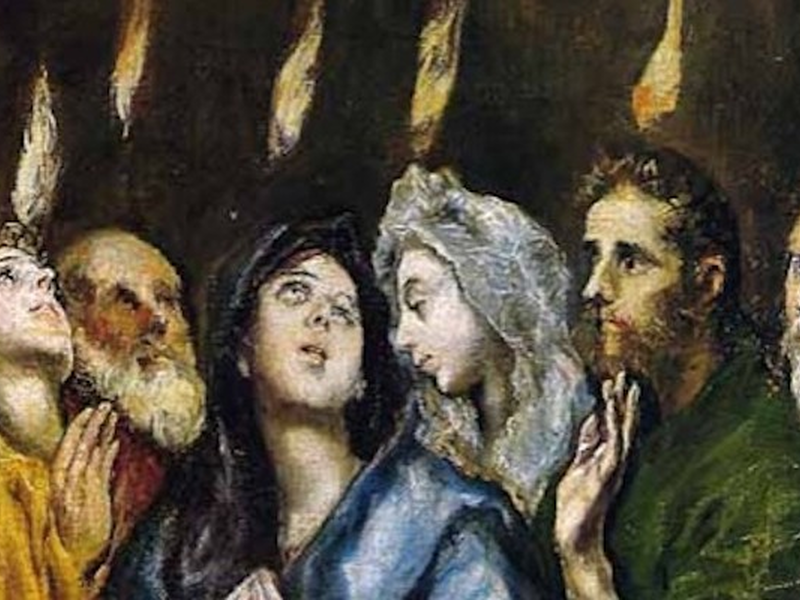
In the introduction we saw that Matthew and Luke are the only gospels which include “fire” in John the Baptist's narrative. If Matthew and Luke are the priestly and prophetic gospels, the inclusion of fire is of great importance. Priests are servants of the altar, working with fire every day.…

by Adam McIntoshAugust 30, 2016
city-heaven
Daniel

Brexit and the Binding of Satan: Part 3

The feet of the great statue in Nebuchadnezzar’s dream cannot be interpreted as a prediction of the states of modern Europe, but the lessons from their failure can certainly be applied . The statue in Nebuchadnezzar’s dream spoke of God’s ordaining of four empires which would rule in succession throughout…

by Mike BullAugust 25, 2016
istock_1475569697_1__9049d5f0-0813-44b1-9fa3-56fa65117e67
City

From Milwaukee

This past Sunday afternoon, I drove just a few miles west of my neighborhood to visit the corner of Sherman Blvd. and Burleigh St. in Milwaukee, Wisconsin. Amid a crowd I stood, looking at a huge gas station and multiple vehicles, all completely destroyed. Hundreds of feet of yellow caution…

by Jonathan SedlakAugust 23, 2016
david-men

Help

1 Chronicles 12 is a flashback. The Chronicler has told the story of Saul’s death at the battle of Mount Gilboa. He has described how “all Israel” gathered to David at Hebron to make him king over all Israel (11:1-3). At the beginning of chapter 12, we move back to…

by Peter LeithartAugust 18, 2016
e99a1834-2-6
Theopolis News

Leviticus Course Recap

A great story draws you into specific details while delivering an ending that keeps you coming back. It brings you into the minutiae of life in such a way that requires patience, only to deliver a breath of fresh air time and again. The climax of the biblical story comes…

by Brian MoatsAugust 17, 2016

Showing page 126 of 309

See all

Showing page 23 of 43

See all
Literature

Ibsen

Ibsen, Steiner argues, did not write tragedies. Ibsen wrote “dramatic rhetoric” calling society to reform. For real tragedy, there is no such “solution” to be found, there is no remedy, except destructive sacrifice and perhaps a deus ex machina. From this angle, tragedy is perhaps among the STOICHEIA that prepared…

January 7, 2004
Literature

More Quotations from Steiner

Some more quotations from Steiner’s Death of Tragedy : “We cannot understand the romantic movement if we do not perceive at the heart of it the impulse toward drama . . . . The romantic mode is neither an ordering nor a criticism of life; it is a dramatization. And…

January 7, 2004
Theology

NT Wright’s Rutherford House Lecture

Some thoughts on NT Wright’s Rutherford House Lecture, August 2003. I have little disagreement with much of the lecture, and it clarified a number of things for me. Wright’s views on justification, however, continue to puzzle me at a number of points. Here’s an attempt to clarify my (or NTW’s)…

January 7, 2004
Theology

NT Wright’s Rutherford House Lecture

Some thoughts on NT Wright’s Rutherford House Lecture, August 2003. I have little disagreement with much of the lecture, and it clarified a number of things for me. Wright’s views on justification, however, continue to puzzle me at a number of points. Here’s an attempt to clarify my (or NTW’s)…

January 7, 2004
Literature

European Drama

Steiner notes that, following the Renaissance, European drama operated under the shadows of neo-classical and Elizabethan dramatic practice, the former “closed” and rigidly adhering to Aristotelian criteria, the other open and experimental. He discusses the theory of Thomas Rymer (a neo-classicist) at some length, concluding that the controversies that Rymer…

January 6, 2004
Literature

Shakespearean Difference

George Steiner in his Death of Tragedy describes the “Shakespearean difference” as mainly due to Shakespeare’s avoidance of fascination with Hellenic models: “The neo-classic view [which rigidified Aristotelian conceptions of tragedy] expresses a growing perception of the miracle of Greek drama. This perception was fragmentary. There were few translations of…

January 6, 2004

Showing page 2141 of 2212

Browse by Category

In Medias Res

Your weekly digest for all things Theopolis.

Donate

Theopolis is nearly 100% donor-supported. Consider joining us on our mission.