Theopolis Logo

Writing

Explore our collection of theological essays, biblical studies, and reflections on faith and culture.

See all
sinitta-leunen-dvibhmzsy8e-unsplash
Epistemology

A Cheer for the Mystics

Mystical theologians are often unguarded, extreme, un-nuanced, pressing to the edges of heresy, sometimes beyond. Still, the mystics are worthy of study. Why? Many reasons. Unlike some late medieval and post-Reformation dogmaticians, mystical theologians are often instinctively and richly Trinitarian. Historical-critical approaches to Scripture left mystical theologians virtually untouched; mystics…

by Peter LeithartSeptember 2, 2013
portrait-of-william-shakespeare-1564-1616-ca-1865
Literature

Shadow and Substance in Shakespeare's Venice

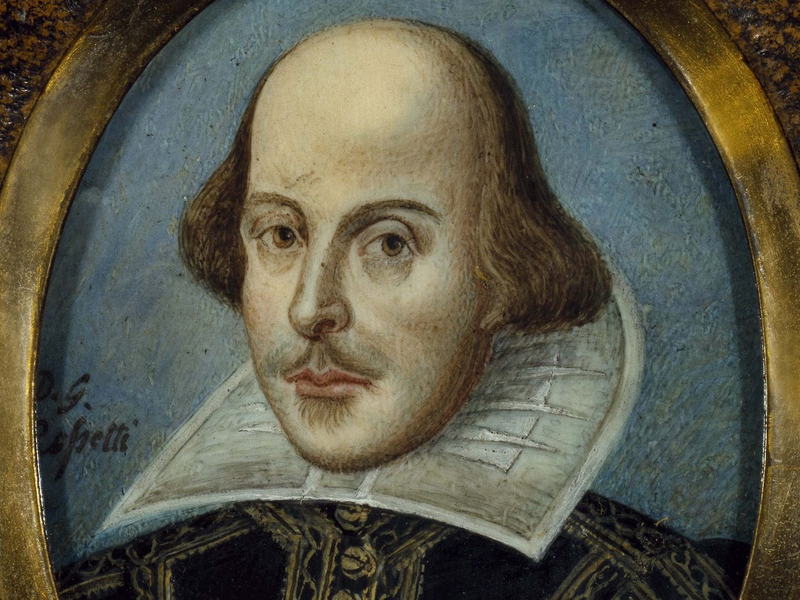
Portia of Belmont is a “lady richly left,” as Bassanio says of her in the first Act of The Merchant of Venice . Plus, she’s beautiful and wise. Suitors clamber to Belmont in hope. Her father knew it would be so, and in his will set up a fairy-tale test…

by Peter LeithartAugust 28, 2013
carlo-alberto-burato-smdx3gleu_m-unsplash
Liturgy

Liturgy Traps

[fve]http://vimeo.com/72195198[/fve]

by James B. JordanAugust 26, 2013
screen-shot-2022-05-12-at-12-07-23-pm
Deuteronomy

Victory Food

In the nature of the case, “the” Christian meditation on Deuteronomy 14:1-21 cannot be written. Meditation offers too many possibilities, opens too many doors. There is not one and only one correct set of associations for a Christian to consider when thinking of Deuteronomy 14:1-21. We could, for example, consider…

by Ralph Allan SmithAugust 21, 2013
aaron-burden-1ebsmyrau-s-unsplash
Romans

David's Sin and Israel's Salvation, Part I

Having retold the story of the cumulative sin of Israel leading to the great atonement on the cross, Paul then reemphasizes that, just as both Jew and Gentiles were locked into sin and judgment, now they are both justified by faith: Then what becomes of our boasting? It is excluded.…

by Mark HorneAugust 20, 2013
ben-white-w8qqn1pmqh0-unsplash
Deuteronomy

You are what you eat

Deuteronomy 14 is full of allusions to events of Israel’s history and other portions of Scripture. What would an Israelite learn by mediation on these allusions? The answer, I believe, is at least fourfold. Faith, Worship, War For the ancient Israelite first hearing Moses’ sermon, or perhaps hearing it read…

by Ralph Allan SmithAugust 15, 2013

Showing page 189 of 309

See all

Showing page 23 of 43

See all
Philosophy

Smith on Derrida

James Smith’s conclusions regarding Derrida express more clearly than I’ve been able to do my own sense of Derrida. These are scattered quotations from The Fall of Interpretation , pp. 127-129: “Derrida is honest about not challenging for a moment Rousseau’s and Levi-Strauss’s reading of violence; his own analysis is…

October 15, 2003

Interpretation and the Fall

James K. A. Smith has a neat scheme for summarizing different view of interpretation in terms of the categories of creation and fall. For some thinkers, interpretation and the possibility of misinterpretation are results of the Fall; for others, interpretation and misinterpretation is inherent in created life, though there is…

October 15, 2003
Philosophy

Another Benefit of Derrida: Because

Another benefit of Derrida: Because he puts philosophical issues in mythological and metaphorical terms, he moves philosophy into the field of theology. As I’ve pointed out in a number of posts, Derrida (following Plato) speaks of the relationship between speaker and speech (or sometimes between speech and writing) as a…

October 14, 2003
History

Writing and Democratization

JP Vernant points out the connection between writing and democratization: “In the kingdoms of the New East, writing was a privilege and specialty of scribes. Writing enabled the royal administration to control the economic and social life of the State by keeping records of it. Its purpose was to constitute…

October 14, 2003
Philosophy

Pharmakos

Well, here’s an interesting coincidence (pointed to by Derrida, still in “Plato’s Pharmacy”): Derrida is discussing the ritual of the pharmakos , which he is connecting to Plato’s various uses of pharmak - words in discussions of knowledge, language, and other issues. The pharmakos rite was a scapegoat ritual, annually…

October 14, 2003
Philosophy

Why is Derrida Fun?

What is it that makes Derrida so stimulating and fun to read? At least for his treatment of standard philosophical works (I’m reading “Plato’s Pharmacy” in Disseminations ), I think it’s mainly that he shows that philosophy is not about what undergraduate courses in philosophy teach you it is about.…

October 14, 2003

Showing page 2183 of 2212

Browse by Category

In Medias Res

Your weekly digest for all things Theopolis.

Donate

Theopolis is nearly 100% donor-supported. Consider joining us on our mission.