Theopolis Logo

Writing

Explore our collection of theological essays, biblical studies, and reflections on faith and culture.

See all
blocks-t3mkjxfdims-unsplash-2
Advent

Advent and Christmas Music Recommendations

Inspired by our recent podcast on Christmas and Advent music recommendations, we offer here a list of excellent recordings that are sure to enrich your Advent and Christmas season. Praetorius: Mass for Christmas Morning Paul McCreesh with the Gabrieli Consort and Players Amazon | Spotify | Apple Music 2. Christmas…

by John Ahern and Paul BuckleyDecember 23, 2020

sasha-stories-c6g-26myd34-unsplash
Advent

Between the Altar and the City: Isaiah 65:17-25

In the year 1483 in the city of Nuremberg, the leaders of the renowned Saint Lawrence Church were seeking to redesign their altar, and above the table where the priests presided over the eucharist, they wanted new art installed above the prestigious Krell altar. What they decided on took everyone…

by Casey BedellDecember 22, 2020
adam-and-eve-in-the-garden-of-eden-wenzel-peter
Advent

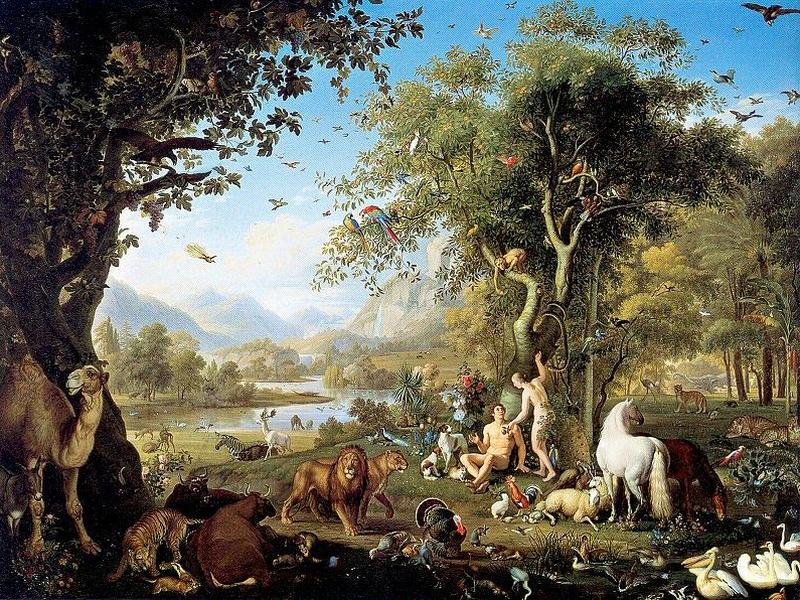
Why We're the Real Seventh Day Adventists

The consequences of disobedience start with exile from the garden of God and the Tree of Yahweh, but they do not end there. They cascade down through the structure of the dynastic order. Everything which had previously been given in the Kingdom of Elohim is either taken back or curtailed…

by Jerry BowyerDecember 18, 2020
herrmann-stamm-19il-6uc5c4-unsplash
Biblical Studies

Psalm 23: A Lesson in Reading Biblical Poetry

Parallelism: A Course Correction If you have ever studied Hebrew poetry, you have probably heard its basic poetic feature described as “parallelism.” Hebrew poetry is not metered, it does not rhyme, it does not employ many of the common poetical tropes, but its distinctive (and almost universal) feature is commonly…

by Ryan HandermannDecember 15, 2020
screen-shot-2020-12-11-at-10-04-32-am
Deuteronomy

Deuteronomy 17 and the Separation of Powers

In The Crown and the Courts , David C. Flatto traces the development of the idea of judicial independence in Jewish commentaries on the Scriptures – particularly Deuteronomy 17 – from the Second Temple and early rabbinic periods. These periods roughly span 400 BC to 300 AD. Flatto does not…

by James R. RogersDecember 11, 2020
67201-zechariah-verses-1200w-tn
Advent

Zechariah and John: A Story in Names

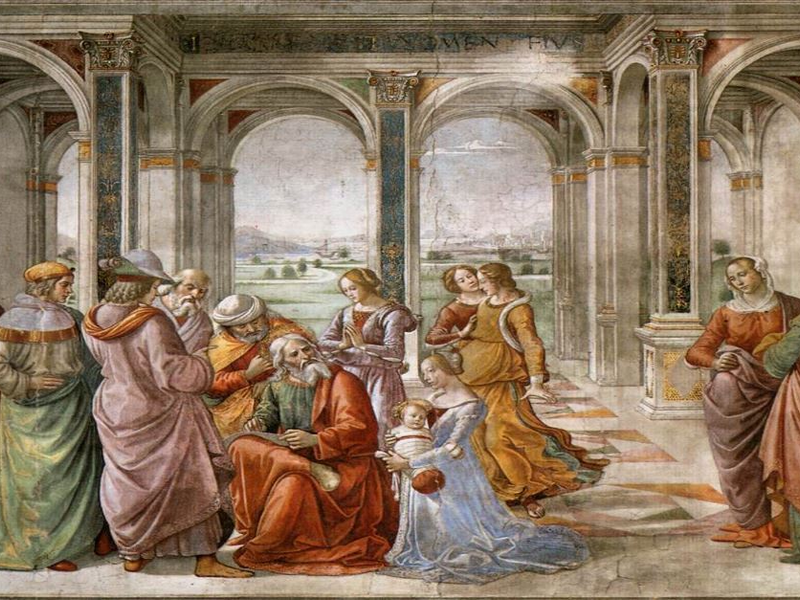
A curious feature of the Infancy Narratives in the Gospel of Luke is the naming of John the Baptist. When the angel appears to Zechariah, he is instructed to give his promised son the name John (Luke 1:13). On the day of John’s circumcision, Luke tells us that “they [presumably…

by Rhys LavertyDecember 8, 2020

Showing page 60 of 309

See all

Showing page 26 of 43

See all

You shall know them by their fear

Stott notes that 1 John 4:19 indicates that the church’s great characteristic is love, not fear. That is, it should be. Is it? Hardly. Read the next piece of direct mail you get from a Christian advocacy group. Look at the listings in a Christian book catalogue or bookstore. Analyze…

January 20, 2007

Fear and fear

Perfect love casts out fear, John says. But the Bible repeatedly exhorts us to fear God. There’s fear, then there’s fear. How do we tell the difference? The difference is in the direction our fear moves us. Adam feared God, and hid in the garden. Wrong fear drives us away…

January 20, 2007

Kantian modalism?

Post-Kantian thought cannot make room for undistorted revelation of God in history. History, creation, is necessarily a distorting medium. Is this just a form of modalism? Doesn’t this just create an unbridgeable modalist gap between God-in-Himself and God-as-revealed? Isn’t this just saying that God is not what He appears to…

January 20, 2007

God’s body

Time was when you could despise the body and love God, or despise God and love the body. One could be an ascetic or a hedonist. Then God got Himself a body. Despite efforts to retain this choice (Nietzsche, flagellants), the incarnation made the ancient choice of ascetic or hedonist…

January 19, 2007

God’s body

Time was when you could despise the body and love God, or despise God and love the body. One could be an ascetic or a hedonist. Then God got Himself a body. Despite efforts to retain this choice (Nietzsche, flagellants), the incarnation made the ancient choice of ascetic or hedonist…

January 19, 2007

Dionysus and the crucified

Shaftesbury recognized the stark difference between his own rational Deity and the vulgar bodily and crucifiable Christ. Francis Hutcheson, building on Shaftesbury, tried to conflate the two. Hutcheson was a Christian, a Presbyterian professor of moral theology. Shaftesbury loathed Christ. But which of the two was the better friend of…

January 19, 2007

Showing page 1732 of 2212

Browse by Category

In Medias Res

Your weekly digest for all things Theopolis.

Donate

Theopolis is nearly 100% donor-supported. Consider joining us on our mission.