Theopolis Logo

Writing

Explore our collection of theological essays, biblical studies, and reflections on faith and culture.

See all
kiwihug-l4gw27xzn1i-unsplash
Hermeneutics

Hermeneutical Polytheism

A couple of decades ago, when I was a young Reconstructionist (instead of a middle-aged post-Reconstructionist), I coined the phrase "political polytheism" to describe how modern evangelical Christians approach matters of social law and politics. Christians want the Bible for Church and family life, but turn to other gods for…

by James B. JordanJanuary 28, 1996

jan-kahanek-g3o5ztrk2e4-unsplash
Biblical Horizons

Concerning Contracts and Covenants

Gary North has from time to time taken note of some of the differences between contracts and covenants. For him, one of the most important is the oath-character of a covenant. Naturally, the English terms "contract" and "covenant" can be used with varying nuances by different writers, and their zone…

by James B. JordanJanuary 5, 1996
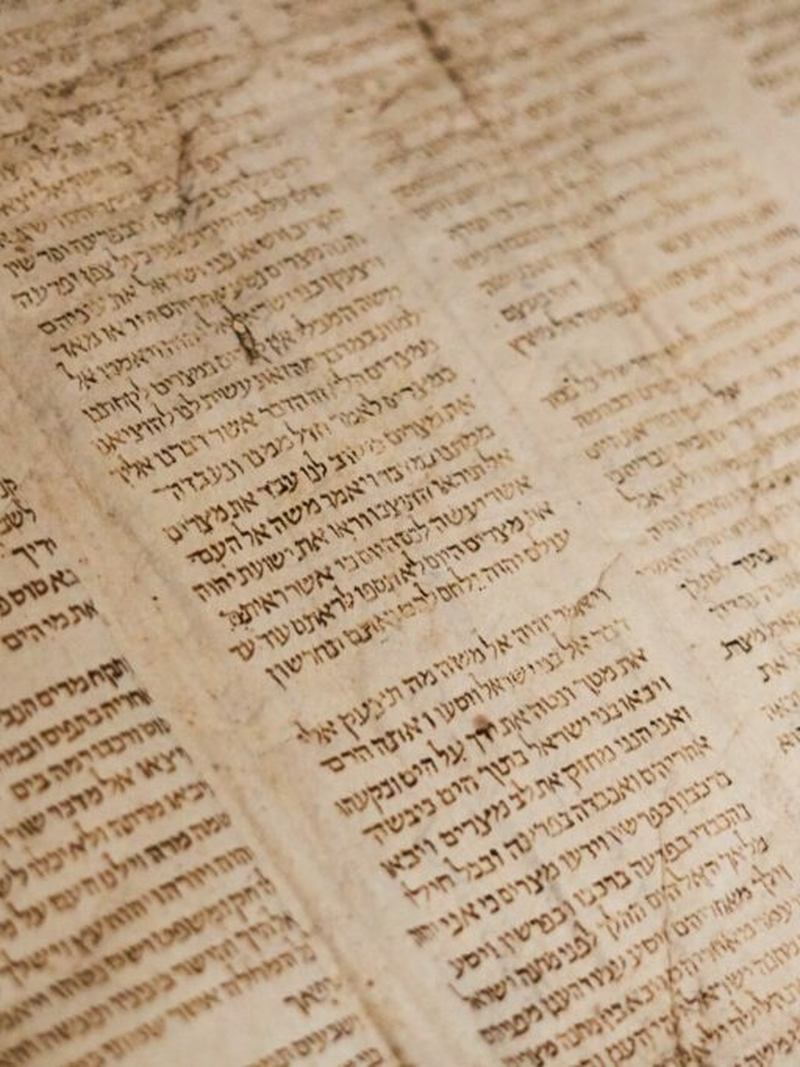
hebrew-manuscript-6
Biblical Studies

Rethinking the Order of the Old Testament

The Book of Chronicles is the last book in the Hebrew Canon of the Old Testament. The word "canon" means "authoritative list" when used in connection with the Bible. What we call the Hebrew Canon consists of 24 books arranged in three major divisions: the Law, the Prophets, and the…

by James B. JordanDecember 28, 1995
skyler-gerald-akljfvj5ym4-unsplash
Biblical Studies

At The Center of the Book of Kings

by: Peter Leithart and James Jordan The Book of Kings is structured chiastically, or concentrically. To see this clearly, we start in the middle and work our way outward. 2 Kings 3–7 record the central events of the ministry of Elisha. Elisha makes his first appearance in 1 Kings 19:19-21,…

by Peter LeithartNovember 5, 1995
lili-popper-lu15z1m_kfm-unsplash
Judges

Dynastic Aspirations in the Book of Judges

(The following is a supplement to my book, God’s War Against Humanism , a study of the book of Judges, available from Biblical Horizons for $20.00 – a photocopy of the original book, which is now out of print). The turning point in the book of Judges is 8:22-28. Here…

by James B. JordanNovember 5, 1995
james-coleman-orks2dpueo0-unsplash
Biblical Horizons

Doing the Lord’s Supper

From time to time I am asked how I think the Lord’s Supper should be done. This essay is my response to that question. To start with, we should agree that the Lord’s Supper is the only ritual we are obligated to do in the New Covenant on a routine…

by James B. JordanNovember 5, 1995

Showing page 268 of 309

See all

Showing page 26 of 43

See all

Necessity of Incarnation

Would the Son have been incarnate if Adam had not sinned? 1 Corinthians 15:44-45 provides a prooftext for an affirmative answer. Verse 44 says that the “spiritual body” is implied by the existence of the “natural body.” Human beings were created in a natural state, but they were destined from…

August 12, 2006
Philosophy

Decentered Self of Modernity

Bishop Joseph Butler of Durham worried about the consequences of Locke’s empiricism: “That personality is not a permanent, but a transcient thing: that it lives and dies, begins and ends continually: that no one can any more remain one and the same person two moments together, than two successive moments…

August 12, 2006
History

Embedded mind

Modernity ignores the social, linguistic, and political context of thought, and the way interest shapes the mind; postmodernity foregrounds all this. Perhaps, but . . . . Descartes said that his travels demonstrates that “all those who hold notions strongly contrary to our own are not for that reason barbarians…

August 12, 2006
History

Self and World

For premoderns - ancients and medievals - there was a homology between the self and the world. Man was seen as microcosm, and, as Seigel puts it, they believed that “the world, like the self, is structured so as to fulfill intelligible moral ends.” The initial shift in early modernity,…

August 12, 2006
Philosophy

Birth of the Modern Self?

Seigel views with “considerable skepticism” the notion that Descartes constructed “a general theory of the human self and subject on the basis of the cogito .” In his treatise on the Passions of the Soul , Descartes claimed that the soul was linked with the body, which acts on the…

August 12, 2006
History

Purity

According to Seigel, “Descartes’s view of reason as most pure and solid when it was free of corruption by the world’s confusions implied nothing less than the attempt to break free of all social and cultural experience.” Not for the first time, I wish there were an anthropological history of…

August 12, 2006

Showing page 1812 of 2212

Browse by Category

In Medias Res

Your weekly digest for all things Theopolis.

Donate

Theopolis is nearly 100% donor-supported. Consider joining us on our mission.