Theopolis Logo

Writing

Explore our collection of theological essays, biblical studies, and reflections on faith and culture.

See all
screen-shot-2022-08-04-at-9-36-57-am
Matthew

Paul Doesn't Care About Universal Individual Sinfulness or General Revelation

One reason readers assume Paul is trying to prove that all human beings are sinful is that they understand him to be arguing that no one can keep the law. That means, they think, his opponents must believe that human nature is potentially sinless. Taking Paul’s statement that, if you…

by Mark HorneJune 17, 2013

karsten-wurth-imegmbunara-unsplash
Mission

Dreams and Visions

[Note: This post was written prior to our name changing to Theopolis Institute.] What is Trinity House for? Three things: We aim to advance the reformation of the church and, through the church, to promote the renewal of culture; in furthering reformation, we aspire to be a site of fraternal,…

by Peter LeithartJune 12, 2013
sixteen-miles-out-al48tflf4e8-unsplash
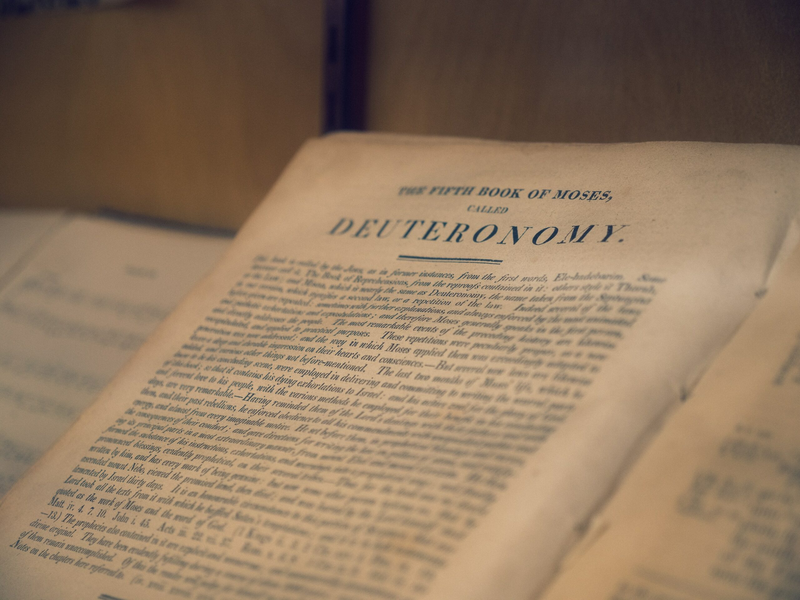
Deuteronomy

Sons to Yahweh your God!

This is the third in a series of studies of the Third Word, and especially of Deuteronomy 14. In 1979 Stephen Kaufman penned a groundbreaking essay on Deuteronomy, arguing that it was a meticulously structured and carefully composed book. In his view, chapters 12 to 26 in particular follow the…

by Ralph Allan SmithJune 10, 2013
kelly-sikkema-gpoh17dxqdm-unsplash
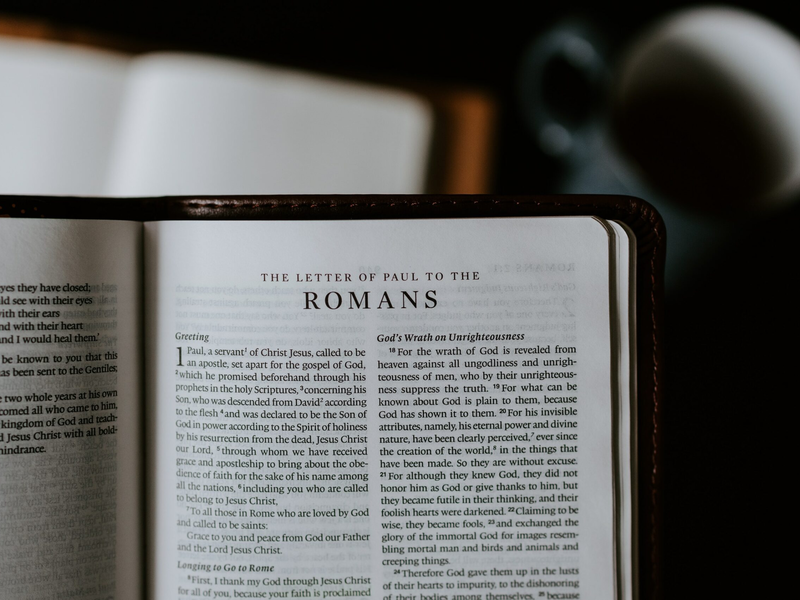
Romans

How is Wrath Revealed?

A large mistake is made in understanding Romans if one assumes that Paul is concerned with proving the fact that no one can ever live without sin—or that all attempts at obeying God’s commands are at least tainted with human sinfulness. The first problem with such an assumption is that…

by Mark HorneJune 5, 2013
chris-bair-ndczc5739ck-unsplash
Deuteronomy

The Third Word

This is the second in a series of studies on the Third Word, and especially on the food laws of Deuteronomy 14. In the second part of this series, I argue that Moses’ reworking of the Ten Words in Deuteronomy 5 includes adding nuance to the Third Word. This prepares…

by Ralph Allan SmithJune 3, 2013
yannis-papanastasopoulos-if_29sed7ta-unsplash
Culture

Turning Babel into a Beast

Recent months have brought a lively discussion of Christian participation in the culture war. On the one hand, the pro-life movement appears to be making some slow progress on the abortion issue. The trial of abortionist and serial murderer Kermit Gosnell has the potential to awaken those who are nominally…

by Joe RigneyMay 29, 2013

Showing page 193 of 309

See all

Showing page 26 of 43

See all

Just Quitting

One day, Henry just quit. He had soldered wires for he didn’t know what in the back room of the Magnavox plant for thirteen years, and enough was enough. His eyes itched, the watery coffee from the machine was bitter, the pinups in the maintenance room never changed, and he…

November 24, 2005

Sermon Outline, First Advent

INTRODUCTION When Christians speak of the “holy family,” they normally have in mind Jesus’ “nuclear family,” Joseph and Mary and his siblings. But Matthew begins with Jesus’ larger family, tracing his descent from Abraham and David. THE TEXT “The book of the genealogy of Jesus Christ, the Son of David,…

November 24, 2005
Philosophy

A word for Scotus

Jonathan McIntosh, a student at the University of Dallas, challenges Vanhoozer’s (and Radical Orthodoxy’s) reading of Scotus that I summarized in a previous post, arguing that Scotus does not deny analogy. He has a point. The following discussion of Scotus’ understanding of the univocity of being is taken largely from…

November 24, 2005
History

History of the Sentence

Ian Robinson’s The Establishment of Modern English Prose in the Reformation and the Enlightenment (Cambridge, 1998) is a fascinating discussion of the history of the sentence and of English punctuation, and, despite its heavy-handed title, is a delight to read. Does the sentence have a history? Robinson shows that it…

November 24, 2005
Philosophy

Postmodern Theology

Kevin Vanhoozer has done a great service by editing the Cambridge Companion to Postmodern Theology (2003). Though the authors of the various articles differ among themselves, they are all well-informed about postmodern thought and culture and are making an effort to respond from the stance of Christian theology. In his…

November 24, 2005
Theology

Images of God

In the Summa theologiae (1.1.9), Thomas argues that “it is more fitting that divine matters should be conveyed under the figure of lowly bodies than of noble bodies.” Rocks are better figures for God than ideal forms. Thomas gives three reasons for this preference: First, if “lowly” bodies provide the…

November 24, 2005

Showing page 1921 of 2212

Browse by Category

In Medias Res

Your weekly digest for all things Theopolis.

Donate

Theopolis is nearly 100% donor-supported. Consider joining us on our mission.