Theopolis Logo

Writing

Explore our collection of theological essays, biblical studies, and reflections on faith and culture.

See all
little-girl
Children

Honor God With Your Body

I am making a new rule in our house! We are actually kind of skimpy on the house rules. I try very hard to keep things simple: love God, love others, be joyful. It’s not complicated to avoid discipline here. But I have found myself repeating this new rule over…

by Lindsey TollefsonApril 9, 2015
giotto-noli-me-3
John

The Gardener and the Beloved, (Part 3)

Click HERE for Part 2 The voice of Jesus transforms and changes Mary when she hears him speak her name. This is her last “turning.” So also the woman in the Song of Songs longs to hear the voice of her beloved. Let me see your face, let me hear…

by Jeff MeyersApril 6, 2015
giotto-noli-me-2
John

The Gardener and the Beloved, (Part 2)

Click HERE for Part 1. The details of this story call the attentive reader back to the drama of Solomon’s Song of Songs. And the Song of Song’s alludes to, ties us into the story of Adam and Eve in the Garden and the promise of a coming Messiah that…

by Jeff MeyersApril 4, 2015
easter-term-2015-2
Theopolis News

Easter Term, 2015

“The course was a paradigm shift for me,” said Jonathan Sedlak, a Milwaukee electrical contractor who attended Theopolis’s course on Revelation. “I am left with a book that is far more practical than it has ever seemed before.” Jonathan Anderson of Louisville, Kentucky found the course “refreshing.” “I finished with…

by TheopolisApril 2, 2015
psalm-singing
Genesis

Worship as Response: Liturgical Logic, (Part 1)

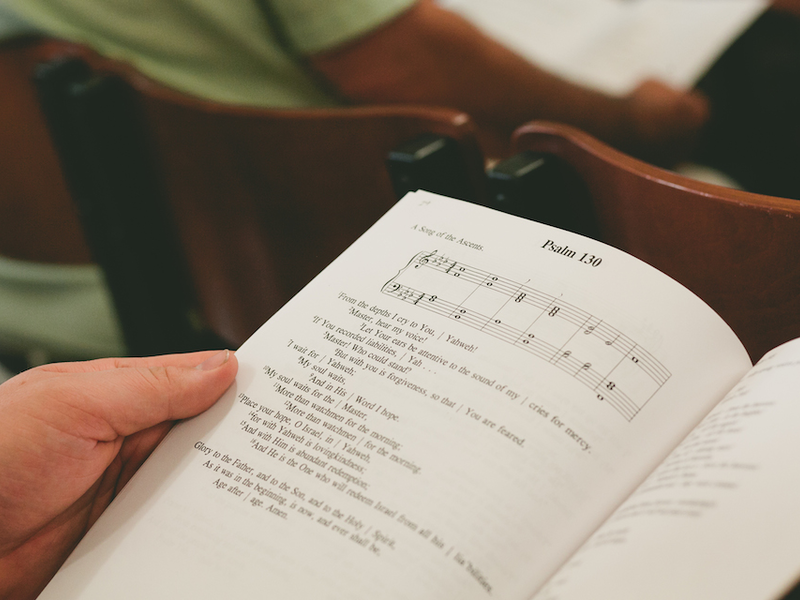
“It is only by participation in a rational, practice-based community that one becomes rational.” – Alasdair MacIntyre It may be perfectly clear to a chef why adding unsifted powdered sugar to a hot frosting is a bad idea. But for an amateur cook, this may be the kind of rule…

by Jonathan BarlowApril 2, 2015
giotto-noli-me
John

The Gardener and the Beloved, (Part 1)

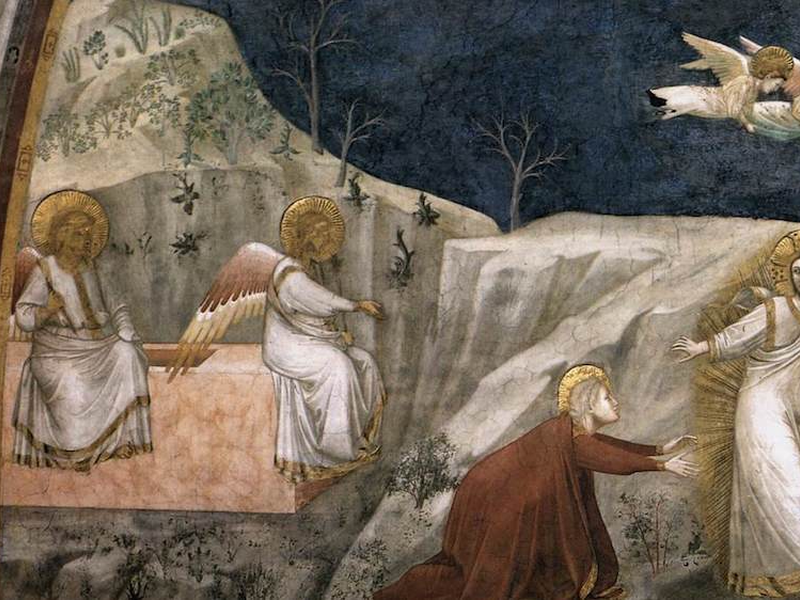
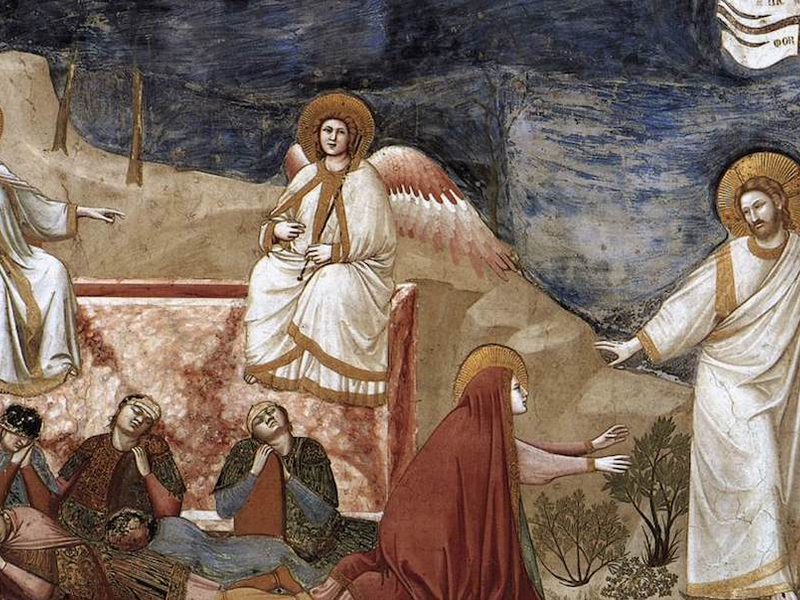
On a fresco in a chapel in Padua, Italy, there is a famous painting depicting the dramatic post-resurrection scene in John 20 with Mary and Jesus outside of the garden tomb. Giotto di Bondone painted it in the early 14th century. Jesus is striding from the tomb with a victor’s…

by Jeff MeyersApril 1, 2015

Showing page 156 of 309

See all

Showing page 26 of 43

See all

Stuhlmacher on Hilasterion (Rom. 3:25)

Peter Stuhlmacher interprets HILASTERION in Rom 3:25 as the KAPPORET of the ark of the covenant, the place where atonement is made. From the cross on, the place of atonement was no longer in the temple but in Jesus. He links this with the critique of the temple and temple…

January 25, 2004

Chiasm in Romans 3:27-30

There looks to be some chiastic action going on in Romans 3:27-30: A. Where is boasting? Excluded B. By law of works? C. No: Law of faith C. justification is by faith B. not by works of law (reversing word order of previous verse) A. God is God of Jews…

January 24, 2004

Romans 3:21-31

Most commentaries I’ve examined assume that Paul’s discussion of the work of Jesus in Romans 3:21-31 centers in the cross. The reference to blood and to propitiation (or propitiating sacrifice) in v 25 justifies this, but this doesn’t mean that Paul’s focus is exclusively on the cross. Several things support…

January 24, 2004

Paul on God’s Righteousness

Romans 3:21 begins a section where Paul expounds, for the first time in Romans, on the revelation of the righteousness of God. One of the ways to characterize current debates about this passage, and about the righteousness of God and justification in general, is to ask whether this is about…

January 22, 2004

Paul on God’s Righteousness

Romans 3:21 begins a section where Paul expounds, for the first time in Romans, on the revelation of the righteousness of God. One of the ways to characterize current debates about this passage, and about the righteousness of God and justification in general, is to ask whether this is about…

January 22, 2004
Literature

Kelly on Tragedy

Henry Ansgar Kelly’s Ideas and Forms of Tragedy from Aristotle to the Middle Ages (Cambridge, 1993) is a careful and useful study of the use of the word “tragedy” from the ancients through the 14th century. He narrowly focuses on the uses of the word-group itself, and shows that the…

January 22, 2004

Showing page 2133 of 2212

Browse by Category

In Medias Res

Your weekly digest for all things Theopolis.

Donate

Theopolis is nearly 100% donor-supported. Consider joining us on our mission.