Theopolis Logo

Writing

Explore our collection of theological essays, biblical studies, and reflections on faith and culture.

See all
screen-shot-2021-08-12-at-2-57-54-pm
Matthew

What Tune is Playing? (Matthew 11:1-19)

Matthew’s gospel is a replay of Israel’s history, and this replay occurs at two different levels. On the one hand, Jesus relives Israel’s history and does it faithfully. He is the Son, the true Israel, called out of Egypt, baptized in the sea, tempted in the wilderness. He is the…

by Peter LeithartJanuary 14, 2014

markus-winkler-aid-xyrtlec-unsplash
Theopolis News

Constantine, Christendom, Christian Renewal

Trinity House President Peter Leithart will deliver two lectures at the Eighth Day Institute annual conference in Wichita, Kansas, January 16-18. The conference theme is "Constantine, Christendom, and Christian Renewal," and Dr. Leithart will be lecturing on Constantine. Dr. Leithart will preach on Sunday, January 19, at Trinity Covenant Church…

by Peter LeithartJanuary 13, 2014
screenshot-2023-08-30-at-11-50-23-am
Matthew

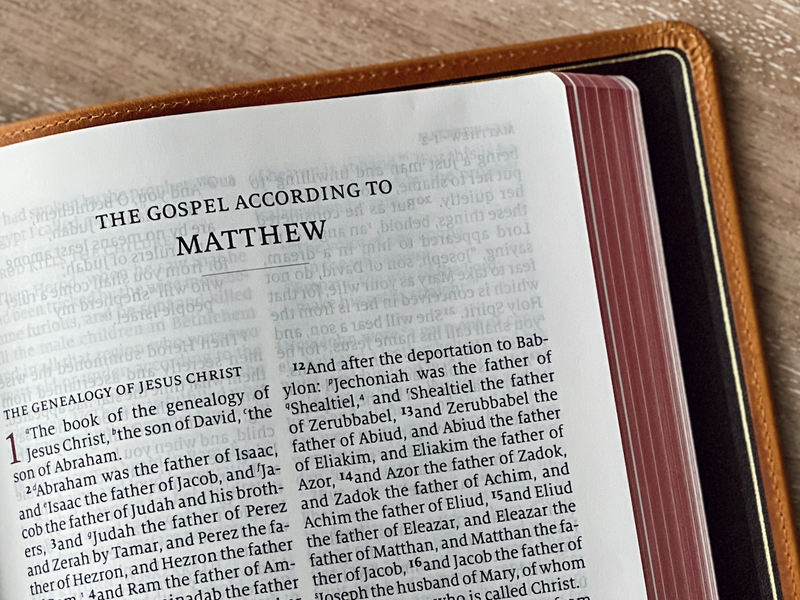
Treasures in Matthew's Genealogy, 2

In the previous article, we considered the life of Abraham up to the birth of Isaac and the way in which his life up to that point foreshadows later redemptive history. Our reason for this consideration was at the Gospel of Matthew's behest. He pointed us in that direction. He…

by Kelly KerrJanuary 9, 2014
annie-spratt-ia-cxcviwty-unsplash-3
Theology

The Trinity and the Nations, 3

The Spirit of Speech The last period in Israel’s history arrives almost from nowhere. The prophets appear unannounced, give short, but earth-shattering messages and then are whisked away by the Spirit (1 Kings 18:12). They do not hold high positions in Israel, but their words give them great political sway.…

by Brian MarrJanuary 7, 2014
markus-winkler-aid-xyrtlec-unsplash
Theopolis News

Nevin Lectures

Trinity House Institute is delighted to announce our first annual series of Nevin Lectures. Timothy George, Dean and Professor of Church History at Beeson Divinity School, will deliver four lectures on “Sacramental Theology from a Baptist Perspective” on February 7-8, 2014 at Trinity Presbyterian Church in Birmingham, Alabama. More information...…

by TheopolisJanuary 2, 2014
screen-shot-2022-08-04-at-9-36-57-am
Revelation

Him Whom They Pierced

Revelation 1: 7 states the theme of Revelation. It is a self-standing verse, beginning and ending with “Amen” (the “Amen” at the end of verse 6 should be taken as the beginning of the statement in verse 7). A double Amen as a double witness, and it becomes a threefold…

by Peter LeithartJanuary 1, 2014

Showing page 181 of 309

See all

Showing page 27 of 43

See all
Literature

Ibsen

Ibsen, Steiner argues, did not write tragedies. Ibsen wrote “dramatic rhetoric” calling society to reform. For real tragedy, there is no such “solution” to be found, there is no remedy, except destructive sacrifice and perhaps a deus ex machina. From this angle, tragedy is perhaps among the STOICHEIA that prepared…

January 7, 2004
Literature

More Quotations from Steiner

Some more quotations from Steiner’s Death of Tragedy : “We cannot understand the romantic movement if we do not perceive at the heart of it the impulse toward drama . . . . The romantic mode is neither an ordering nor a criticism of life; it is a dramatization. And…

January 7, 2004
Theology

NT Wright’s Rutherford House Lecture

Some thoughts on NT Wright’s Rutherford House Lecture, August 2003. I have little disagreement with much of the lecture, and it clarified a number of things for me. Wright’s views on justification, however, continue to puzzle me at a number of points. Here’s an attempt to clarify my (or NTW’s)…

January 7, 2004
Theology

NT Wright’s Rutherford House Lecture

Some thoughts on NT Wright’s Rutherford House Lecture, August 2003. I have little disagreement with much of the lecture, and it clarified a number of things for me. Wright’s views on justification, however, continue to puzzle me at a number of points. Here’s an attempt to clarify my (or NTW’s)…

January 7, 2004
Literature

European Drama

Steiner notes that, following the Renaissance, European drama operated under the shadows of neo-classical and Elizabethan dramatic practice, the former “closed” and rigidly adhering to Aristotelian criteria, the other open and experimental. He discusses the theory of Thomas Rymer (a neo-classicist) at some length, concluding that the controversies that Rymer…

January 6, 2004
Literature

Shakespearean Difference

George Steiner in his Death of Tragedy describes the “Shakespearean difference” as mainly due to Shakespeare’s avoidance of fascination with Hellenic models: “The neo-classic view [which rigidified Aristotelian conceptions of tragedy] expresses a growing perception of the miracle of Greek drama. This perception was fragmentary. There were few translations of…

January 6, 2004

Showing page 2141 of 2212

Browse by Category

In Medias Res

Your weekly digest for all things Theopolis.

Donate

Theopolis is nearly 100% donor-supported. Consider joining us on our mission.