Theopolis Logo

Writing

Explore our collection of theological essays, biblical studies, and reflections on faith and culture.

See all
25f3baab-e5a9-42ec-aab6-649e53879085-3
John

Israel Redux: The Image of Christ in the Gospel According to John (Part IV)

John 18, 19: Latter Prophets and the Writings John 18 and 19 record the arrest, trial, torture, and death of Jesus as laid out in detail in Isaiah 53. After the Roman soldier pierces Jesus’ side, John quotes Zechariah: “They shall look at him whom they pierced” (Zech 12:10). In…

by Geert HeetebrijDecember 6, 2018

25f3baab-e5a9-42ec-aab6-649e53879085-3
John

Israel Redux: The Image of Christ in the Gospel According to John (Part III)

John 12.12 – John 17: Latter Prophets In the Hebrew Scriptures, Kings is followed by the Latter Prophets. John 12:15 quotes Zechariah 9:9 as having prophesied Jesus’ triumphal entry: “Do not be afraid, O Daughter of Zion; see, your king is coming, seated on a donkey’s colt.” [1] N.T. Wright…

by Geert HeetebrijDecember 5, 2018
25f3baab-e5a9-42ec-aab6-649e53879085-3
John

Israel Redux: The Image of Christ in the Gospel According to John (Part II)

John 6.16-70: Joshua The book of Joshua documents the nation of Israel entering the Promised Land. Consider the order of events: (1) Israel is still receiving the daily miracle of manna; (2) Israel miraculously crosses the Jordan on dry foot; (3) The day after Passover , Israel eats produce of…

by Geert HeetebrijNovember 29, 2018
25f3baab-e5a9-42ec-aab6-649e53879085-3
John

Israel Redux: The Image of Christ in the Gospel According to John (Part I)

Since my educational and professional training have revolved around story and narrative structure, I approach John’s Gospel from a literary and narrative perspective. In doing so, I have noticed structural story patterns and followed them where they seem to lead: the Gospel of John parallels the ordering of the books…

by Geert HeetebrijNovember 27, 2018
white-hall-hospital
Art

The Clouds of Mt. Sinai

The Mt. Sinai Hospital was neolithic on the black hill of Hollow, New Hampshire. Winter dampened the trees and the wind bit at the sparse branches, the sidewalks and stairs were perilous with soggy leaves, and the dim yellow light cast a pallor upon the milky stone building. Ambling inside…

by Remy WilkinsNovember 22, 2018
sodom-and-gomorrah-58ecfa883df78c5162cb92b5
Revelation

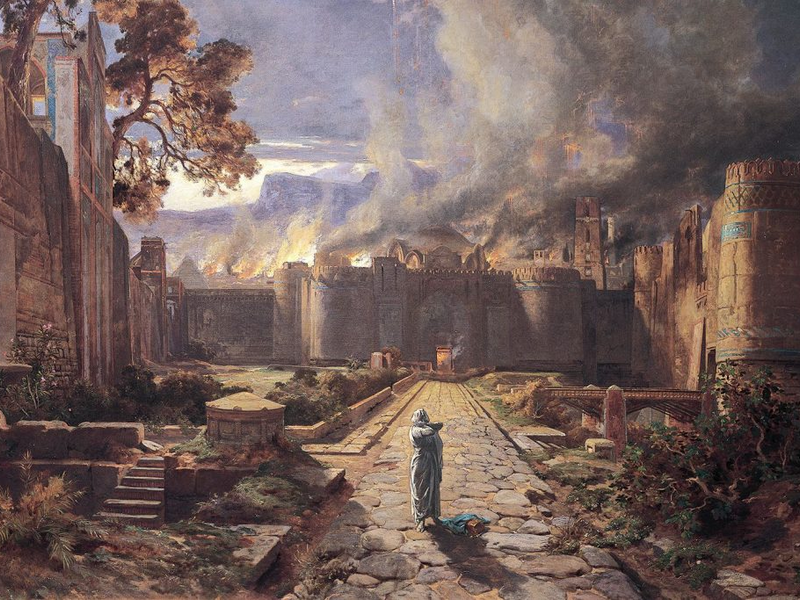
Egypt and Sodom, Where the Lord was Crucified

The Revelation can only be understood in the light of Old Testament symbols and sequences. The same is true of the epistle of Jude, which serves as a blistering hors d’oeuvre to John’s fiery feast. Possibly written by the apostle Judas Thaddaeus (Luke 6:16; Acts 1:13; John 14:22), the epistle…

by Mike BullNovember 20, 2018

Showing page 84 of 309

See all

Showing page 29 of 43

See all

You shall know them by their fear

Stott notes that 1 John 4:19 indicates that the church’s great characteristic is love, not fear. That is, it should be. Is it? Hardly. Read the next piece of direct mail you get from a Christian advocacy group. Look at the listings in a Christian book catalogue or bookstore. Analyze…

January 20, 2007

Fear and fear

Perfect love casts out fear, John says. But the Bible repeatedly exhorts us to fear God. There’s fear, then there’s fear. How do we tell the difference? The difference is in the direction our fear moves us. Adam feared God, and hid in the garden. Wrong fear drives us away…

January 20, 2007

Kantian modalism?

Post-Kantian thought cannot make room for undistorted revelation of God in history. History, creation, is necessarily a distorting medium. Is this just a form of modalism? Doesn’t this just create an unbridgeable modalist gap between God-in-Himself and God-as-revealed? Isn’t this just saying that God is not what He appears to…

January 20, 2007

God’s body

Time was when you could despise the body and love God, or despise God and love the body. One could be an ascetic or a hedonist. Then God got Himself a body. Despite efforts to retain this choice (Nietzsche, flagellants), the incarnation made the ancient choice of ascetic or hedonist…

January 19, 2007

God’s body

Time was when you could despise the body and love God, or despise God and love the body. One could be an ascetic or a hedonist. Then God got Himself a body. Despite efforts to retain this choice (Nietzsche, flagellants), the incarnation made the ancient choice of ascetic or hedonist…

January 19, 2007

Dionysus and the crucified

Shaftesbury recognized the stark difference between his own rational Deity and the vulgar bodily and crucifiable Christ. Francis Hutcheson, building on Shaftesbury, tried to conflate the two. Hutcheson was a Christian, a Presbyterian professor of moral theology. Shaftesbury loathed Christ. But which of the two was the better friend of…

January 19, 2007

Showing page 1732 of 2212

Browse by Category

In Medias Res

Your weekly digest for all things Theopolis.

Donate

Theopolis is nearly 100% donor-supported. Consider joining us on our mission.