Theopolis Logo

Writing

Explore our collection of theological essays, biblical studies, and reflections on faith and culture.

See all
sixteen-miles-out-d40gdcd_-he-unsplash-2
Matthew

Reading Matthew, Identifying Discourses: A Closer Look at the “Six-Discourse” Proposal

In a February blog post for the Theopolis Institute, Benoît Engel offers a thought-provoking challenge to the widely accepted five-discourse structure of Matthew’s Gospel, proposing a sixth discourse in Matthew 21:28–22:14 to reframe the Gospel’s chiastic center. As someone deeply invested in Matthew’s literary design—explored in my book Reading Matthew,…

by Jonathan SedlakJune 26, 2025

getty-images-2cytteec2ng-unsplash
2 Timothy

Avoid Foolish Disputes

Avoid foolish disputes, genealogies, contentions, and strivings about the law, for they are unprofitable and useless. Titus 3:9 Out of a deep love and care for the church, Paul tells Titus and those in the church to avoid four specific things: foolish disputes, genealogies, contentions, and strivings about the law.…

by Grant Van BrimmerJune 24, 2025
yucar-studios-cfr-v1quekw-unsplash-1
Baptism

The Indispensable Mark of Worship: Infant Baptism

Theopolis publishes many polemics, especially on the Sacraments. This piece does not necessarily reflect the views of Theopolis, her board, or her editors. -JW Whoever touches the dead body of any person shall be unclean seven days.He shall cleanse himself with the water on the third day and on the…

by Tommy ThompsonJune 19, 2025
zdenek-machacek-4nsuy3e5nec-unsplash
American Culture

Ecclesiocentric Life is Back

There is in the United States and the Western World some sort of religious revival occurring. Gen Z men—males born between ca 1997 and 2012—are flooding back in to churches. USA Today noted that Gen Z men—and to a lesser degree women—attending churches more than their millennial predecessors and they…

by Miles SmithJune 17, 2025
tanner-mardis-xuxghzhibn4-unsplash-1-2
Biblical Studies

Sceptical Text-Critical Hypotheses

The primary task of many Biblical scholars (as they see it) is to explain how and why the Biblical text acquired its final form—i.e., what source material it used, how that material was expanded/redacted, who expanded/redacted it, why they did so, what the weather was like at the time, etc.…

by James BejonJune 12, 2025
james-coleman-qej5dhl4mwq-unsplash-2
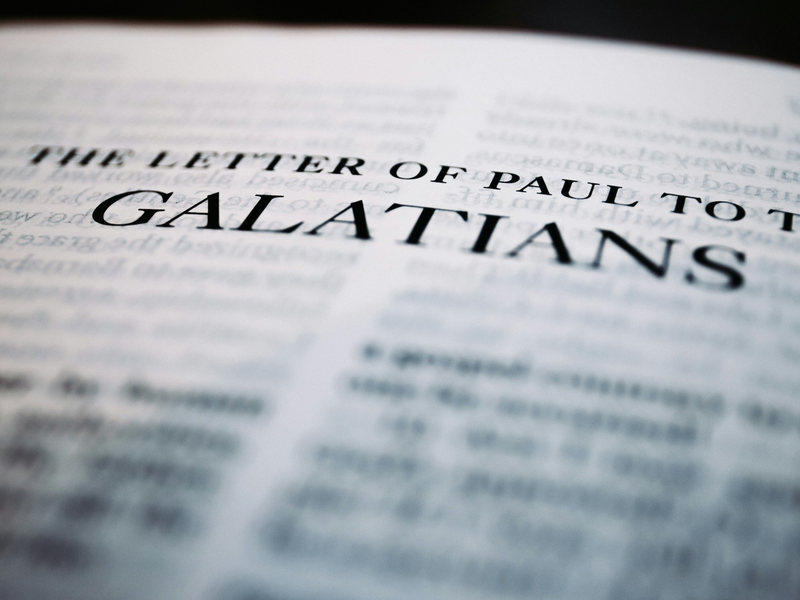
Galatians

Flesh & Spirit in Galatia

Galatians 5:5-15 For through the Spirit, by faith, we ourselves eagerly wait for the hope of righteousness. For in Christ Jesus neither circumcision nor uncircumcision counts for anything, but only faith working through love. You were running well. Who hindered you from obeying the truth? This persuasion is not from…

by Jeff MeyersJune 10, 2025

Showing page 8 of 309

See all

Showing page 29 of 43

See all

New Face for the World

R owan Williams ( Sign and Sacrifice ) summarizes the Anselmian understanding of the atonement using the categories of sacrifice, obedience, and gift, all set within a Trinitarian frame. It's quite lovely. Citing Hebrews citing Psalm 40, Williams argues that the Old Testament sacrificial system existed to symbolize the true…

February 28, 2017

At the Parbar

D escribing the assignments of Levite gatekeepers, the Chronicler records that there were four at the “highway” at the western end of the temple, and two “at the Parbar,” which was also on the west (1 Chronicles 26:18). Scholars have proposed a variety of foreign etymologies for the term. From…

February 27, 2017
Architecture

How To Read Churches

D enis McNamara's How To Read Churches is an extraordinary book. Subtitled “a crash course in ecclesiastical architecture,” it covers building types, floor plans, sections of churches (nave, apse, choir), materials, windows, altars, ornaments in 256, 6 x 6-inch pages, each of which is stuffed with pictures and diagrams and…

February 24, 2017

Undemocratic Education

J ohn Milbank cites what he calls “Socrates's subversive realization” that “education can never be democratic” ( Being Reconciled , 182). This is in part because “the sheer singular uniqueness and contingency of wisdom is unable to subordinate itself to any majority,” partly because “if one is to learn, one…

February 24, 2017

Irrationality and Intellectual Flaws

T hrough a series of thought experiments, Richard Foley ( Intellectual Trust in Oneself and Others ) develops a concept of rationality as “a matter of making oneself invulnerable to intellectual self-criticism to the extent possible, of living up to one’s own deepest intellectual convictions and standards.” Rationality thus “requires…

February 24, 2017

Lockean Individualism

F ollowing Alvin Platinga, Richard Foley summarizes the principles of Locke's epistemology in three principles ( Intellectual Trust in Oneself and Others ): Evidence (the “obligation to base one's opinion on one's evidence,” the latter defined as “what one knows with certainty”); appraisal (the obligation “to appraise the probability of…

February 24, 2017

Showing page 202 of 2212

Browse by Category

In Medias Res

Your weekly digest for all things Theopolis.

Donate

Theopolis is nearly 100% donor-supported. Consider joining us on our mission.