Theopolis Logo

Writing

Explore our collection of theological essays, biblical studies, and reflections on faith and culture.

See all
528977ldsdl
Theologia

Reflections on the Importance of Predestination in the Christian Mindset

But I say to you who hear, love your enemies, do good to those who hate you, bless those who curse you, pray for those who mistreat you. Whoever hits you on the cheek, offer him the other also; and whoever takes away your coat, do not withhold your shirt…

by Mark HorneJune 4, 1998

aaron-burden-1ebsmyrau-s-unsplash
Biblical Horizons

The Case Against Western Civilization, Part 5

Part 5: Laying New Foundations in a Dying World As I mentioned above, the history of Israel involved several centuries as a church-without-a-culture, and then several centuries as a culture-without-a-city. To be sure, there was an informal culture around the church of the Patriarchs, but the civilization of free farmers…

by James B. JordanJune 4, 1998
yucar-studios-cfr-v1quekw-unsplash-1
Baptism

Why Do We Baptize?

In the Reformation Tradition we baptize both professing believers and their children. In the case of infants it is now commonly insisted that this is done because the children are already in covenant with God. Baptism is a sign and seal of a previously existing reality. Despite the popularity of…

by Mark HorneJune 3, 1998
aaron-burden-qjdzyt_k8xg-unsplash
Eucharist

This Is What We Are:

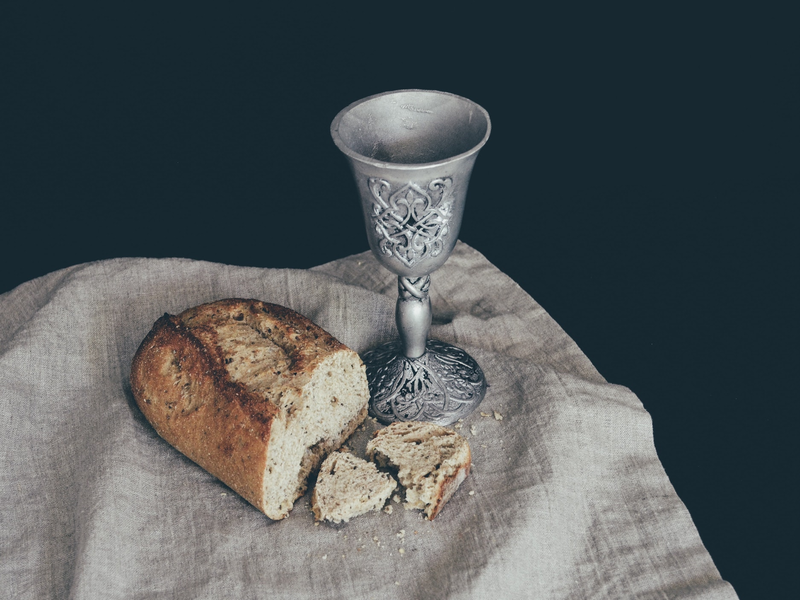
Concerning Sex & the Sacrament of the Lord’s Supper Is not the cup of blessing which we bless a sharing in the blood of Christ? Is not the loaf of bread which we break a sharing in the body of Christ? Since there is one loaf, we who are many…

by Mark HorneJune 3, 1998
debby-hudson-qa74yh6-xlc-unsplash
Baptism

Sacramental Efficacy

Protestant-Catholic debates about the sacraments have usually taken the form of debates about sacramental efficacy. Protestants claim that Catholics believe that sacraments work ex opere operato, virtually a magical view of the sacraments. A priest goes through the motions and says the mumbo-jumbo and — presto! — the sacraments confer…

by Peter LeithartJune 3, 1998
aaron-burden-qjdzyt_k8xg-unsplash
Baptism

Baptism and the Church

In 27.2, the Westminster Confession says that because of the “spiritual relation” between sacraments and the things they represent, “the names and effects of the one are attributed to the other.” Applied to baptism, this means that when the Bible says that we are baptized into Christ (Rom. 6), it…

by Peter LeithartMay 29, 1998

Showing page 249 of 309

See all

Showing page 29 of 43

See all
Literature

Ibsen

Ibsen, Steiner argues, did not write tragedies. Ibsen wrote “dramatic rhetoric” calling society to reform. For real tragedy, there is no such “solution” to be found, there is no remedy, except destructive sacrifice and perhaps a deus ex machina. From this angle, tragedy is perhaps among the STOICHEIA that prepared…

January 7, 2004
Literature

More Quotations from Steiner

Some more quotations from Steiner’s Death of Tragedy : “We cannot understand the romantic movement if we do not perceive at the heart of it the impulse toward drama . . . . The romantic mode is neither an ordering nor a criticism of life; it is a dramatization. And…

January 7, 2004
Theology

NT Wright’s Rutherford House Lecture

Some thoughts on NT Wright’s Rutherford House Lecture, August 2003. I have little disagreement with much of the lecture, and it clarified a number of things for me. Wright’s views on justification, however, continue to puzzle me at a number of points. Here’s an attempt to clarify my (or NTW’s)…

January 7, 2004
Theology

NT Wright’s Rutherford House Lecture

Some thoughts on NT Wright’s Rutherford House Lecture, August 2003. I have little disagreement with much of the lecture, and it clarified a number of things for me. Wright’s views on justification, however, continue to puzzle me at a number of points. Here’s an attempt to clarify my (or NTW’s)…

January 7, 2004
Literature

European Drama

Steiner notes that, following the Renaissance, European drama operated under the shadows of neo-classical and Elizabethan dramatic practice, the former “closed” and rigidly adhering to Aristotelian criteria, the other open and experimental. He discusses the theory of Thomas Rymer (a neo-classicist) at some length, concluding that the controversies that Rymer…

January 6, 2004
Literature

Shakespearean Difference

George Steiner in his Death of Tragedy describes the “Shakespearean difference” as mainly due to Shakespeare’s avoidance of fascination with Hellenic models: “The neo-classic view [which rigidified Aristotelian conceptions of tragedy] expresses a growing perception of the miracle of Greek drama. This perception was fragmentary. There were few translations of…

January 6, 2004

Showing page 2141 of 2212

Browse by Category

In Medias Res

Your weekly digest for all things Theopolis.

Donate

Theopolis is nearly 100% donor-supported. Consider joining us on our mission.