Theopolis Logo

Writing

Explore our collection of theological essays, biblical studies, and reflections on faith and culture.

See all
communion
Biblical Horizons

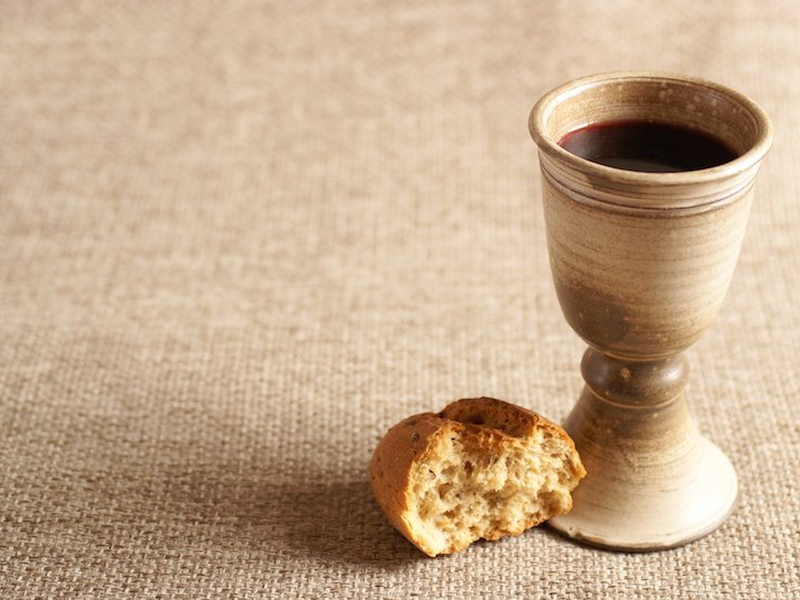
The Peril of Weekly Communion

A while back a friend told me that his church had finally introduced weekly communion. He told me that they were having an 8:00 a.m. service on Sundays for anyone who wanted to have communion. At present only about five people were coming to this service, but he was hopeful…

by James B. JordanDecember 5, 1993

priscilla-du-preez-x_jaypjskyi-unsplash-2
Deuteronomy

The Structure of Deuteronomy 12

According to James B. Jordan’s outline of Deuteronomy, the first commandment section runs from 6:1 to 11:32, and the second commandment section begins with 12:1. 1 That this division of the text is sound is confirmed by a comparison of 6:1 with 12:1. Deuteronomy 6:1 announces that "this is the…

by Peter LeithartNovember 20, 1993
screen-shot-2023-04-04-at-5-01-54-pm
Ezra

The Holy City

Calling Jerusalem the "holy city" comes so naturally to Christians that it comes as something of a surprise to realize how infrequently the phrase is used in Scripture. Not only is Jerusalem rarely called holy, but in the Old Testament this classification is found only in texts that refer to…

by Peter LeithartNovember 17, 1993
jelleke-vanooteghem-gnxb59lgu1m-unsplash
John

Born From Above

Nicodemus’s conversation with Jesus in John 3:1-15 is often regarded as an illustration of the tremendous stupidity of the Jews of our Lord’s day. Those who take the passage this way fail to recognize the profound nature of Nicodemus’s questions and of Jesus’ answers. In verse 3, Jesus tells Nicodemus…

by James B. JordanNovember 5, 1993
trnava-university-beeyeib-am8-unsplash
Deuteronomy

1994? — Not! (Part 3)

In his book 1994? , Harold Camping asserts that the life spans of the primeval patriarchs of Genesis 5 & 11 were actually epochs, one after another. This together with other mistakes in interpretation yields for him a creation date of 11013 B.C. From here, Camping tries to work out…

by James B. JordanNovember 5, 1993
tim-mossholder-arqiwcmola8-unsplash
1 Corinthians

The Woman’s Head Covering in 1 Corinthians 11:2-16

I have received a number of letters asking for my comments on this difficult passage. Here is my best shot! 2. Now I praise you because you remember me in everything, and hold firmly to the traditions, just as I delivered them to you. This statement opens a new section…

by James B. JordanOctober 5, 1993

Showing page 283 of 309

See all
See all

Conference

If you’re in the vicinity of Duke, you might be interested in a conference sponsored by the Center for Catholic and Evangelical Theology, in cooperation with the Duke Divinity School, on May 21-23, at Duke. The theme is “Preaching, Teaching, and Living the Bible.” Speakers include Robert Jenson, Rusty Reno,…

March 30, 2006
Literature

Garber on Merchant

Marjorie Garber has, as usual, some insightful things to say about Merchant of Venice: 1) She describes the play as “Shakespeare’s great play about difference,” pointing to the apparent stark contrasts of Christian and Jew, Venice and Belmont, male and female. Yet, she also notes that the play is busy…

March 29, 2006
Literature

Biblical echoes in Merchant of Venice

A.R. Braunmuller offers some suggestive comments in his introduction to the Merchant of Venice in the Pelican Shakespeare. Having summarized Portia’s speech (which he suggests might be a “setup that turns on a technicality” that “turns back on Shylock a legal rigidity he had been duped into demanding”), he notes…

March 29, 2006

Hypostatic union

Thomas argues that “if the human nature is not united to God the Word in person, it is not united to him in any way, and thus belief in the incarnation is altogether done away with, which subverts the entire Christian faith.” But since there is a union, it must…

March 29, 2006

Aquinas and Chalcedon

Frederick Bauerschmidt claims that “Aquinas is in fact the first medieval theologian in the West to quote directly from the Council of Chalcedon.” This is remarkable on all sorts of levels, not least because of the questions it raises about the authority of the ecumenical councils in medieval thought.

March 29, 2006
Theology

Gift and Gratitude in the Middle Ages

INTRODUCTION Seneca’s de Beneficiis was known to the Christian Middle Ages, as were some of the gift and gratitude customs of the Roman world. We’ll examine the use that Aquinas makes of Seneca when we get to the Summa later this week. But in addition to these ancient sources, medieval…

March 28, 2006

Showing page 1865 of 2212

Browse by Category

In Medias Res

Your weekly digest for all things Theopolis.

Donate

Theopolis is nearly 100% donor-supported. Consider joining us on our mission.