Theopolis Logo

Writing

Explore our collection of theological essays, biblical studies, and reflections on faith and culture.

See all
lili-popper-lu15z1m_kfm-unsplash
John

Jesus is the Way to the Tree of Life

When Jesus says in the farewell discourse that his disciples know the way to where He is going, Thomas replies: “We do not know where you are going. How can we know the way?” Jesus answers Thomas, but He gives Thomas more than he asked : “I am the way,…

by Josh JensenMay 24, 2023

jordan-wozniak-xp_agmeea6s-unsplash-2
Luke

Beware of the Infection of Hypocrisy

Through the pandemic we learned a lot about infections, how to catch them, what’s contagious, how to protect yourself from getting the infection. I learned a lot of new terms, like “social distancing,” “ppe” (personal protective equipment), N95 masks, and so on. We’ve seen that people are willing to go…

by John CarpenterMay 16, 2023
noah
Biblical Theology

Noah: Man of the Soil

In Genesis 9:20, Noah is called “a man of the soil”. This phrase is a bit of a shock in the Hebrew; though it’s made up of two very common words - 'ish is “man” and 'adamah is “soil” or “ground” - these two words are never used together before…

by Donald LinnemeyerMay 9, 2023
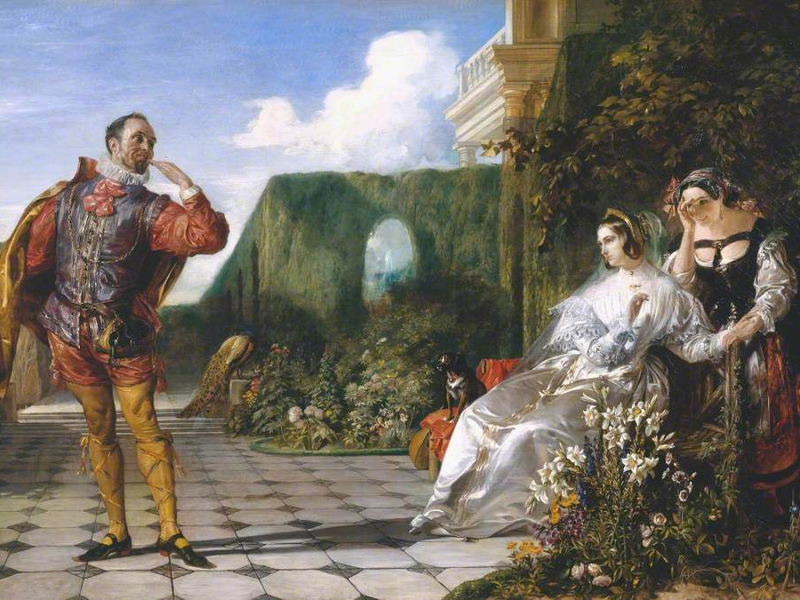
maclise-daniel-1806-1870-scene-from-twelfth-night-malvolio-and-the-countess
Literature

Twelfth Night

Harold Bloom’s discussion of Twelfth Night in his Shakespeare: The Invention of the Human is, as would be expected, insightful. It displays his deep love of poetry, and includes some truly eloquent descriptions of Orsino: “that sublimely outrageous lover of love” and “amiable erotic lunacy.” Bloom is worth reading just…

by Ralph Allan SmithMay 4, 2023
screen-shot-2023-05-02-at-1-14-25-pm
James

A Quadrigatic Reading on Marian Intercession

There have been times when Evangelicals, in an attempt to be clear about the errors of Rome and Constantinople concerning Mary, have been so denigrating of the mother of our Lord that they sounded more like cut and pasted lines from the Babylonian Talmud than they did disciples of Mary’s…

by Garrett SoucyMay 2, 2023
mike-l-8qr1ixi-rmu-unsplash-2
Theology

Awe and the Sensus Divinitatus

Awe is the phenomena experienced when one looks up and lights upon the height, majesty, and mystery of the California Redwoods. It appears the trees pierce heaven itself. Among these giant organisms are the Sequoia–while they are shorter in form, they reserve a width that spans an automobile. These trees…

by Charles JacobiApril 25, 2023

Showing page 31 of 309

See all
See all

Conveniens

Bauerschmidt notes that Aquinas frequently argues, especially when speaking of the incarnation, not for “proof” of doctrine but for its “fittingness.” Reason has the role of “manifesting how [the incarnation] fits together (convenire means literally ‘to come together’) with other things that Christians hold true about God.” Perhaps this can…

March 23, 2006

Extra-Augustinisticum

In Epistle 137, Augustine writes: “The Christian teaching nowhere holds that God was so poured into human flesh as either to desert or lose - or to transfer and, as it were, compress within this frail body - the care of governing the universe. This is the thought of people…

March 23, 2006

Thomas on Merit

Commenting on ST I-II, q. 109, Frederick Bauerschmidt says that Thomas uses the word “merit” analogically when we speak of God rewarding human action “since we can act in the first place only because God has given us the capacity to act.” This applies even to Jesus: “even when Thomas…

March 23, 2006

On Seneca, de Beneficiis, Books 1-2

Seneca suggests that ingratitude is the worst of vices, and nothing is more “harmful to society” than ingratitude (I.1). Later in Book I, he lists a series of moral ills that plague society – “homicides, tyrants, thieves, adulterers, ravishers, sacrilegious, traitors” – but concludes that “worse than all these is…

March 23, 2006
Literature

Prospero the Magus

I am grateful to Ralph Smith for references to Frances Yates’ work on Shakespeare’s plays. In an analysis of The Tempest, Frances Yates writes: “It is inevitable and unavoidable in thinking of Prospero to bring in the name of John Dee, the great mathematical magus of whom Shakespeare must have…

March 22, 2006
History

Elizabethan Magic

Educated Elizabethans lived in a world of similitudes. As EMW Tillyard argued, the Elizabethan world picture was constituted by a series of analogous chains of being. The social world manifested and was manifested by the natural world; the universe as a whole resembled human beings; there was a hierarchy among…

March 22, 2006

Showing page 1867 of 2212

Browse by Category

In Medias Res

Your weekly digest for all things Theopolis.

Donate

Theopolis is nearly 100% donor-supported. Consider joining us on our mission.