Theopolis Logo

Writing

Explore our collection of theological essays, biblical studies, and reflections on faith and culture.

See all
or
Abortion

Political Hermeneutics: The Argument From Silence, Part 2

Click HERE for part 1. III This leads to a further question. I have argued that silence cannot by itself establish a Scriptural principle, but does Scripture’s silence carry any weight in itself? Does the fact that something is unbiblical in a weak sense tell us anything at all? In…

by Peter LeithartMarch 13, 1990

hebrew-manuscript-6
Biblical Chronology

Groping Through the Gaps

Although nowadays gap theories are associated with dispensationalism, it was not always so. In the nineteenth century, scholars from a variety of backgrounds (Anglican, Reformed, and proto-fundamentalist) seem to have become fascinated by gaps. If you are not familiar with what I am talking about, this newsletter will acquaint you…

by James B. JordanFebruary 26, 1990
or
Abortion

Political Hermeneutics: The Argument from Silence, Part 1

If the debate over Operation Rescue has proven anything, it has proven that there is absolutely no consensus among evangelicals in general, or among "reconstructionists" in particular, about how to use the Bible to judge political actions and movements. Each side of the debate claims biblical authority for its position,…

by Peter LeithartFebruary 13, 1990
49980-nicolas_poussin_-_the_judgment_of_solomon_-_wga18330-800w-tn
Biblical Studies

Advice From a Sojourner, Part 4

Two things I asked of Thee, Do not refuse me before I die: Keep deception and words of falsehood far from me, Give me neither poverty nor riches, Feed me with the food that it my portion, Lest I be full and deny Thee, And say, "Who is the LORD?"…

by James B. JordanFebruary 2, 1990
image-2
Biblical Horizons

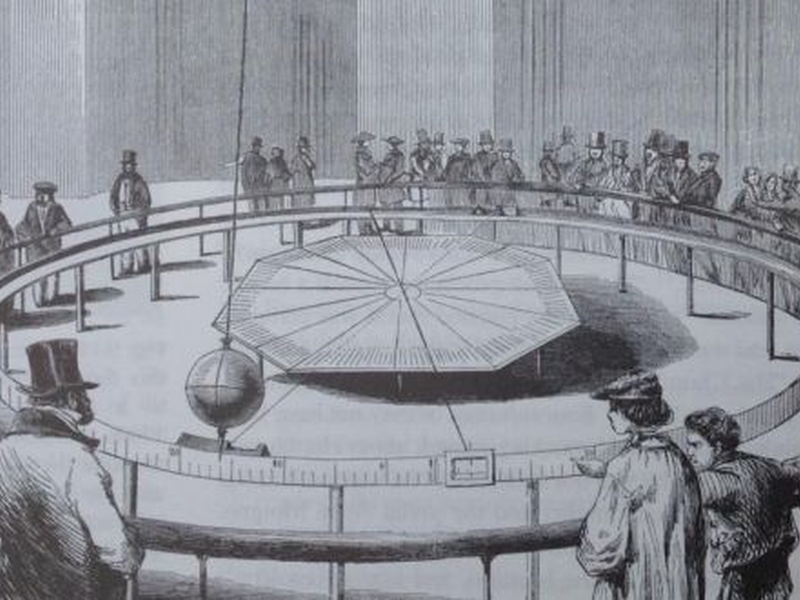
Foucault’s Pendulum

Umberto Eco’s "The Name of the Rose" was certainly one of the best literary works of the past decade, though the film version hardly measured up to it. Now Eco has given us a new novel, "Foucault’s Pendulum." Like Rose, Foucault’s Pendulum reflects on the limitations of human knowledge, and…

by James B. JordanJanuary 26, 1990
tanner-mardis-xuxghzhibn4-unsplash-1-2
Biblical Studies

What Is “Interpretive Maximalism”?

From time to time people ask me about "interpretive maximalism." They want to know what it is, and sometimes want to know if it represents some departure from the Reformed grammatico-historical, Biblico-theological approach to the Bible. I have something of a problem with these questions, because "interpretive maximalism" is not…

by James B. JordanJanuary 26, 1990

Showing page 305 of 309

See all
See all
History

Modernity and antiquity

Kumar suggests that “some of the principal hall-marks of modernity” are already evident in the Christian notions of time and history. Both Christianity and modernity separate time from nature, and humanize time; time is seen by both as “linear and irreversible”; both see history as an Aristotelian drama with beginning,…

February 24, 2006
History

First Modernity

The Latin modernus was coined in the late fifth century, as an antonym to antiquus , and variations of modernus became particularly common after the 10th century. Thus, Krishan Kumar writes, “Modernity is . . . an invention of the Christian Middle Ages,” and was used to emphasize the radical…

February 24, 2006
Philosophy

Computer Communications and the Self

Poster lists four effects that computer communications (email, chat groups, etc) have on the self: “1 they introduce new possibilities for playing with identities; 2 they degender communications by removing gender cues; 3 they destabilize existing hierarchies in relationships and re-hierarchize communications according to criterio that were previously irrelevant; and…

February 24, 2006
Philosophy

Computers, subjects and objects

Descartes famously contrasted the mind (res cogitans) with the external world (res extensa), but Mark Poster suggests that computer writing fudges that distinction: “the computer dematerializes the written trace. As inputs are made to the computer through the keyboard, pixels of phosphor are illuminated on the screen, pixels that are…

February 24, 2006
Media

Community and New Communications

Mark Poster points to a tension between the modern institutions of production and the postmodern technologies of communication, particularly as they impact the formation of the self: “If modernity or the mode of production signifies patterned practices that elicit identities as autonomous and (instrumentally) rational, postmodernity or the mode of…

February 24, 2006
Media

Telephone

Prior to World War I, Telefon Hirmondo, the telephone system of Budapest, was used as a broadcast system, with a published schedule of programs that were restricted to certain classes of people in Hungary. Only later did it develop into a communications system in which everyone could pass information to…

February 24, 2006

Showing page 1878 of 2212

Browse by Category

In Medias Res

Your weekly digest for all things Theopolis.

Donate

Theopolis is nearly 100% donor-supported. Consider joining us on our mission.