Theopolis Logo

Writing

Explore our collection of theological essays, biblical studies, and reflections on faith and culture.

See all
screen-shot-2023-02-24-at-1-48-41-pm
Biblical Chronology

Chronologies and Kings: Part 3

The chronology of the Kings of Judah and Israel can be divided into three periods with clearly defined boundaries. The first period begins with the death of Solomon and the accessions of Rehoboam in the south (Judah) and Jeroboam in the north (Israel). It ends with the deaths of Ahaziah…

by James B. JordanSeptember 22, 1991

johann-walter-bantz-clv9dfjlwac-unsplash-1-5
Art

Arts & Play, Part 1

Most modern people regard the arts as essentially decorative. They are hardly very important, as compared to business, politics, or religion. Yet, from a Biblical point of view, the arts lie close to the heart of human life. The universe that God created is itself an artistic masterpiece by the…

by James B. JordanSeptember 22, 1991
6273e95e0f5ac766258d8cf3_joshuasconquestoftheland-2
Exodus

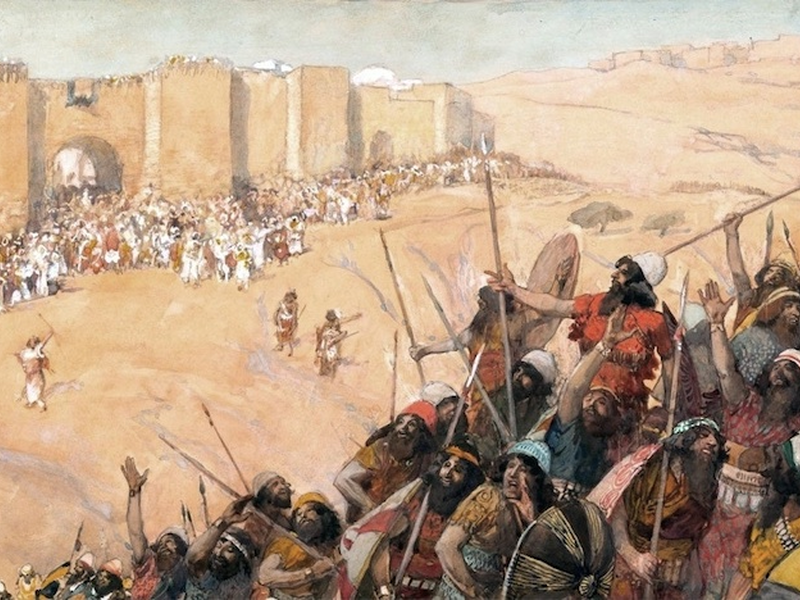
Chronologies and Kings, Part 2

Before we move into a detailed survey of the history and chronology of the kings of Israel and Judah, let us review the chronological information that leads from creation to the kingdom. This will be helpful both to new readers of these essays, and a reminder for those who have…

by James B. JordanAugust 22, 1991
screen-shot-2023-02-24-at-1-48-41-pm
Biblical Chronology

Chronologies and Kings, Part 1

We have completed our overall survey of Biblical chronology, and now turn to a detailed examination of the Biblical information regarding the chronology of Israel’s kings. The first piece of chronological information we have regarding Israel’s kings is very cryptic, and it serves as an guide to the interpretation of…

by James B. JordanJuly 22, 1991
screenshot-2023-08-09-at-2-13-32-pm
Biblical Horizons

Book Review - To Take Place: Toward Theory in Ritual

Jonathan Z. Smith, To Take Place: Toward Theory in Ritual (Chicago: University of Chicago Press, 1987). Reviewed by Peter J. Leithart. The philosophes of the 18th century often attacked Christendom using the tools of anthropology and comparative religion. Rousseau contrasted the idyllic equality of primitive, natural peoples with the bondage…

by Peter LeithartJuly 6, 1991
screenshot-2023-08-09-at-1-47-41-pm
Biblical Horizons

Book Review: The Rise of Magic in Early Medieval Europe

Valerie I. J. Flint, The Rise of Magic in Early Medieval Europe (Princeton University Press, 1991). Reviewed by Peter J. Leithart. Valerie I. J. Flint, Professor of History at the University of Auckland, New Zealand, is refreshingly candid about her reasons for undertaking a study of The Rise of Magic…

by Peter LeithartJuly 6, 1991

Showing page 295 of 309

See all
See all

Proverbs 12:8-14

INTRODUCTION This section of Proverbs focuses on issues of image, wealth, work, and treatment of employees (vv. 8-12), and ends with two verses that deal again with the use of the tongue (vv. 13-14). The final verses connect this section to the preceding section of this chapter (12:1-7). Thus, the…

January 6, 2006
Literature

Hamlet in Prufrock

The influence of Hamlet, the play and the character, on modern literature is vast. Consider Hamlet as model for Prufrock: Zulfikar Ghose says the “I am not Hamlet” in Eliot’s Prufrock may be literal or ironic, but then adds: “the more one ponders the language of ‘Prufrock’ and of Hamlet…

January 5, 2006
Literature

Pierre

Herman Melville’s Pierre (1852) was, to put it mildly, not warmly received by critics. One newspaper headlined its review with “HERMAN MELVILLE CRAZY” and another reviewer complained that Melville’s fancy was diseased. Critics are divided over whether it is a grand failure or simply a failure. Updike caught the tone…

January 5, 2006

Schleiermacher

Bauman distinguishes between the “legislative” notion of reason found in Kant and other Enlightenment figures and the “interpretive” rationality that characterizes much postmodern thought. The shift from the former to the latter was not accomplished all at once. Schleiermacher, for all importance in the rise of hermeneutics, was still aiming…

January 5, 2006
Philosophy

Foundations and Tribunals

The architectural model of building a structure of thought on “foundations” is among the metaphors employed by modern thinkers, and in this as in other areas there was a close alliance of philosophy and political action. Bauman notes that this was particularly evident in various utopian writers of the modern…

January 5, 2006
History

Postmodern critique, postmodern re-enchantment

“Postmodernity,” writes Zygmunt Bauman in his 1992 Intimations of Postmodernity , “means many different things to many different people. It may mean a building that arrogantly flaunts the ‘orders’ prescribing what fits what and what should be kept strictly out to preserve the functional logic of steel, glass and concrete.…

January 5, 2006

Showing page 1903 of 2212

Browse by Category

In Medias Res

Your weekly digest for all things Theopolis.

Donate

Theopolis is nearly 100% donor-supported. Consider joining us on our mission.