
Theopolis Logo

Writing

Explore our collection of theological essays, biblical studies, and reflections on faith and culture.

See all
timothy-eberly-djj49s6ud2o-unsplash
Biblical Studies

Whom Shall We Believe? Evangelicals and Scholarship

As we move into the Persian period of ancient history, and try to reconcile it with Daniel’s prophecies, we need to ask some hard questions about the interpretation of the data before us. One question concerns the reliability of the Biblical witness, and beyond that a second question concerns the…

by James B. JordanJanuary 30, 1991

a2-118606403-jpg
Biblical Horizons

Understanding Russia

Ewa Majewska Thompson: Understanding Russia: The Holy Fool in Russian Culture Ewa M. Thompson is Professor and Chairman of the Department of German and Slavic Studies at Rice University. In this seminal study, she investigates the concept of the "holy fool" as it exists in Russian culture and civilization. While…

by James B. JordanJanuary 30, 1991
alfons-morales-ylswjsy7stw-unsplash-1
Biblical Studies

The Bible and Western Literature

The most cursory glance at the history of Western literature reveals that it has been deeply influenced by the Bible. Some of the greatest classics of Western literature draw their plots, characters, and ideas largely from Scripture; Dante’s Divine Comedy and Milton’s Paradise Lost are two of the most notable…

by Peter LeithartJanuary 23, 1991
screen-shot-2022-04-28-at-4-57-36-pm
Exodus

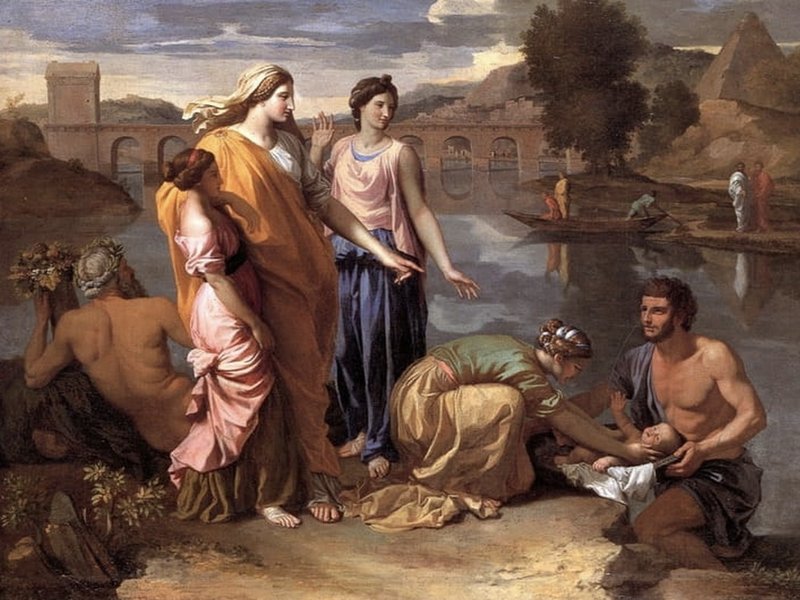
The Beautiful Child

Each time the Scriptures recount the story of Moses’ birth and deliverance from Pharaoh, reference is made to two facts about that event. First, each text points out that Moses was "beautiful." Second, each text points out that Amram and Jochebed, his parents, hid him for three months (cf. Ex.…

by Peter LeithartJanuary 23, 1991
501819ld-2
Romans

Who Rules the Land? The Meaning of the Noahic Covenant, Part 2

Click HERE for Part 1. The Message of the Covenant Can we really say that the saints presently rule the world, and always have since Noah? Look around and you can see that the wicked rule in virtually every country on earth. There are wicked civilizations that rise Babelically age…

by James B. JordanDecember 30, 1990
hebrew-manuscript-6
Hermeneutics

Daniel’s 70 Weeks

As we saw last time , we have come to the place in the study of Biblical chronology where it seems that we are forced to abandon the Bible itself as our primary source of information. If we assume that the seventy sevens of Daniel 9:24-27 are in fact weeks…

by James B. JordanDecember 23, 1990

Showing page 300 of 309

See all
See all
Literature

Ibsen

Ibsen, Steiner argues, did not write tragedies. Ibsen wrote “dramatic rhetoric” calling society to reform. For real tragedy, there is no such “solution” to be found, there is no remedy, except destructive sacrifice and perhaps a deus ex machina. From this angle, tragedy is perhaps among the STOICHEIA that prepared…

January 7, 2004
Literature

More Quotations from Steiner

Some more quotations from Steiner’s Death of Tragedy : “We cannot understand the romantic movement if we do not perceive at the heart of it the impulse toward drama . . . . The romantic mode is neither an ordering nor a criticism of life; it is a dramatization. And…

January 7, 2004
Theology

NT Wright’s Rutherford House Lecture

Some thoughts on NT Wright’s Rutherford House Lecture, August 2003. I have little disagreement with much of the lecture, and it clarified a number of things for me. Wright’s views on justification, however, continue to puzzle me at a number of points. Here’s an attempt to clarify my (or NTW’s)…

January 7, 2004
Theology

NT Wright’s Rutherford House Lecture

Some thoughts on NT Wright’s Rutherford House Lecture, August 2003. I have little disagreement with much of the lecture, and it clarified a number of things for me. Wright’s views on justification, however, continue to puzzle me at a number of points. Here’s an attempt to clarify my (or NTW’s)…

January 7, 2004
Literature

European Drama

Steiner notes that, following the Renaissance, European drama operated under the shadows of neo-classical and Elizabethan dramatic practice, the former “closed” and rigidly adhering to Aristotelian criteria, the other open and experimental. He discusses the theory of Thomas Rymer (a neo-classicist) at some length, concluding that the controversies that Rymer…

January 6, 2004
Literature

Shakespearean Difference

George Steiner in his Death of Tragedy describes the “Shakespearean difference” as mainly due to Shakespeare’s avoidance of fascination with Hellenic models: “The neo-classic view [which rigidified Aristotelian conceptions of tragedy] expresses a growing perception of the miracle of Greek drama. This perception was fragmentary. There were few translations of…

January 6, 2004

Showing page 2141 of 2212

Browse by Category

In Medias Res

Your weekly digest for all things Theopolis.

Donate

Theopolis is nearly 100% donor-supported. Consider joining us on our mission.