Theopolis Logo

Writing

Explore our collection of theological essays, biblical studies, and reflections on faith and culture.

See all
little-girl
Children

Honor God With Your Body

I am making a new rule in our house! We are actually kind of skimpy on the house rules. I try very hard to keep things simple: love God, love others, be joyful. It’s not complicated to avoid discipline here. But I have found myself repeating this new rule over…

by Lindsey TollefsonApril 9, 2015

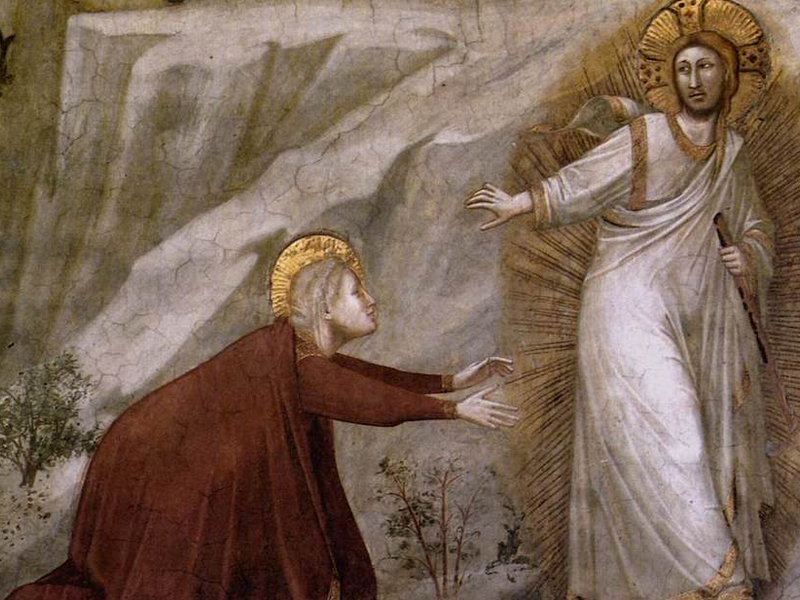
giotto-noli-me-3
John

The Gardener and the Beloved, (Part 3)

Click HERE for Part 2 The voice of Jesus transforms and changes Mary when she hears him speak her name. This is her last “turning.” So also the woman in the Song of Songs longs to hear the voice of her beloved. Let me see your face, let me hear…

by Jeff MeyersApril 6, 2015
giotto-noli-me-2
John

The Gardener and the Beloved, (Part 2)

Click HERE for Part 1. The details of this story call the attentive reader back to the drama of Solomon’s Song of Songs. And the Song of Song’s alludes to, ties us into the story of Adam and Eve in the Garden and the promise of a coming Messiah that…

by Jeff MeyersApril 4, 2015
easter-term-2015-2
Theopolis News

Easter Term, 2015

“The course was a paradigm shift for me,” said Jonathan Sedlak, a Milwaukee electrical contractor who attended Theopolis’s course on Revelation. “I am left with a book that is far more practical than it has ever seemed before.” Jonathan Anderson of Louisville, Kentucky found the course “refreshing.” “I finished with…

by TheopolisApril 2, 2015
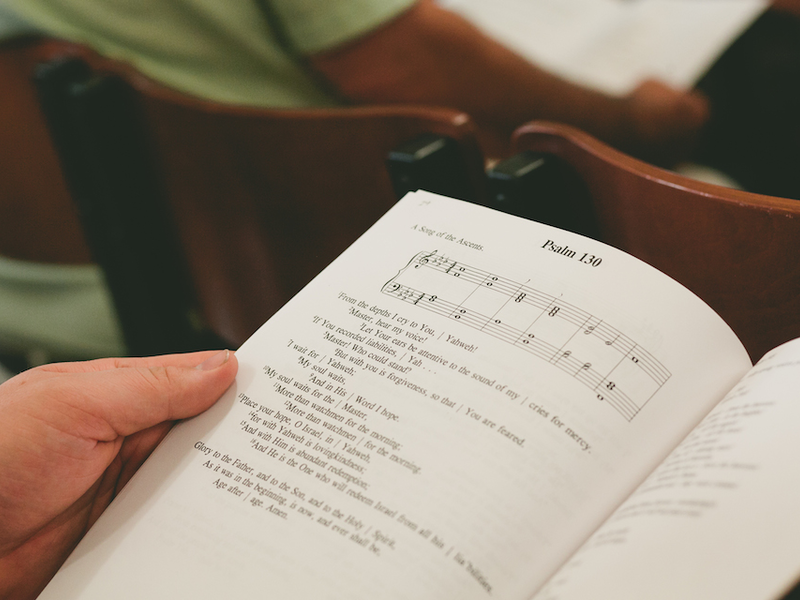
psalm-singing
Genesis

Worship as Response: Liturgical Logic, (Part 1)

“It is only by participation in a rational, practice-based community that one becomes rational.” – Alasdair MacIntyre It may be perfectly clear to a chef why adding unsifted powdered sugar to a hot frosting is a bad idea. But for an amateur cook, this may be the kind of rule…

by Jonathan BarlowApril 2, 2015
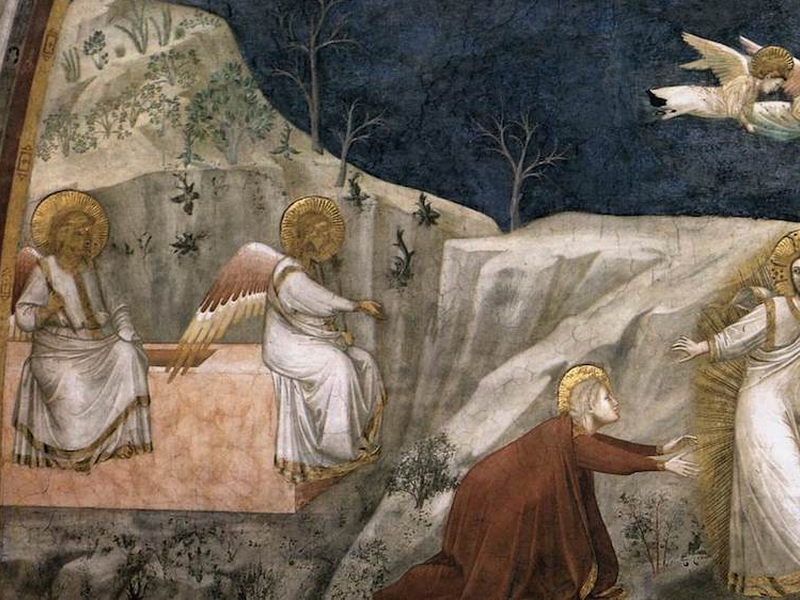
giotto-noli-me
John

The Gardener and the Beloved, (Part 1)

On a fresco in a chapel in Padua, Italy, there is a famous painting depicting the dramatic post-resurrection scene in John 20 with Mary and Jesus outside of the garden tomb. Giotto di Bondone painted it in the early 14th century. Jesus is striding from the tomb with a victor’s…

by Jeff MeyersApril 1, 2015

Showing page 156 of 309

See all
See all
Economics

Gift and Market

Unlike many theorists who discuss the gift, Jacques Godbout ( The World of the Gift , 193) does not believe that is should “drown” everything, especially markets: “That would not only be impossible but also very harmful, for a great society (statistically speaking) needs the state and market apparatus. The…

July 1, 2012
History

Child god

Godbout ( The World of the Gift , 40-41 ) remarks on the fact that “in modern society, children are the only people to whom one can give without even being tempted to do an accounting.” Many (he says) give to children and don’t expect them to make any return…

June 29, 2012
Philosophy

Santa and the Pure gift

Godbout ( The World of the Gift , 47) wonders about the curious “abnegation” of parents who convince their children that Santa, not they, made and gave that mountain of presents under the Christmas tree. One theory: “It’s as though the parents are trying to prove to themselves that they…

June 29, 2012

Why Wrap?

Jacques Godbout ( The World of the Gift , 37 ) asks why we wrap presents only to discard the wrapping. It is a “potlatch” gesture, a gesture of excess, “an utterly gratuitous extra.” Further, “it hides what is in circulation, thus demonstrating that what counts is not the hidden…

June 29, 2012
History

Modern gifts

In his work on Geschenk Nach Form Und Inhalt , written i 1914, Wilhelm Gaul laid out many of the parameters for future discussion of the gift. Harry Liebersohn ( The Return of the Gift ) quotes this impressive passage: “What is striking at once about the ‘modern’ gift is…

June 29, 2012
Economics

Historicizing Homo Economicus, II

A few quotations from the opening pages of Karl Bucher’s Industrial evolution; . Economic theory begins from the assumption that human beings have an “economic nature,” and that “From this economic nature a principle is supposed to spring, which controls all his actions that are directed to the satisfaction of…

June 29, 2012

Showing page 893 of 2212

Browse by Category

In Medias Res

Your weekly digest for all things Theopolis.

Donate

Theopolis is nearly 100% donor-supported. Consider joining us on our mission.