Theopolis Logo

Writing

Explore our collection of theological essays, biblical studies, and reflections on faith and culture.

See all
tim-marshall-k2u71wv2ei4-unsplash
Modernity

Protestantism and the Postmodern self

Postmodernism has, we are told, “decentered” the modern self, that unified, sovereign, isolated, godlike “thinking thing” discovered by Rene Descartes. The postmodern self is not single but multiple; not sovereign but controlled by external forces; not isolated but “embedded” in the world and in relation; not godlike, but human, all…

by Peter LeithartMay 6, 2013

kiwihug-l4gw27xzn1i-unsplash
Matthew

Law and History: How to Read the Law of Moses (Part 8)

This is the eighth in a series of studies on Deuteronomy 22:30-23:8. And Jesus went out thence, and withdrew into the parts of Tyre and Sidon. And behold, a Canaanitish woman came out from those borders, and cried, saying, Have mercy on me, O Lord, thou son of David; my…

by Ralph Allan SmithMay 1, 2013
screen-shot-2023-09-20-at-7-04-07-am
Augustine

A Cusan Modernity?

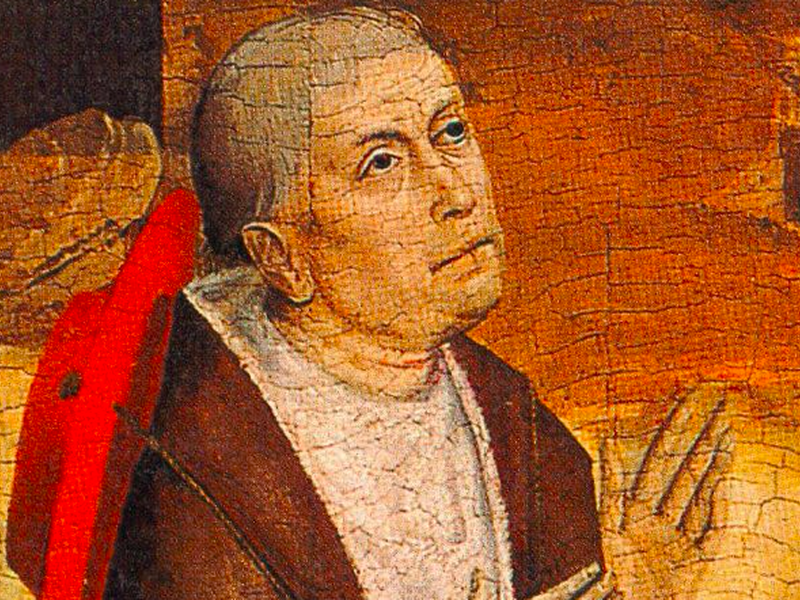
The fifteenth-century German Cardinal Nicholas of Cusa led a busy and wide-ranging life. Educated in liberal arts and law at Heidelberg and Padua, Nicholas was a leading figure in the Conciliarist movement, and later served as a papal legate to both Constantinople and throughout Germany. As Bishop of Brixen, he…

by Peter LeithartApril 29, 2013
screenshot-2023-07-27-at-10-25-35-am
Deuteronomy

Law and History: How to Read the Law of Moses (Part 7)

This is the seventh in a series of studies on Deuteronomy 22:30-23:8. Thou shalt not abhor an Edomite, for he is thy brother; thou shalt not abhor an Egyptian, because thou wast a sojourner in his land. The children of the third generation that are born unto them shall enter…

by Ralph Allan SmithApril 25, 2013
ivan-aleksic-16yxcjsoaek-unsplash
Romans

What Advantage the Jew?

A sermon on Romans 3:1-8. 1 Then what advantage has the Jew? Or what is the value of circumcision? 2 Much in every way. To begin with, the Jews were entrusted with the oracles of God. A lot of people speculate here about what kind of advantage Paul is talking…

by Mark HorneApril 22, 2013
screenshot-2023-07-27-at-10-25-35-am
Deuteronomy

Law and History: How to Read the Law of Moses (Part 6)

This is the sixth in a series of studies on Deuteronomy 22:30-23:8. An Ammonite or a Moabite shall not enter into the assembly of Yahweh; even to the tenth generation shall none belonging to them enter into the assembly of Yahweh forever: because they met you not with bread and…

by Ralph Allan SmithApril 17, 2013

Showing page 195 of 309

See all

Showing page 31 of 43

See all
History

Eschatological self

Jerrold Seigel suggests that Locke’s self has “three different aspects”: We are selves to others “by virtue of what they know about our mental and moral life”; we are “selves to ourselves, but incompletely so, through the imperfect consciousness we have of our lives and deeds in the here and…

August 15, 2006
Science

Interior Senses

Murphy goes into admiring detail describing Thomas’s theory of interior senses in higher animals. Apart from its purely historical interest and the anticipations of later scientific theories, Thomas’s discussion has philosophical and theological interest in its own right. He claims, for instance, that there are a number of interior senses…

August 14, 2006
Science

Dueling Theodicies

Robert Young claims that the controversy over Darwinism in the 19th century was not so much a religion-v.-science controversy as a duel between competing theodicies. At one level, he argues, “the protagonists in the debate were in fundamental agreement. They were fighting over the best ways of rationalizing the same…

August 14, 2006
Philosophy

Mind-Body and Energy

Murphy offers an amusing discussion of the question, Assuming a Cartesian dualism of mind and body, how can the mind cause a physical object like the body to move? If one assumes that physicists are correct that physical energy can be transferred to a physical system, it has to arise…

August 14, 2006
Theology

Effects of dualism

Murphy makes this interesting comment, which she admits is an oversimplification: “the adoption of a dualist anthropology in the early centuries of the church was largely responsible for changing Christians’ conception of what Christianity is basically all about. I am suggesting that original Christianity is better understood in socio-political terms…

August 14, 2006
Theology

Physicalism and the Bible

In her Bodies and Souls, or Spirited Bodies? (Cambridge, 2006), Nancey Murphy argues for a non-reductionist version of physicalism on the question of the “body-soul” problem: “This is the view that humans are composed of only one ‘part,’ a physical body.” She spends a bit over six pages near the…

August 14, 2006

Showing page 1810 of 2212

Browse by Category

In Medias Res

Your weekly digest for all things Theopolis.

Donate

Theopolis is nearly 100% donor-supported. Consider joining us on our mission.