Theopolis Logo

Writing

Explore our collection of theological essays, biblical studies, and reflections on faith and culture.

See all
isaiah-commission
Isaiah

To An Unclean People

The book of Isaiah has a very brief introduction, one verse, and then plunges into a searing indictment of the people of Judah and Jerusalem. They are sons who do not honor their father, worse than donkeys and oxen who at least know their master. They are a bruised and…

by Peter LeithartSeptember 1, 2015

sixteen-miles-out-al48tflf4e8-unsplash
Biblical Studies

Apologia on Reading the Bible, (Part 3)

This is the third of a three-part essay. The Literary Reader As a conclusion to this essay, I want to make some observations that grow out of C. S. Lewis’s remarkable Experiment in Criticism , mentioned in an earlier installment. What Lewis is interested in doing is coming up with…

by James B. JordanAugust 27, 2015
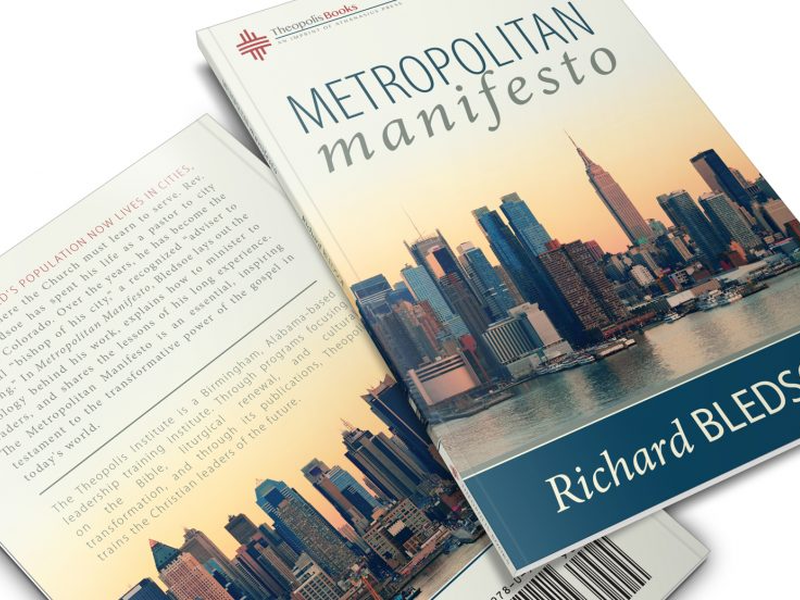
metropolitanmanifesto-3dfrontback-promo-3
Theopolis News

Metropolitan Manifesto: Available Now!

Metropolitan Manifesto, the new work from Theopolis fellow Richard Bledsoe, and first "Theopolis Books" release, is out today! Head over to the Athanasius Press website to get a copy. Half the world's population now lives in cities, and that is where the Church must learn to serve. Rev. Richard Bledsoe…

by Brian MoatsAugust 25, 2015
medievalilluminatedmanuscript
Biblical Studies

Apologia on Reading the Bible, (Part 2)

This is the second portion of a three-part essay. Learning to Read Learning to read the Bible is easier said than done, of course. There are several reasons for this, and they all have to do with the art of reading. Reading is an art and not a science, and…

by James B. JordanAugust 25, 2015
img_1069
Theopolis News

Mission to the City

“It instilled a real and abiding change in the way I understand my life as a disciple of Jesus Christ,” said Clint Hail, a Community Development Coordinator out of Dallas who attended Theopolis’ course on Mission to the City . “The course renovated the way I understand the challenges facing,…

by Brian MoatsAugust 21, 2015
hebrew-manuscript
Hermeneutics

Apologia on Reading the Bible, (Part 1)

What does it mean to read the Bible as inspired literature? The method is not new nor is it uncommon in Dutch Reformed circles. Exegesis must be Christocentric, plenary (all the text serves a theological purpose), respect the context in God’s redemptive plan, and plumb the full literary depth of…

by James B. JordanAugust 20, 2015

Showing page 145 of 309

See all

Showing page 31 of 43

See all
Philosophy

Smith on Derrida

James Smith’s conclusions regarding Derrida express more clearly than I’ve been able to do my own sense of Derrida. These are scattered quotations from The Fall of Interpretation , pp. 127-129: “Derrida is honest about not challenging for a moment Rousseau’s and Levi-Strauss’s reading of violence; his own analysis is…

October 15, 2003

Interpretation and the Fall

James K. A. Smith has a neat scheme for summarizing different view of interpretation in terms of the categories of creation and fall. For some thinkers, interpretation and the possibility of misinterpretation are results of the Fall; for others, interpretation and misinterpretation is inherent in created life, though there is…

October 15, 2003
Philosophy

Another Benefit of Derrida: Because

Another benefit of Derrida: Because he puts philosophical issues in mythological and metaphorical terms, he moves philosophy into the field of theology. As I’ve pointed out in a number of posts, Derrida (following Plato) speaks of the relationship between speaker and speech (or sometimes between speech and writing) as a…

October 14, 2003
History

Writing and Democratization

JP Vernant points out the connection between writing and democratization: “In the kingdoms of the New East, writing was a privilege and specialty of scribes. Writing enabled the royal administration to control the economic and social life of the State by keeping records of it. Its purpose was to constitute…

October 14, 2003
Philosophy

Pharmakos

Well, here’s an interesting coincidence (pointed to by Derrida, still in “Plato’s Pharmacy”): Derrida is discussing the ritual of the pharmakos , which he is connecting to Plato’s various uses of pharmak - words in discussions of knowledge, language, and other issues. The pharmakos rite was a scapegoat ritual, annually…

October 14, 2003
Philosophy

Why is Derrida Fun?

What is it that makes Derrida so stimulating and fun to read? At least for his treatment of standard philosophical works (I’m reading “Plato’s Pharmacy” in Disseminations ), I think it’s mainly that he shows that philosophy is not about what undergraduate courses in philosophy teach you it is about.…

October 14, 2003

Showing page 2183 of 2212

Browse by Category

In Medias Res

Your weekly digest for all things Theopolis.

Donate

Theopolis is nearly 100% donor-supported. Consider joining us on our mission.