Theopolis Logo

Writing

Explore our collection of theological essays, biblical studies, and reflections on faith and culture.

See all
or
Abortion

Political Hermeneutics: The Argument From Silence, Part 2

Click HERE for part 1. III This leads to a further question. I have argued that silence cannot by itself establish a Scriptural principle, but does Scripture’s silence carry any weight in itself? Does the fact that something is unbiblical in a weak sense tell us anything at all? In…

by Peter LeithartMarch 13, 1990
hebrew-manuscript-6
Biblical Chronology

Groping Through the Gaps

Although nowadays gap theories are associated with dispensationalism, it was not always so. In the nineteenth century, scholars from a variety of backgrounds (Anglican, Reformed, and proto-fundamentalist) seem to have become fascinated by gaps. If you are not familiar with what I am talking about, this newsletter will acquaint you…

by James B. JordanFebruary 26, 1990
or
Abortion

Political Hermeneutics: The Argument from Silence, Part 1

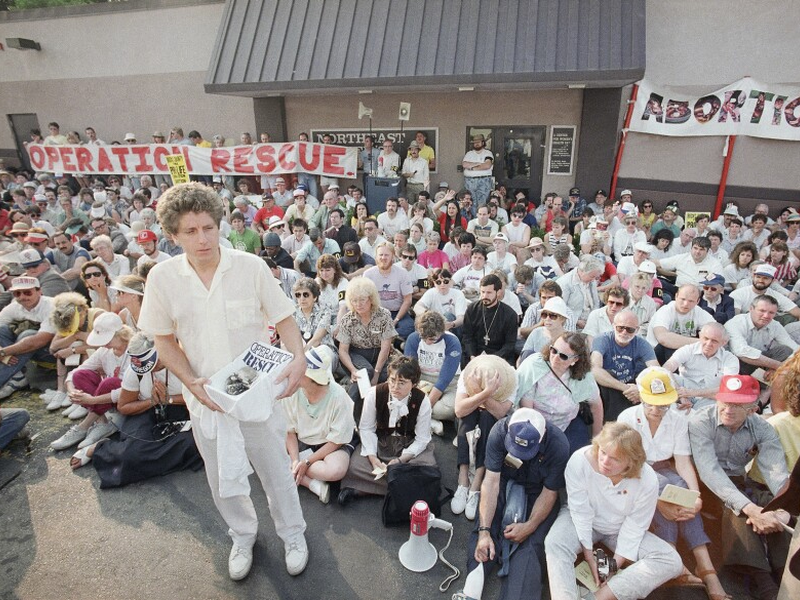
If the debate over Operation Rescue has proven anything, it has proven that there is absolutely no consensus among evangelicals in general, or among "reconstructionists" in particular, about how to use the Bible to judge political actions and movements. Each side of the debate claims biblical authority for its position,…

by Peter LeithartFebruary 13, 1990
49980-nicolas_poussin_-_the_judgment_of_solomon_-_wga18330-800w-tn
Biblical Studies

Advice From a Sojourner, Part 4

Two things I asked of Thee, Do not refuse me before I die: Keep deception and words of falsehood far from me, Give me neither poverty nor riches, Feed me with the food that it my portion, Lest I be full and deny Thee, And say, "Who is the LORD?"…

by James B. JordanFebruary 2, 1990
image-2
Biblical Horizons

Foucault’s Pendulum

Umberto Eco’s "The Name of the Rose" was certainly one of the best literary works of the past decade, though the film version hardly measured up to it. Now Eco has given us a new novel, "Foucault’s Pendulum." Like Rose, Foucault’s Pendulum reflects on the limitations of human knowledge, and…

by James B. JordanJanuary 26, 1990
tanner-mardis-xuxghzhibn4-unsplash-1-2
Biblical Studies

What Is “Interpretive Maximalism”?

From time to time people ask me about "interpretive maximalism." They want to know what it is, and sometimes want to know if it represents some departure from the Reformed grammatico-historical, Biblico-theological approach to the Bible. I have something of a problem with these questions, because "interpretive maximalism" is not…

by James B. JordanJanuary 26, 1990

Showing page 305 of 309

See all

Showing page 31 of 43

See all

Pedagogy and Counter-Pedagogy in Genesis

Before Yahweh is an object of worship, He is a teacher, issuing an invitation to Adam to eat from the fruit of the garden but prohibiting the fruit of the tree of knowledge (Genesis 2:16-17). After He forms Eve, though, He disappears from the narrative, leaving Eve and Adam to…

April 15, 2015

Inevitable Denominations?

Rex Koivisto ( One Lord, One Faith ) argues that the problem of church unity has less to do with denominational structures and more to do with a sectarian spirit. Denominations weren't sectarian in origins, but an attempt to retain catholicity in a diverse theological setting. All true, but his…

April 14, 2015

The Addict as Modern Prophet

K ent Dunnington ( Addiction and Virtue ) observes that what Peter Berger called “the heretical imperative” sharpens questions about the “right ordering of the goods and activities of our lives.” Our diverse world doesn't direct us to any particular ends; it deliberately refuses to do so. As a result,…

April 14, 2015

Chiasm of Love

M arion Gibbs and Sidney Johnson present a sensitive analysis of the poetry of Gottfried of Strassburg's Tristan in their introduction to Medieval German Literature . In the Prologue to the poem, Gottfried captures the contradictory qualities of love with a rich series of antitheses: ir süeze sur, ir liebez…

April 14, 2015

Apocalyptic Mouths

“Mouth” ( stoma ) appears 22 times in Revelation. Mostly, things come out of mouths, rather than going in. The book is framed by double references to the sword that comes from the mouth of Jesus (1:16; 2:16; 19:15, 21). Jesus' mouth-sword is the ideal: A word that slays and…

April 14, 2015
Architecture

Church as Sacred Place

Some of the churches that Duncan Stroik discusses in The Church Building as Sacred Place sound and look like wretched spaces. The parish church in Tor Tre Teste, thirty miles outside central Rome, for instance, is designed to disorient and decenter: “The nave is conceived as an asymmetrical space in…

April 13, 2015

Showing page 440 of 2212

Browse by Category

In Medias Res

Your weekly digest for all things Theopolis.

Donate

Theopolis is nearly 100% donor-supported. Consider joining us on our mission.