Theopolis Logo

Writing

Explore our collection of theological essays, biblical studies, and reflections on faith and culture.

See all
aaron-burden-h8s0pf2rcqs-unsplash
Galatians

The Restoration of the Galatians

While controversies over the writings of Paul continue in various corners of the intellectual globe, the word of God given through Paul and his scribe and all of the church’s interpreters and translators over the last two millennia is still readily available to the lofty and the lowly. Paul, as…

by Grace LangnessMarch 25, 2013

kiwihug-l4gw27xzn1i-unsplash
Deuteronomy

Law and History: How to Read the Law of Moses (Part 2)

The second in a series of studies in Deuteronomy. Deuteronomy 22:30: A man shall not take his father’s wife, and shall not uncover his father’s wing (Hebrew: kanaf ). There are a number of unusual features in this law that mark it out from the previous context, indicating that it…

by Ralph Allan SmithMarch 20, 2013
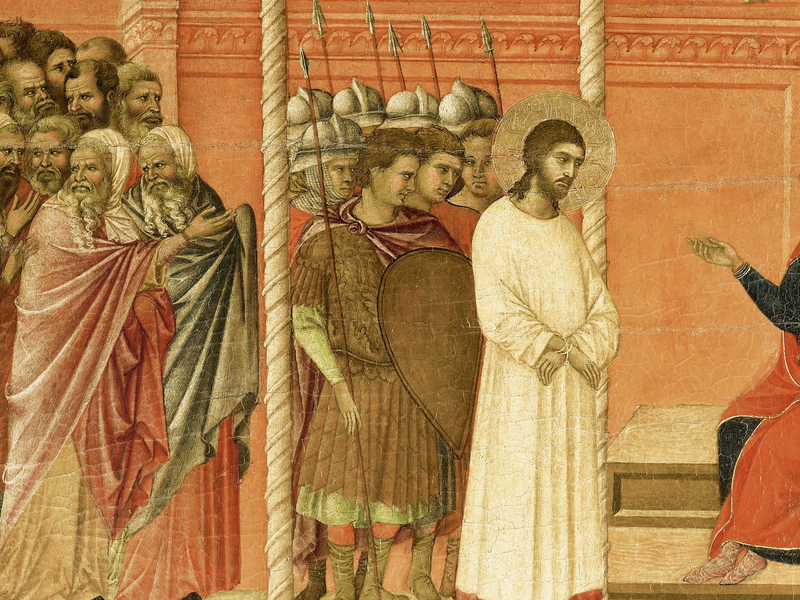
200403-moss-pilate-tease_pncfq5
History

Victimhood and the Gospel

The texts of Christianity have been slowly at work, under the power of the Holy Spirit for 2000 years now. If we could be magically transported back into the world of two millennia ago, modern Americans would be shocked at the cruelty of that world. There was no concern for…

by Richard BledsoeMarch 18, 2013
aaron-burden-1ebsmyrau-s-unsplash
Luke

The Dysfunctional Family of the Gadarene Madman

The Story of the Gadarene Madman is told in all three synoptic Gospels (Matthew 8:28-34, Mark 5:1-20, Luke 8:26-37). Jesus ventures into a Gentile area when He passes over the Sea of Galilee. Upon disembarking from his boat, he is immediately met by a demon-possessed madman. Upon meeting Jesus, he…

by Richard BledsoeMarch 13, 2013
aaron-burden-1ebsmyrau-s-unsplash
Deuteronomy

Law and History: How to Read the Law of Moses

Part 1 of a multi-part series of studies on Deuteronomy 22:30-23:8. Eric Auerbach, in his classic work on Western literature, devotes his first chapter to contrasting Homer with the Bible. Of Homer, he writes of the “need of Homeric style to leave nothing which it mentions half in darkness and…

by Ralph Allan SmithMarch 12, 2013
markus-winkler-aid-xyrtlec-unsplash
Theopolis News

James Jordan in Korea, Japan

Trinity House Fellow James B. Jordan will be a speaker at an International Conference on Biblical Symbolism that will be held in Seoul on Monday, May 27 in 2013. He will address "The Importance of Biblical Symbolism and Symbolic Interpretation of the Bible." The conference will have three other speakers…

by Peter LeithartMarch 9, 2013

Showing page 197 of 309

See all

Showing page 32 of 43

See all
Literature

Wormwood and Rotten Denmark

During the staging of his play before the king, Hamlet mutters the word “Wormwood.” Why? Irwin Matus suggests the following: “Rarely glossed in editions of the play, wormwood is accepted as meaning only something bitter, from the taste of the plant of that name. However, the plant was also used…

August 22, 2005
Literature

Sacral politics in Shakespeare

Shakespeare’s two tetrologies on English history trace the shift from a sacrally based political order (Richard II) to a “Machiavellian” one (Richard III). That is the sequence of actual history. But the sequence of Shakespeare’s composition is different. Shakespeare wrote the historically later tetrology (2 Parts of Henry VI and…

August 22, 2005

Proving grace

Markus Barth highlights the judicial cast of Paul’s statement in Ephesians 2:7 that we “show the surpassing riches of His grace.” The verb “show” or “prove” is a lawcourt term, pointing to the presentation of evidence or a judicial demonstration. God has raised us up in Jesus to the heavenly…

August 21, 2005

Communion meditation, August 21

Ephesians 2:14: He Himself is our peace. Jesus is the one who brings peace between God and man. He has reconciled us to God, and brought near those who have been far off. But in our sermon text Paul is chiefly concerned with the peace that Jesus has brought between…

August 21, 2005

Exhortation, August 21

According to Paul, the church is being built into a holy dwelling, a temple in which the Spirit dwells. This has many implications, but let me highlight one. According to the Old Testament, temples were holy places whose holiness had to be guarded and defended. Levites guarded the tabernacle and…

August 21, 2005

Wise as serpents

From Francis Bacon’s De Augmentis Scientiarum , 7.1: “For as the fable goes of the basilisk, that if he sees you first, you die for it, but if you see him first, he dies; so itis with deceits, impostures, and evil arts, which, if they be first espied, they lose…

August 20, 2005

Showing page 1953 of 2212

Browse by Category

In Medias Res

Your weekly digest for all things Theopolis.

Donate

Theopolis is nearly 100% donor-supported. Consider joining us on our mission.