Theopolis Logo

Writing

Explore our collection of theological essays, biblical studies, and reflections on faith and culture.

See all
31-03-0213
Hermeneutics

Apocalyptic Eyes

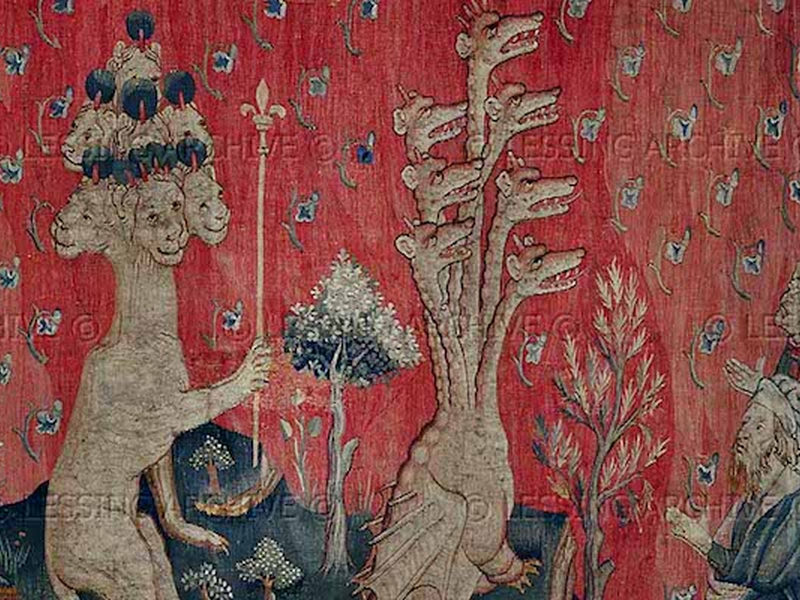
Flying scrolls. Red horses. Beasts coming out of the sea. Winged women. The list goes on. Apocalyptic literature in the Bible is like a cross between science fiction and Marvel comics. And the Bible has a fair bit of this sort of thing. Daniel sees visions in Babylon, Zechariah sees…

by Toby SumpterNovember 4, 2014

bhm-skyline-2
Theopolis News

New Name, New Look

Trinity House Institute has taken a new name, the Theopolis Institute. This striking new name expresses our unique vision and mission and captures the unified purpose behind all our specific programs and activities. We still have Bible, liturgy, and culture in our tagline. We still offer the same courses on…

by TheopolisNovember 4, 2014
istock_000012860926small
Atonement

Not Fearing the Devil

Adam Kotsko offers a socio-political variation on the Christus Victor atonement theory in his 2010 study, The Politics of Redemption: The Social Logic of Salvation . He does this by explaining "the devil" in terms of the Hegelian concept of "objective spirit," Geist . As Kotsko puts it, Geist "refers…

by Peter LeithartOctober 13, 2014
jez-timms-8muutamcwu4-unsplash
Leviticus

The Meaning of Sacrifice

Two factors keep Nahtali Meshel from discussing the meaning of sacrifice until late in his The "Grammar" of Sacrifice . The first has to do with the texts he draws from: "P says little about the meaning of its rituals" (174). The other has to do with the grammatical theory…

by Peter LeithartOctober 8, 2014
jez-timms-8muutamcwu4-unsplash
Leviticus

Praxemics

Chapter 5 of Naphtali Meshel's The "Grammar" of Sacrifice focuses on "praxemics," the physical actions of sacrificial ritual. Praxemes are constituted by six elements: an "atomact," an elementary physical act or gesture; an actor; an object that is acted up; a target for the action and often for the object…

by Peter LeithartOctober 6, 2014
markus-winkler-aid-xyrtlec-unsplash
Leviticus

Jugation and Hierarchy

Two chapters of Naphtali Meshel’s The “Grammar” of Sacrifice cover what he calls “jugation” and “hierarchies.” The first involves the addition of other materials to an animal offering. Jugates include wine, cereal, and oil that are added to the animals (zoemes) that are offered in sacrifice. Some jugates are coordinated…

by Peter LeithartOctober 1, 2014

Showing page 167 of 309

See all

Showing page 34 of 43

See all
History

Eschatological self

Jerrold Seigel suggests that Locke’s self has “three different aspects”: We are selves to others “by virtue of what they know about our mental and moral life”; we are “selves to ourselves, but incompletely so, through the imperfect consciousness we have of our lives and deeds in the here and…

August 15, 2006
Science

Interior Senses

Murphy goes into admiring detail describing Thomas’s theory of interior senses in higher animals. Apart from its purely historical interest and the anticipations of later scientific theories, Thomas’s discussion has philosophical and theological interest in its own right. He claims, for instance, that there are a number of interior senses…

August 14, 2006
Science

Dueling Theodicies

Robert Young claims that the controversy over Darwinism in the 19th century was not so much a religion-v.-science controversy as a duel between competing theodicies. At one level, he argues, “the protagonists in the debate were in fundamental agreement. They were fighting over the best ways of rationalizing the same…

August 14, 2006
Philosophy

Mind-Body and Energy

Murphy offers an amusing discussion of the question, Assuming a Cartesian dualism of mind and body, how can the mind cause a physical object like the body to move? If one assumes that physicists are correct that physical energy can be transferred to a physical system, it has to arise…

August 14, 2006
Theology

Effects of dualism

Murphy makes this interesting comment, which she admits is an oversimplification: “the adoption of a dualist anthropology in the early centuries of the church was largely responsible for changing Christians’ conception of what Christianity is basically all about. I am suggesting that original Christianity is better understood in socio-political terms…

August 14, 2006
Theology

Physicalism and the Bible

In her Bodies and Souls, or Spirited Bodies? (Cambridge, 2006), Nancey Murphy argues for a non-reductionist version of physicalism on the question of the “body-soul” problem: “This is the view that humans are composed of only one ‘part,’ a physical body.” She spends a bit over six pages near the…

August 14, 2006

Showing page 1810 of 2212

Browse by Category

In Medias Res

Your weekly digest for all things Theopolis.

Donate

Theopolis is nearly 100% donor-supported. Consider joining us on our mission.